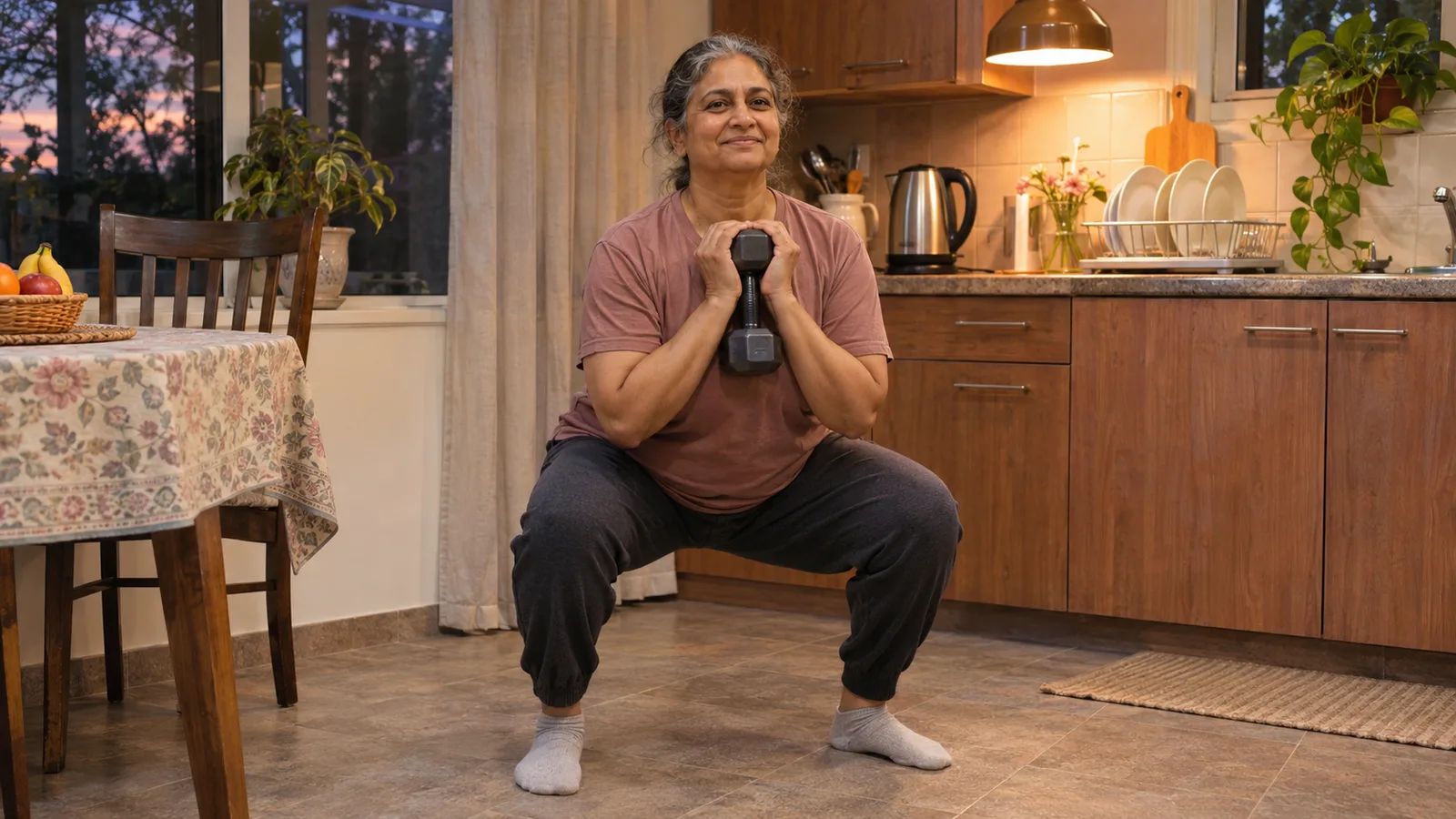
Is muscle really a glucose sink? Yes, if you use it
Muscle is your biggest blood sugar sink, but the 80 percent figure comes from a lab drip test. How lifting puts it to work, and how much it lowers A1C.
29 articles on longevity from the coaching floor.
Muscle is your biggest blood sugar sink, but the 80 percent figure comes from a lab drip test. How lifting puts it to work, and how much it lowers A1C.

Time a 4-meter walk at your usual pace, then see what your seconds mean after 60, what's normal for your age, and the training that speeds you up.
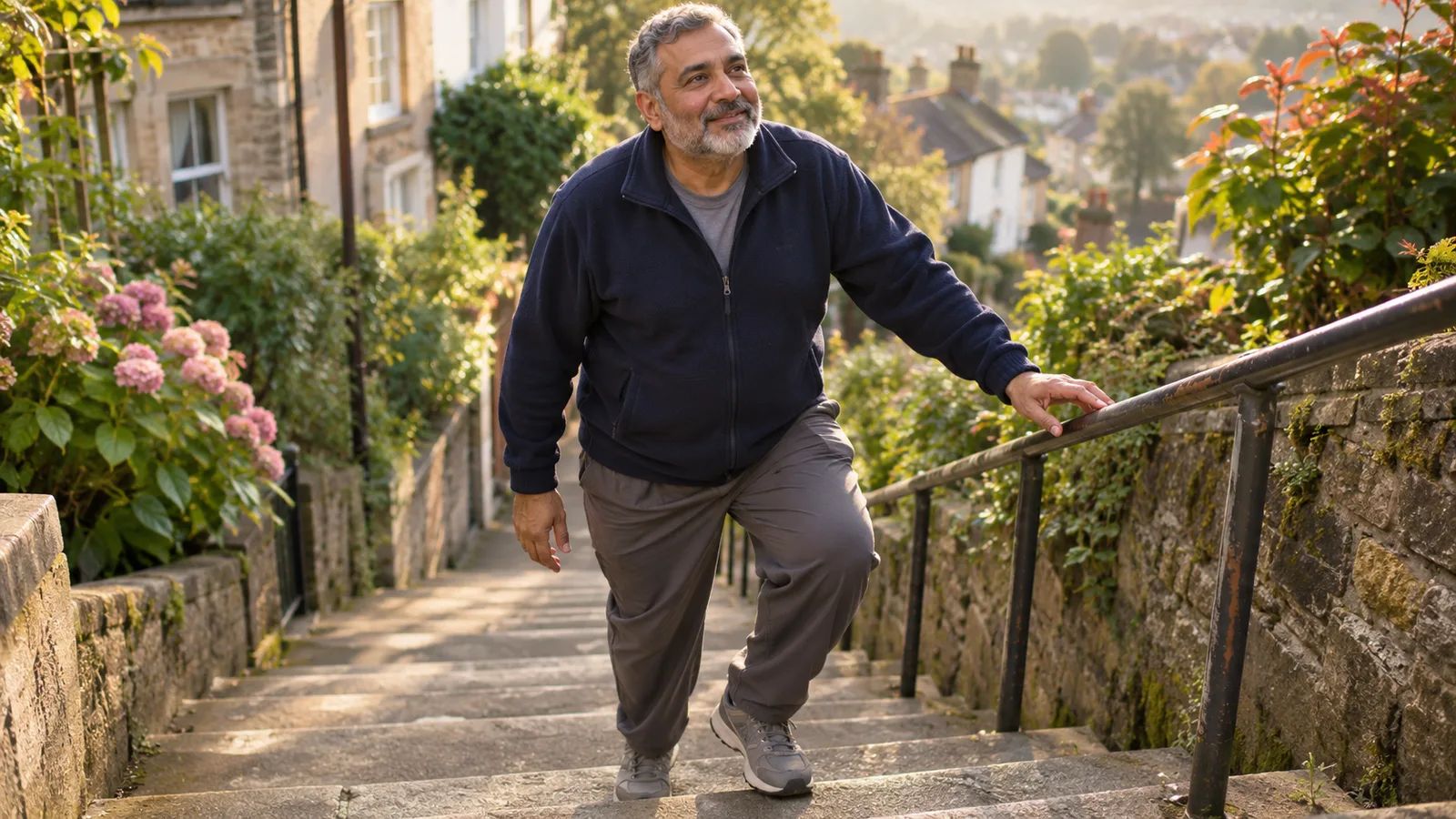
Why one fitness number tracks lifespan so closely, what the big studies really found, where your VO2 max sits for your age, and how far to trust your watch.

Weak grip is a warning light, not a cause. Check your number against norms by age and sex, test it at home in a minute, and see what actually raises it.

Do the chair and floor tests in five minutes, see where your score sits for your age and sex, and learn what to train based on where you lost points.

One workout helps your muscles soak up sugar for about a day, sometimes two, then it fades. Who sees it most, how to plan your week, and the after-meal walk.

Serious illness and surgery make your body break down muscle to supply your organs. Why starting with more seems to help, what doesn't, and how to build it.

Exercise lowers inflammation, yet a long workout sends IL-6, a so-called inflammatory signal, soaring. Why both are true, and what it means for your CRP test.

Fitness slides faster each decade after 45. What to train now, and how many years a higher start buys before chairs, stairs and bags get hard.
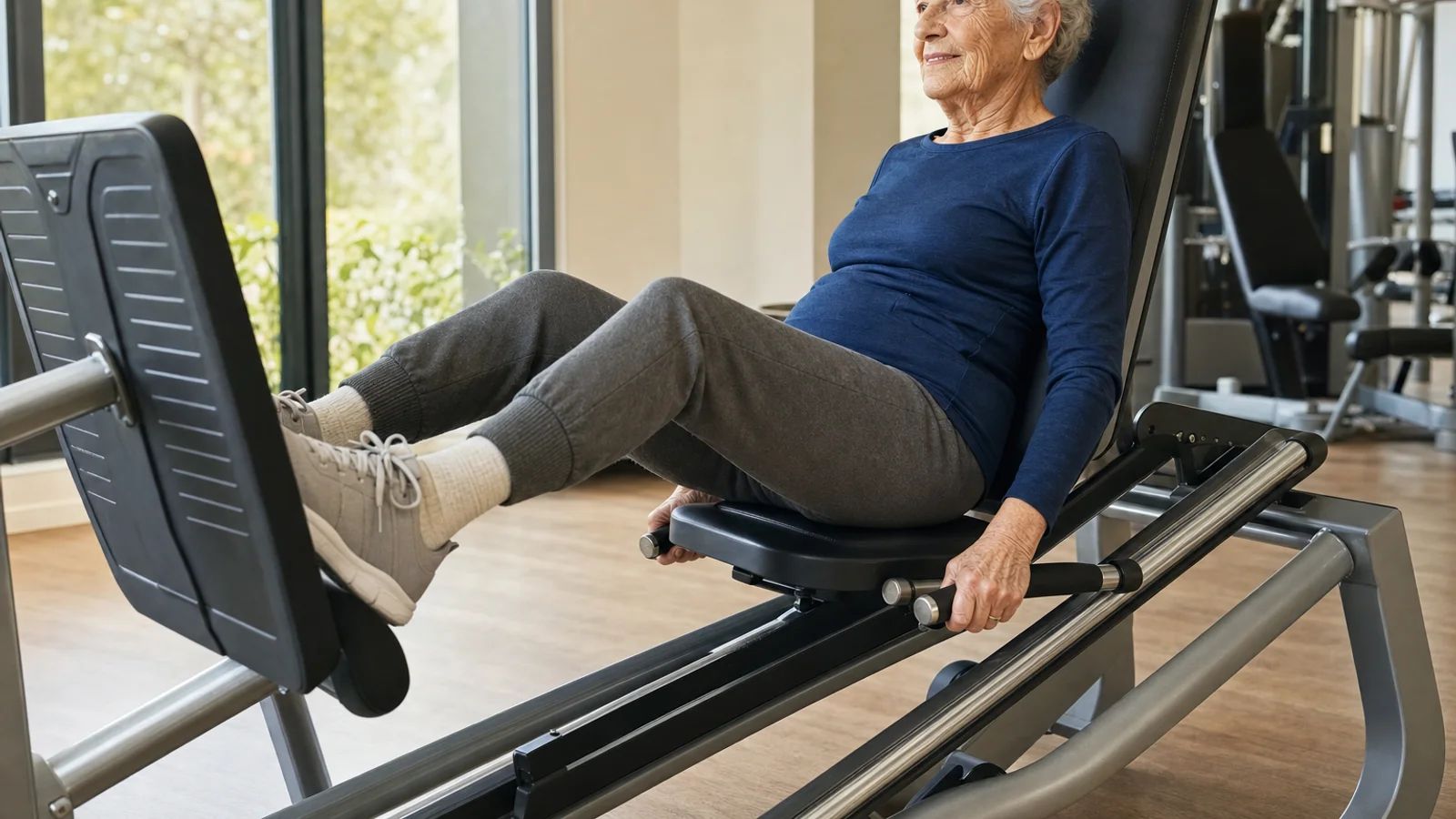
Yes. People averaging 87 grew their thigh muscle 11% in 12 weeks of lifting. What they did, a 30-second chair test to try at home, and how to start safely.

After 45 the scale barely moves while fat shifts to your waist and muscle slips. What's changing, a first routine that turns it around, and a home check.

Power fades faster than strength because age takes speed first: slower nerve signals, shrinking fast fibers, simple physics. Plus a chair test and a plan.

How much sleep muscle recovery needs, what one bad night costs your training, and what deep sleep's growth hormone pulse does and doesn't do.
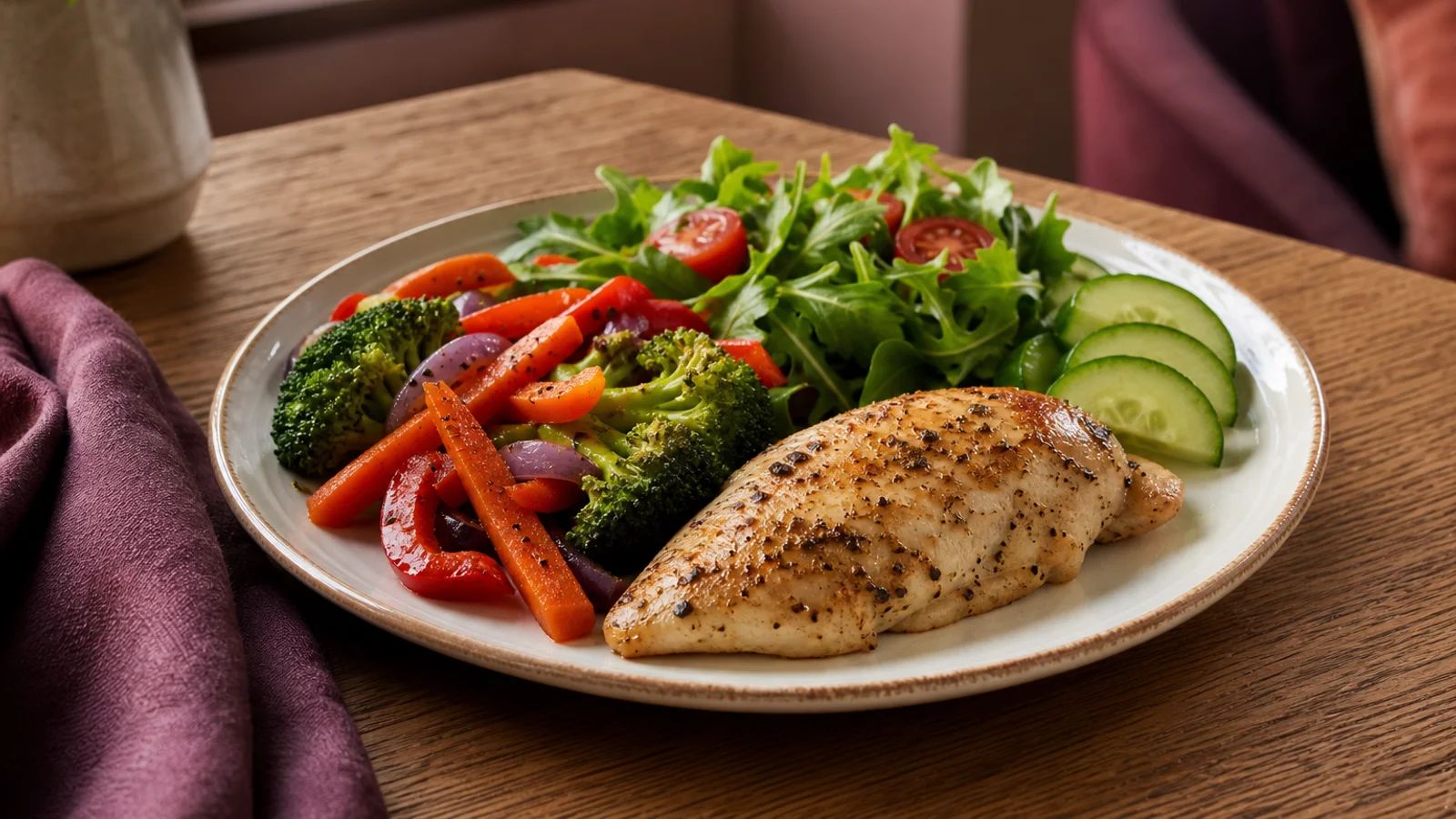
About 2.5 to 3 g of leucine, or 30 to 35 g of protein from real food. Your number by age and weight, which meals clear it, and what's still debated.
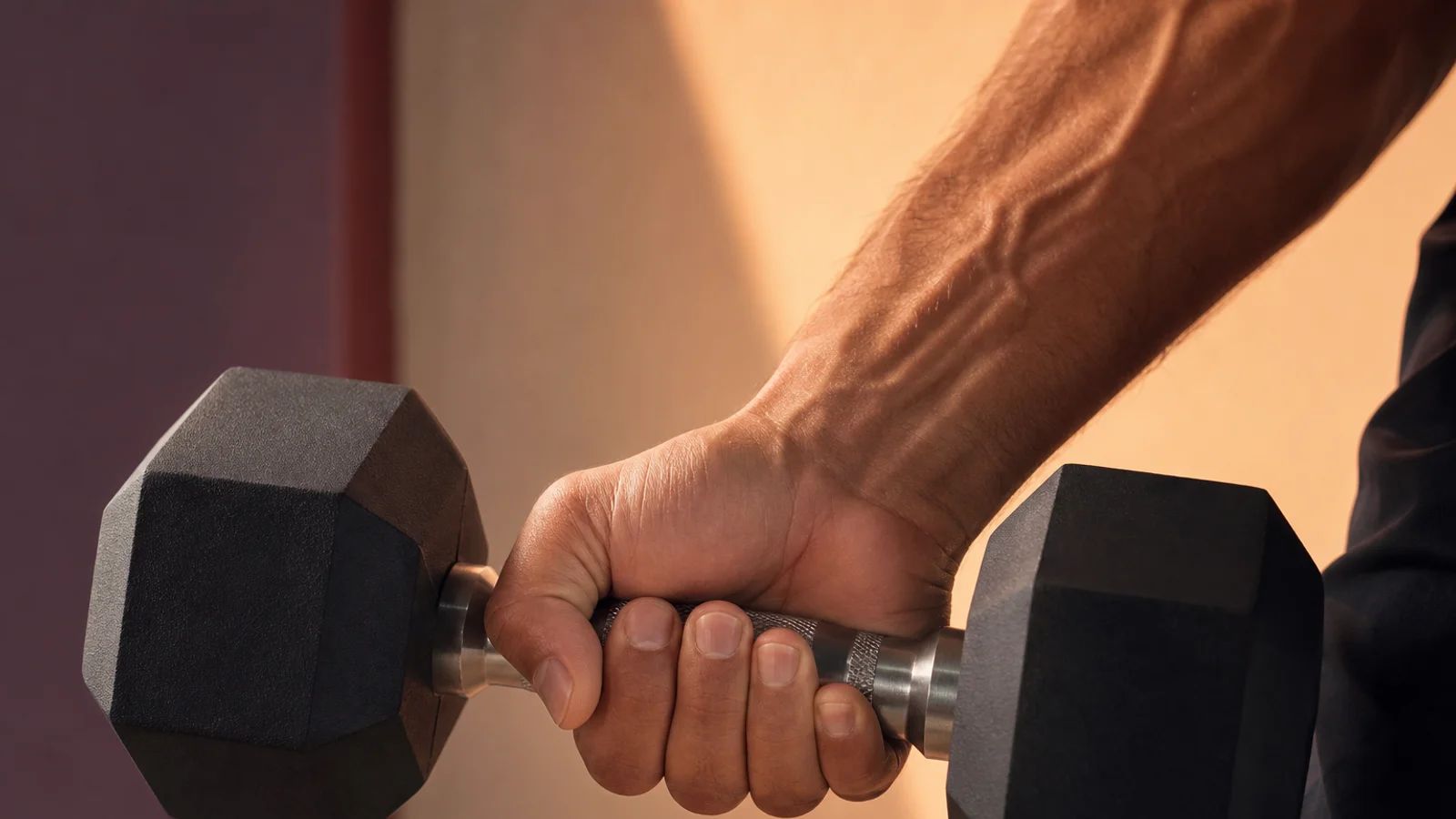
Yes. Each muscle is an organ, and your muscles send hormone-like signals too. The 5 jobs muscle does besides moving you, and how to keep it working.
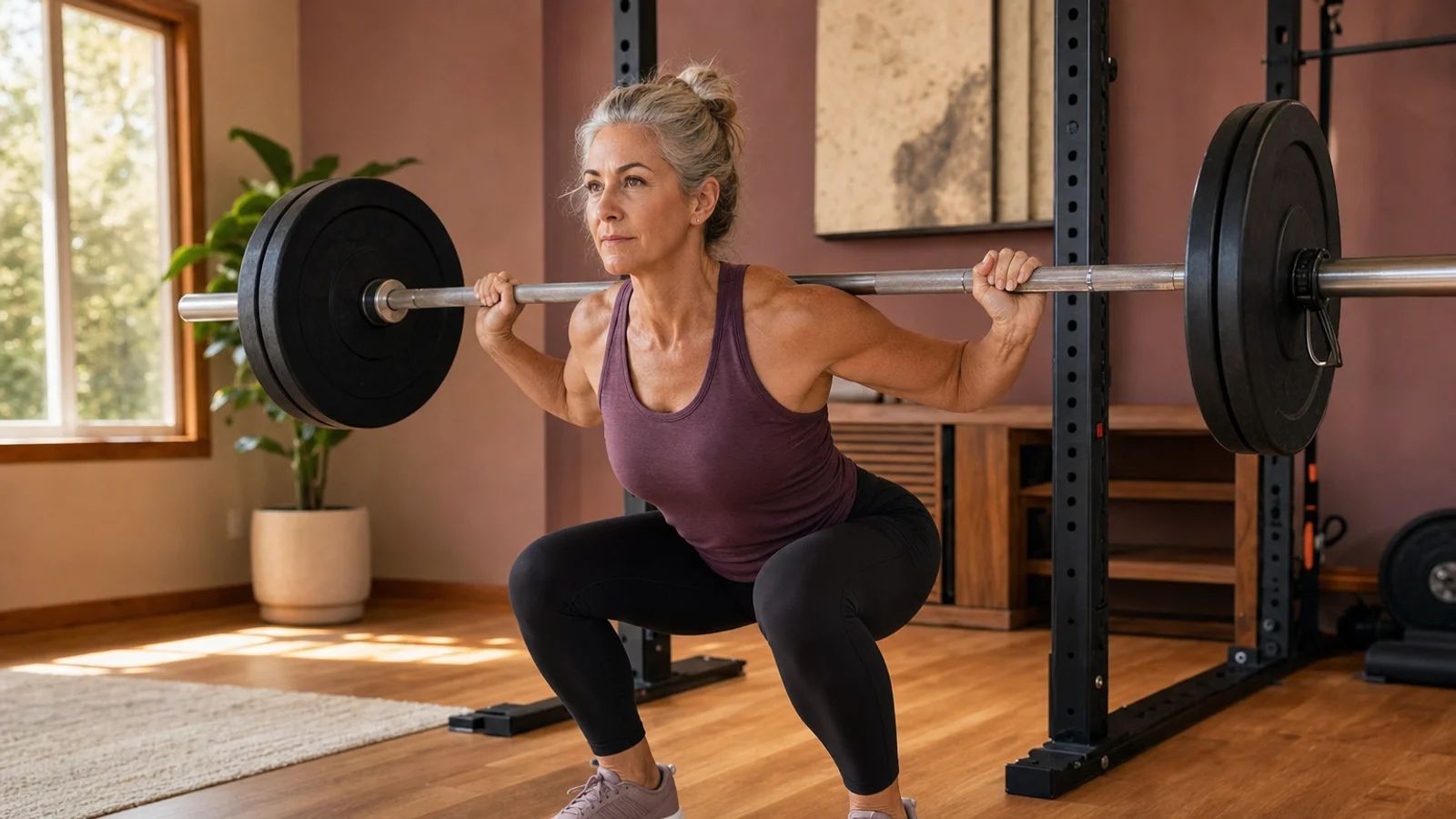
Walking mostly keeps the bone you have. Lifting and jumping can add to it. What happens inside the bone, which moves reach which bones, and a week to copy.

Healthspan is the years you live in good health. The gap to lifespan is about 10 years, 14 in the US. What fills it, and the training that shrinks it.

Your metabolism doesn't crash at 40, it isn't too late at 70, and 10,000 steps began as an ad campaign. Five myths about exercise and aging, and what's true.

Catching a trip takes a fast step and a quick push from your legs. What cuts falls most, and how to train it at home with a chair and light weights.

Easy cardio most days plus one or two 4x4 interval sessions a week. What to expect at your age, why your watch is harsh, and a 12-week plan.

Ten balance exercises for seniors, easiest first, done beside a kitchen counter. A 2-minute test shows where to start and how long until you feel steadier.
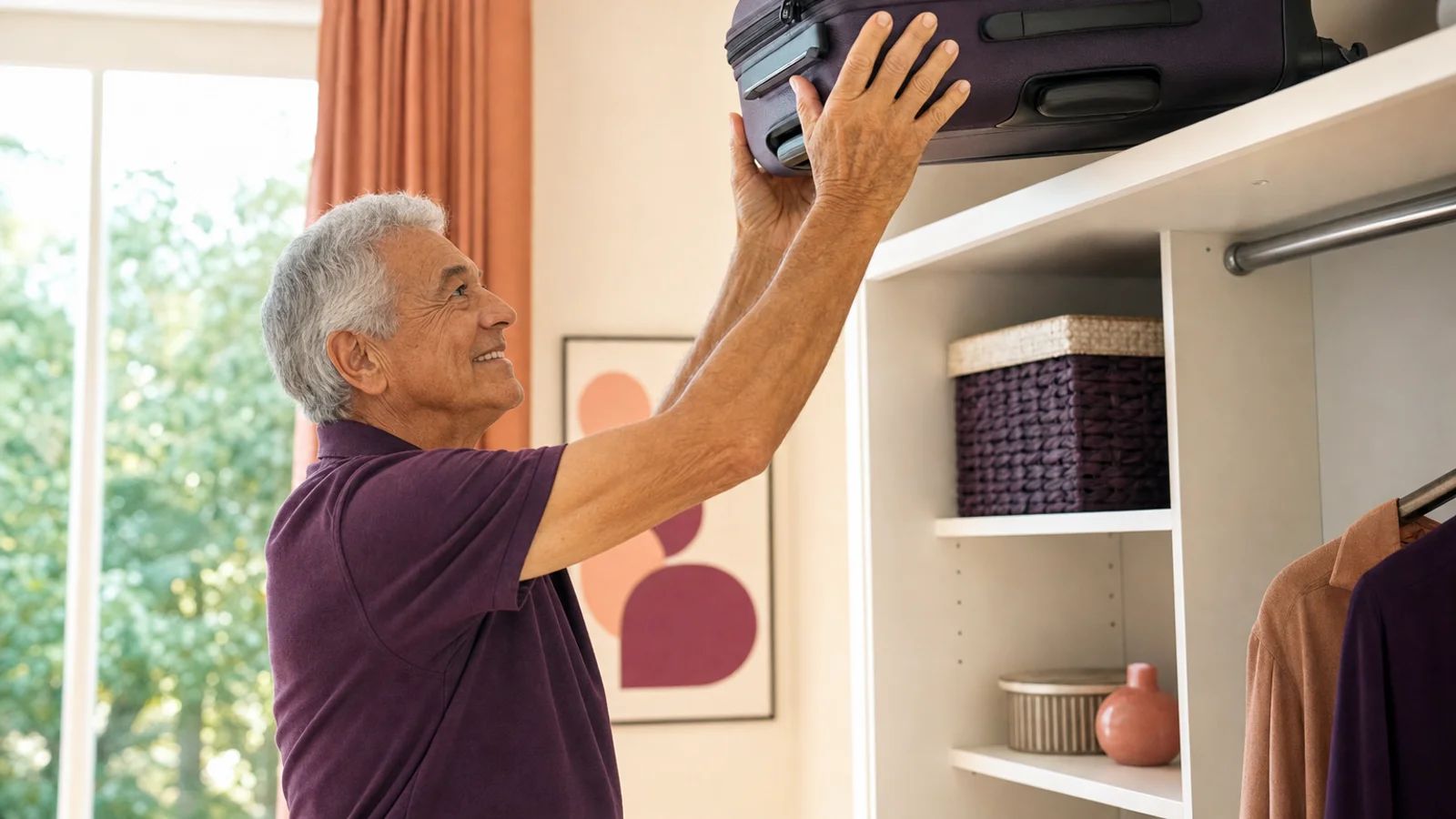
Pick the everyday things you want to still do in your 80s, test them today, and train to about twice what each needs. A starter list and the math inside.
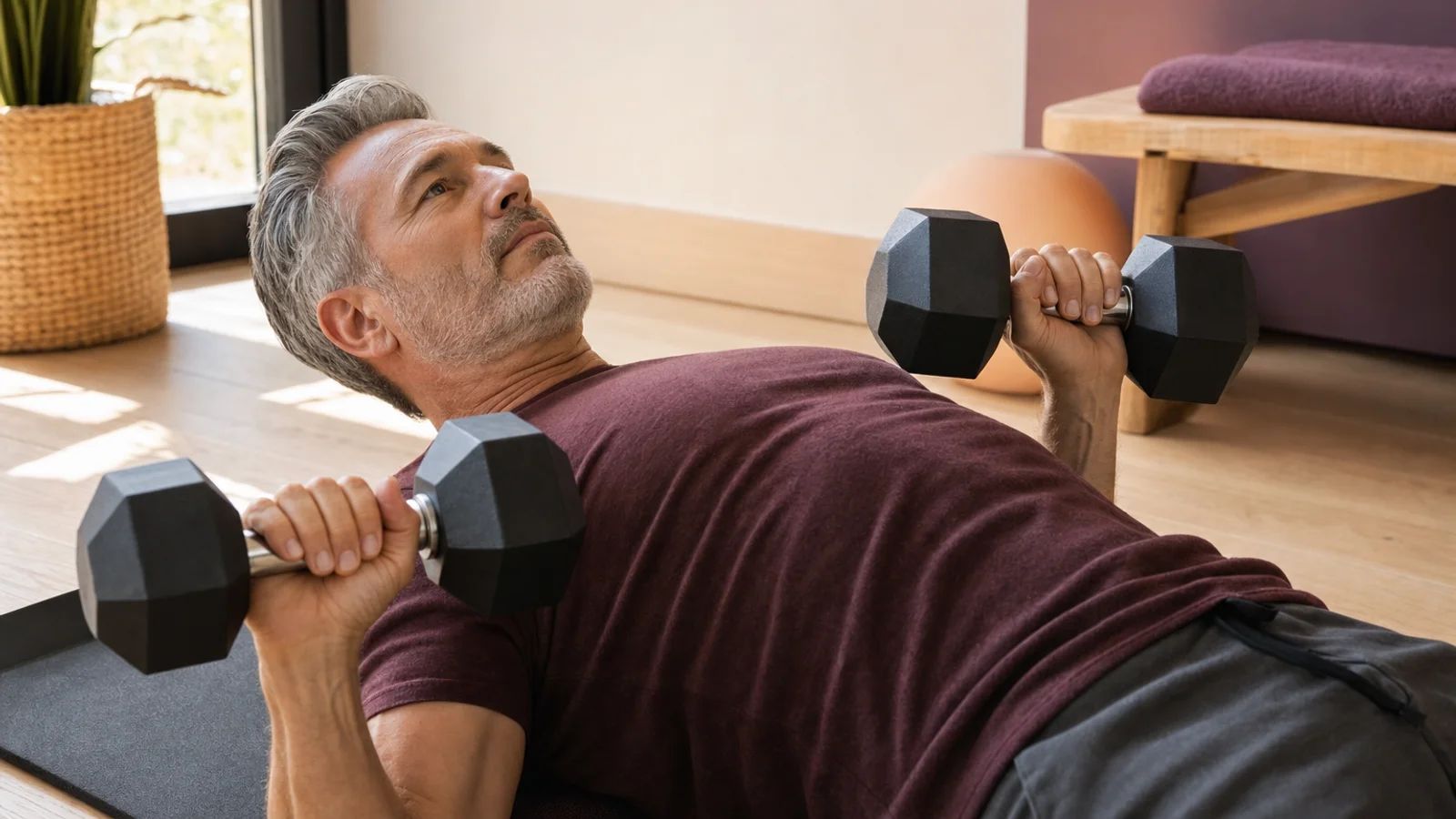
Hypertrophy is muscle size, strength is force. The weights, sets and effort each needs, which to pick for your goal, and why strength wins as you age.

You want both. How to split easy zone 2 and hard intervals for the hours you have, what each should feel like, and whether hard efforts are safe later on.

How much cardio and strength training per week: the 150-minute, two-day target, and the far smaller minimum dose that still works if that's too much.
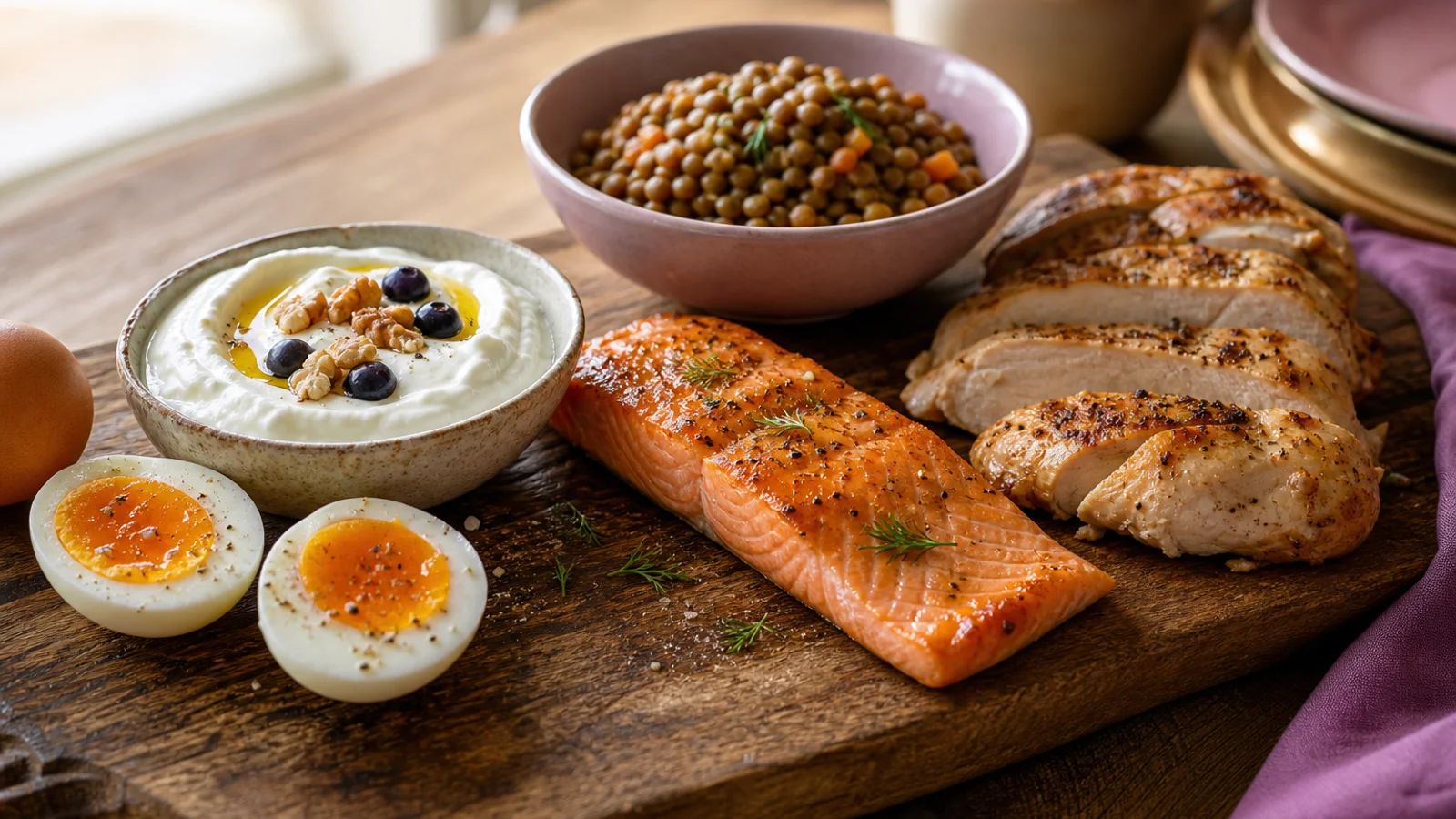
A good protein target after 40 is 0.55 to 0.7 g per lb (1.2 to 1.6 g/kg) a day. Your number in grams, a day of food that hits it, and the kidney question.
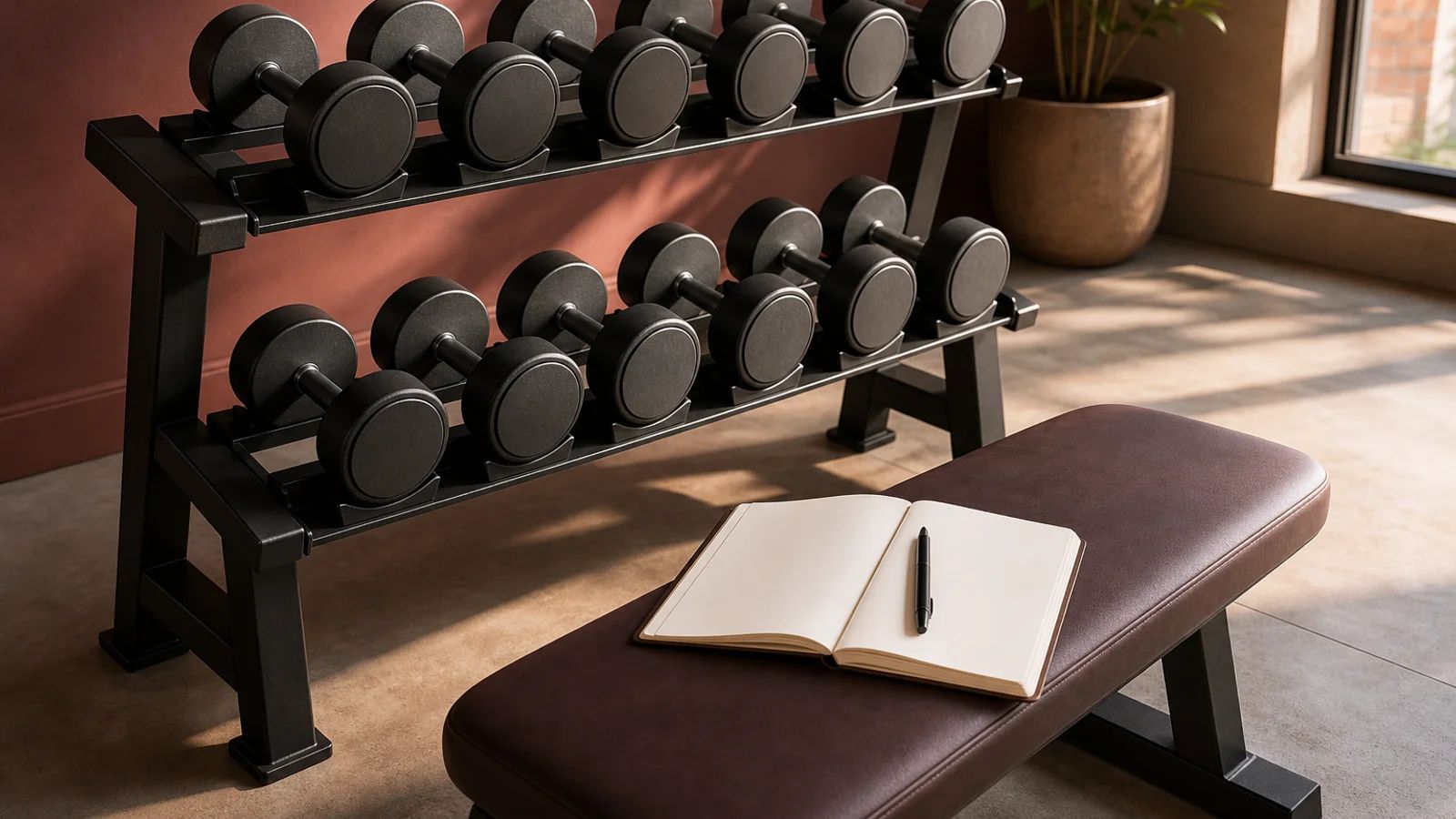
About 10 hard sets per muscle a week builds muscle well, 4 already works, and past 20 each set adds less. How to count yours, and why strength needs fewer.

Strength, easy cardio, hard efforts, mobility and balance. A ten-minute home check to find your weak one, and a week that fits 2, 3½ or 5 hours.

Two or three strength days and 150 minutes of easy cardio. Day-by-day weeks for 3 to 6 free days, and which to do first when both land on one day.
A coach on live video for every session, correcting your form while the bar is still in your hands. 14 days free.
Your coach, liveMatched to youThen $299/mo. Cancel anytime.