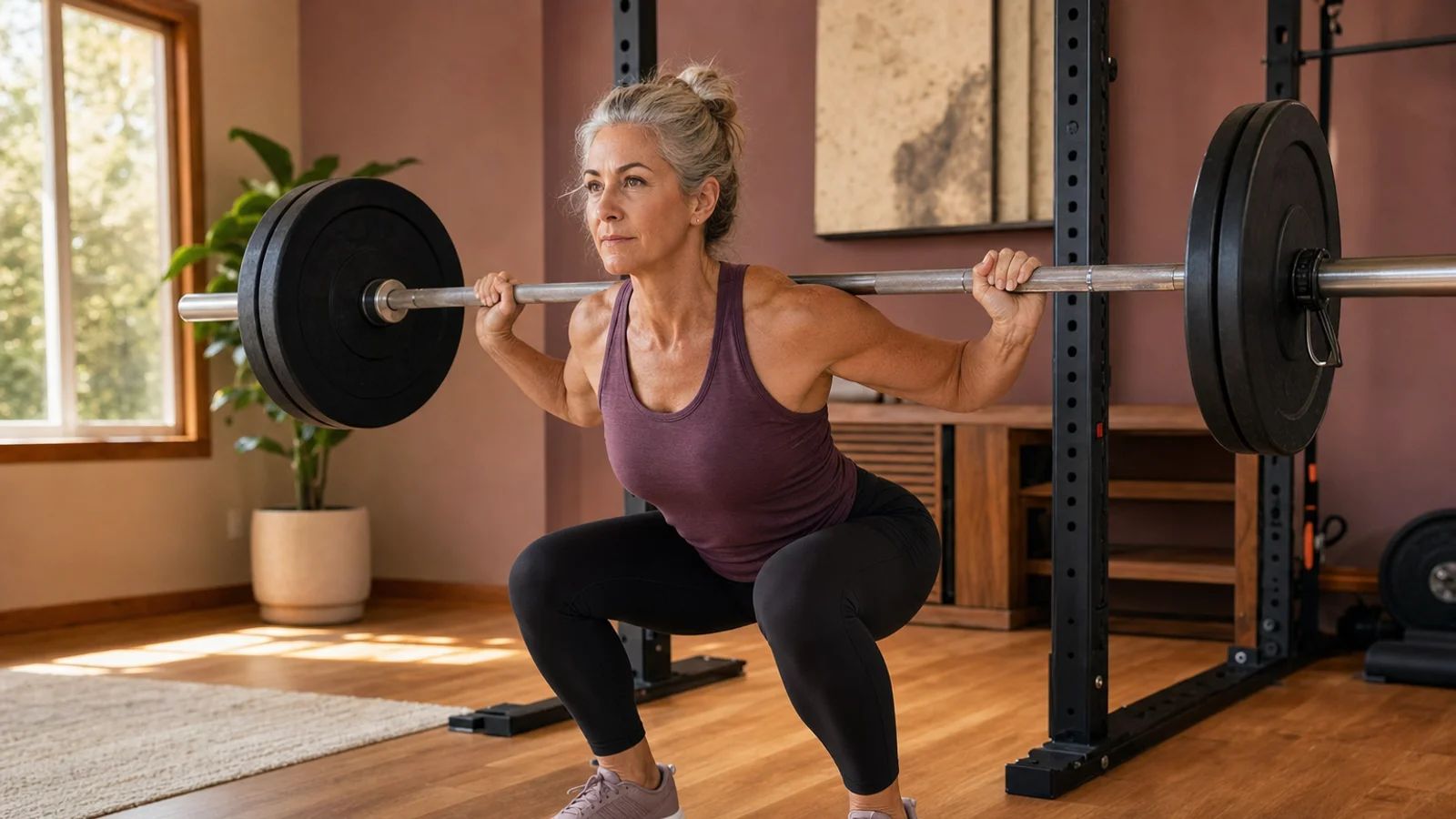
Muscle is an organ: what it does beyond moving you
Muscle isn't only for lifting. It's an organ that clears blood sugar, stores protein for illness, and signals to your bones. Here's how the mechanisms work.
Picture muscle as scaffolding, bolted to your skeleton, moving you around and doing nothing else once you sit down. That's the model most of us carry, and it's about twenty years out of date.
Exercise scientists now treat skeletal muscle as an organ in its own right. It releases hormone-like signals into your blood every time you contract it, clears most of the sugar you eat, keeps a reserve of protein for when you're seriously sick, and pulls hard enough on your bones to keep them dense. I called it the organ of longevity in an earlier post on strength and longevity and left it at three lines. This is the long version, mechanisms included.
Muscle is a gland you can train
An organ does a defined job for the body, and usually that includes chemical signaling. Muscle qualifies on both counts, but the signaling half is the newer discovery.
Bente Pedersen and Mark Febbraio laid out the case in a landmark 2008 review in Physiological Reviews, naming these signals myokines: proteins that contracting muscle releases straight into your bloodstream. Their headline example was interleukin-6, or IL-6, which can spike up to 100-fold in your blood during a hard workout.1
Train hard enough and that contraction fires off chemical messages to your fat, your liver, and your brain. It's a gland you can build with a barbell.
IL-6 has a split reputation, and it's the part of this story that surprised me most. Chronically high IL-6 is a marker of inflammation and shows up in obesity and insulin resistance, which is why it spent years being cast as a villain. But the spike from a hard workout hits right when your insulin sensitivity is improving, not worsening. In that moment, IL-6 appears to help mobilize fuel and improve how your body handles glucose afterward. Same molecule, opposite meaning, depending on why it showed up.
IL-6 isn't the only signal muscle sends. Researchers have cataloged a muscle "secretome" of several hundred candidate proteins, including BDNF, a growth factor better known for its role in the brain, which working muscle also releases and which seems to help drive fat burning.2 The muscle-to-brain conversation looks like it runs both ways, though most of that work is still early.

Irisin: a good story that got ahead of the evidence
You've probably seen irisin described as the "exercise hormone" that flips ordinary white fat into calorie-burning brown fat. That's real, sort of, and the way it got debunked and then half-vindicated is a good lesson in how science actually works.
The molecule showed up in 2012, cleaved from a protein called FNDC5 and switched on by exercise, pushing white fat toward a heat-producing, brown-fat-like state in mice.3 Exciting, if it held up in people.
Then the measuring tools fell apart. By 2015, researchers testing four commercial antibodies used to detect irisin in human blood found the antibodies were cross-reacting with unrelated proteins. One paper went as far as calling irisin "a myth rather than an exercise-inducible myokine."4 A chunk of the human irisin data may have been measuring the wrong thing entirely. Later work using cleaner methods argues irisin does circulate in real people, but the whole episode is a good reason to be skeptical of any single molecule marketed as a breakthrough.
Treat any confident claim about irisin with a raised eyebrow. The mechanism it's chasing, turning fat into a metabolically active tissue, is genuinely interesting. The specific molecule just isn't proven enough yet to build a training plan around.
Where most of the sugar you eat actually goes
This is the part of the muscle-as-organ story with the least argument and the biggest everyday payoff.
Eat carbohydrate and your blood sugar rises, so your pancreas releases insulin to pull that sugar out of the blood. Most of that pulling happens in one place: skeletal muscle. Researchers put the figure at roughly 80 percent of insulin-driven glucose uptake landing in muscle, not fat, not liver.5
The mechanism is worth knowing because it explains a trick that actually works. Muscle cells keep glucose transporters called GLUT4 in reserve. When insulin binds its receptor, it triggers GLUT4 to move to the cell surface and let glucose in. Contraction does the same job through a separate pathway, one that doesn't need insulin at all. That's why a walk after dinner blunts a blood-sugar spike: your muscles open the door themselves.
More muscle means more of those doors and more room to store glucose as glycogen. Less muscle means sugar lingers in your blood and your pancreas has to work harder to move it. Keep that up for years and you're looking at insulin resistance, then type 2 diabetes.
A well-trained muscle is a bigger sponge. It keeps your blood sugar steadier with less strain on your pancreas.
For the aerobic side of the longevity story, read why VO2 max predicts how long you'll live.
Your muscle is also your emergency reserve
Nobody thinks about this job until they need it, and it changes how you look at years of training.
When you're badly hurt, fighting a severe infection, or recovering from major surgery, your body needs a flood of amino acids to run your immune system and rebuild tissue. It gets them by breaking down muscle. Among its other jobs, muscle works as an amino acid reserve, and illness spends from it whether you've saved anything or not.
The spending can be fast. One ICU study tracked critically ill patients and measured their thigh muscle shrinking by about 17.7 percent over the first ten days, faster in anyone with multiple organs failing.6 Ten days flat on your back can undo years of built-up reserve.
Which is why what you start with matters. Show up to an illness or a surgery with more muscle, and you're drawing on a deeper account.

Does muscle really talk to bone?
Yes, in two ways at once, and it's a reason strength training protects more than the muscle itself.
The first link is mechanical. Muscle pulls on bone every time it contracts, and bone responds to that load by getting denser. Stop loading it and the bone thins. The second link is chemical: muscle and bone trade signaling molecules directly. Researchers who study the two together describe them as a coupled system. They come from the same embryonic tissue, reach peak mass around the same age, and decline together as you get older.7
That coupling is a big part of why muscle loss and bone loss show up in the same people so often, and why the same resistance training helps both.
Train one and you end up training both.
What it actually takes to keep this organ working
Muscle runs on a simple rule: use it or lose it. Left untrained, research puts the loss at roughly 3 to 8 percent per decade after 30, and steeper after 60.8 Reversing that slide comes down to three things you actually control.
Load matters most. Muscle grows and holds onto itself when it's pushed close to its limit, whether that's dumbbells, resistance bands, or your own bodyweight moved through a genuinely hard range of motion. A stroll doesn't ask enough of it.
Protein matters too. You can't rebuild tissue without raw material, and older adults generally need more of it per meal than younger people do to trigger the same repair.
And you have to keep showing up, because the payoff arrives at surprisingly modest doses. Pooling data across 16 study groups, researchers linked regular muscle-strengthening activity to roughly 10 to 17 percent lower risk of death from any cause, with most of the benefit landing around 30 to 60 minutes a week.9 Push past that and the curve flattens. You don't need to live in a gym. You need to show up most weeks.
Where the evidence is still thin
Individual myokine research is genuinely young. IL-6's double role is real but not fully mapped, and irisin shows how a measurement problem can inflate a finding before anyone catches it. Treat any single "miracle molecule" claim about muscle with caution.
The mortality numbers above are observational, not experimental. People who strength-train tend to be healthier, wealthier, and more careful about their health in a dozen ways researchers can't fully separate out, so some of that 10 to 17 percent is probably other habits riding along, not the training by itself.
Effects vary by person too. Age, sex, hormones, medication, and genetics all shift how much muscle you build and how well it does these jobs, and a lot of the underlying mechanism work is done in mice, not people. The direction of the evidence holds up well. I wouldn't bet on every number above surviving the next decade of research, but I'd bet on the direction.
Common questions
Does building muscle actually lower blood sugar? More trained muscle gives insulin more places to send glucose, and it stores that sugar as glycogen instead of leaving it in your blood. Studies consistently link more muscle mass and strength with better insulin sensitivity. It won't replace medication if you're diabetic, but it's one of the strongest levers you personally control.
Is cardio or strength training better for living longer? They do different jobs, so the evidence says do both. Aerobic work builds your engine and your VO2 max. Strength preserves the organ described above. Combining the two tracks with lower mortality than doing either alone.
Can I still build muscle in my 60s or 70s? Yes, and later than that. Researchers once put frail volunteers with an average age of 90 through eight weeks of strength training, and their strength rose by an average of 174 percent while their midthigh muscle grew about 9 percent.10 Older muscle responds more slowly and needs more protein per meal to grow, but it still grows. Later is harder, not impossible.
Is irisin actually worth caring about? Not as something to chase. It's a good story about science correcting itself, but nothing in your training plan should depend on it. Load your muscles and the proven benefits show up regardless of what irisin turns out to be.
The part people actually get wrong
What trips most people up here is rarely the theory. It's loading a muscle hard enough to matter without hurting yourself, then doing it every week for years instead of three good weeks and a fade. If you already know how to progress a lift and log your sets, training this yourself on a sensible split gets you everything above for the price of a barbell.
That kind of week-after-week consistency is what we built Bespoke Fit around. Every strength session is live, one-on-one video with a real coach who programs it set by set and adjusts the load as you get stronger. Our coaches read Peter Attia's Outlive before their first member call, so this muscle-as-an-organ thinking runs through the whole program. Your first month is $49, and founding members lock $299 a month for life, with 25 spots. The full setup is on how it works.
Sources
-
Pedersen BK, Febbraio MA, 2008. Muscle as an endocrine organ: focus on muscle-derived interleukin-6. Physiological Reviews. ↩
-
Pedersen BK, Febbraio MA, 2012. Muscles, exercise and obesity: skeletal muscle as a secretory organ. Nature Reviews Endocrinology. ↩
-
Boström P, et al., 2012. A PGC1-α-dependent myokine that drives brown-fat-like development of white fat and thermogenesis. Nature. ↩
-
Albrecht E, et al., 2015. Irisin, a myth rather than an exercise-inducible myokine. Scientific Reports. ↩
-
DeFronzo RA, Tripathy D, 2009. Skeletal muscle insulin resistance is the primary defect in type 2 diabetes. Diabetes Care. ↩
-
Puthucheary ZA, et al., 2013. Acute skeletal muscle wasting in critical illness. JAMA. ↩
-
DiGirolamo DJ, Kiel DP, Esser KA, 2013. Bone and skeletal muscle: neighbors with close ties. Journal of Bone and Mineral Research. ↩
-
Volpi E, Nazemi R, Fujita S, 2004. Muscle tissue changes with aging. Current Opinion in Clinical Nutrition and Metabolic Care. ↩
-
Momma H, Kawakami R, Honda T, Sawada SS, 2022. Muscle-strengthening activities are associated with lower risk and mortality in major non-communicable diseases: a systematic review and meta-analysis of cohort studies. British Journal of Sports Medicine. ↩
-
Fiatarone MA, et al., 1990. High-intensity strength training in nonagenarians. Effects on skeletal muscle. JAMA. ↩