How lifting builds bone: the mechanostat explained
Bone remodels only above a strain threshold, which is why walking maintains it but heavy lifting can build it. Here's the mechanism and the trials.
Bone isn't a fixed scaffold you're issued at birth and slowly wear down. It's living tissue, constantly torn down and rebuilt, and it sets its own strength based on the hardest load you regularly put on it. Strange way to think about your own skeleton, but a useful one, because it explains why lifting builds bone and walking doesn't: your bones need a strain big enough to register as a threat before they bother adding anything.
Physiologists call this feedback system the mechanostat. Below a certain threshold, bone holds steady. Cross it with something heavy, fast, or unfamiliar, and the skeleton switches on new construction. Almost nothing in a normal day gets you across that line. Heavy resistance training does. So does impact work, like jumping.
The mechanostat: your skeleton's load sensor
Two cell types run the renovation. Osteoclasts dissolve old bone, osteoblasts lay down new bone, and which one is winning at any given moment decides whether your total bone mass is climbing or falling.
What tips that balance is a network of cells buried inside the bone itself, called osteocytes. They're wired together like sensors, and what they measure is strain, the tiny amount a bone bends or compresses under load. The physiologist Harold Frost spent decades studying this feedback loop and named it the mechanostat, after the way it works like a thermostat, but for skeletal strength instead of temperature. He kept refining the model for 20 years, right through a 2003 update published in The Anatomical Record.1
What the osteocytes are effectively asking, nonstop, is whether this is the hardest thing you've asked your body to do lately. Stay under that bar for long enough and spare bone gets removed. Cross it, and the mechanostat orders more.
Why doesn't walking build bone?
A thermostat does nothing until the room crosses its set point. Bone works the same way. Below the strain threshold, it holds steady. Above it, the body switches on modeling, the process that adds new bone to the surface and makes it denser.
Walking, gardening, and most of daily life sit comfortably under that line. Your skeleton already handles those loads without effort, so it has no reason to add material. That's not a knock on walking, it's genuinely good for your heart, your joints, and your general health. It's just a different job from building bone, and treating "stay active" as bone-building advice is where people get stuck.
Maintenance and building run on separate thresholds. Nearly everything you do in a normal day lives in the maintenance zone. Crossing into the building zone takes something you choose to do on purpose.
What kind of loading gets bone's attention
Decades of bone research point to the same handful of variables, and they map neatly onto what osteocytes are built to detect.
Size matters most. Bigger loads produce bigger strain, and strain size is the main lever bone responds to. That's why a heavy squat or deadlift does more for bone than a long set of light reps, even when the light reps leave your muscles more tired.
Speed matters almost as much. A quick, forceful load, landing from a jump, driving out of the bottom of a heavy squat, sends a sharper signal than the same force applied slowly.
Repetition kills the signal fast. Osteocytes tune out a load they see every day, so a movement pattern your bones already know stops registering as a threat. Varied loading keeps working. The same machine on the same setting for years eventually doesn't.
And bone responds to change, not to holding still. A hard, brief bout beats a long, steady one, because the signal saturates quickly and more time under the same load doesn't add much after that.
What do the trials actually show?
The clearest evidence comes from LIFTMOR, a trial the Journal of Bone and Mineral Research published in 2018.2 Researchers put 101 postmenopausal women with low bone mass, average age around 65, into two groups for eight months. One group did twice-weekly, thirty-minute supervised sessions built on heavy compound lifts, deadlifts, squats, overhead presses, at more than 85% of a one-rep max, five sets of five, plus impact work. The other did a gentle home program.
The lifters gained about 2.9% bone density at the spine. The control group lost roughly 1.2%. At the femoral neck, the hip site that drives most fracture risk, the lifters held steady or gained slightly while the control group kept dropping. In a population where bone loss is the expected direction, closing that gap, let alone reversing it, is the finding worth caring about.
None of this happened fast. Osteocytes respond to a single hard session within days, but the numbers above took eight straight months of training to show up on a scan.
A second trial makes a similar point from a cleverer angle. Researchers had 34 older men, around 70 on average, hop on one leg every day for a year.3 The other leg did nothing, which turned each man into his own control, same genetics, same diet, same everything except which hip got loaded. After twelve months, the hopping hip had gained close to 2.7% in cortical bone density. The resting hip hadn't moved.
The American College of Sports Medicine reached the same conclusion in a 2004 position stand: bone responds to loads beyond what daily life supplies, and a program built to protect it needs weight-bearing impact and resistance training together, not steady low-intensity movement alone.4
Picking movements, and why a coach matters here
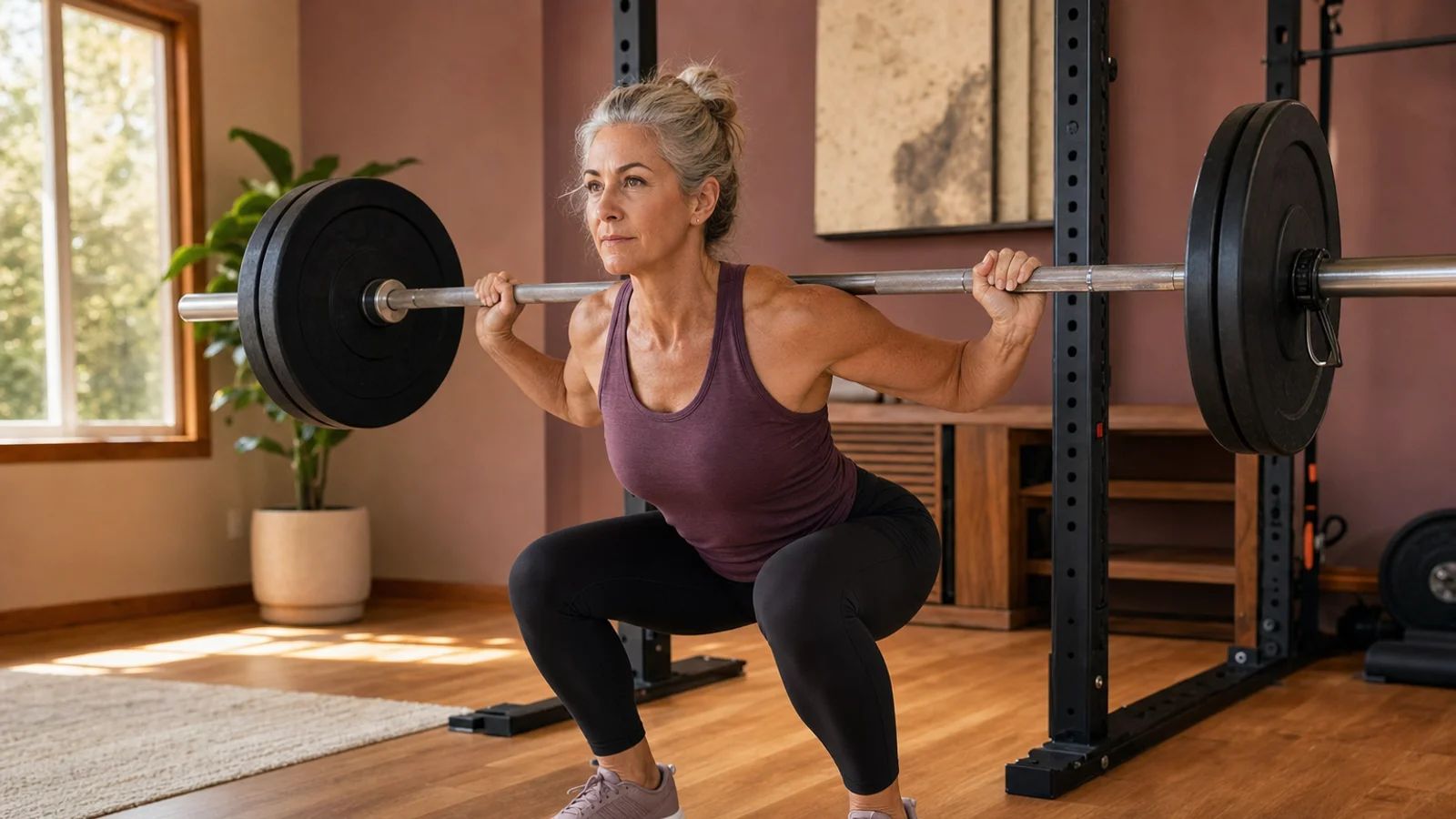
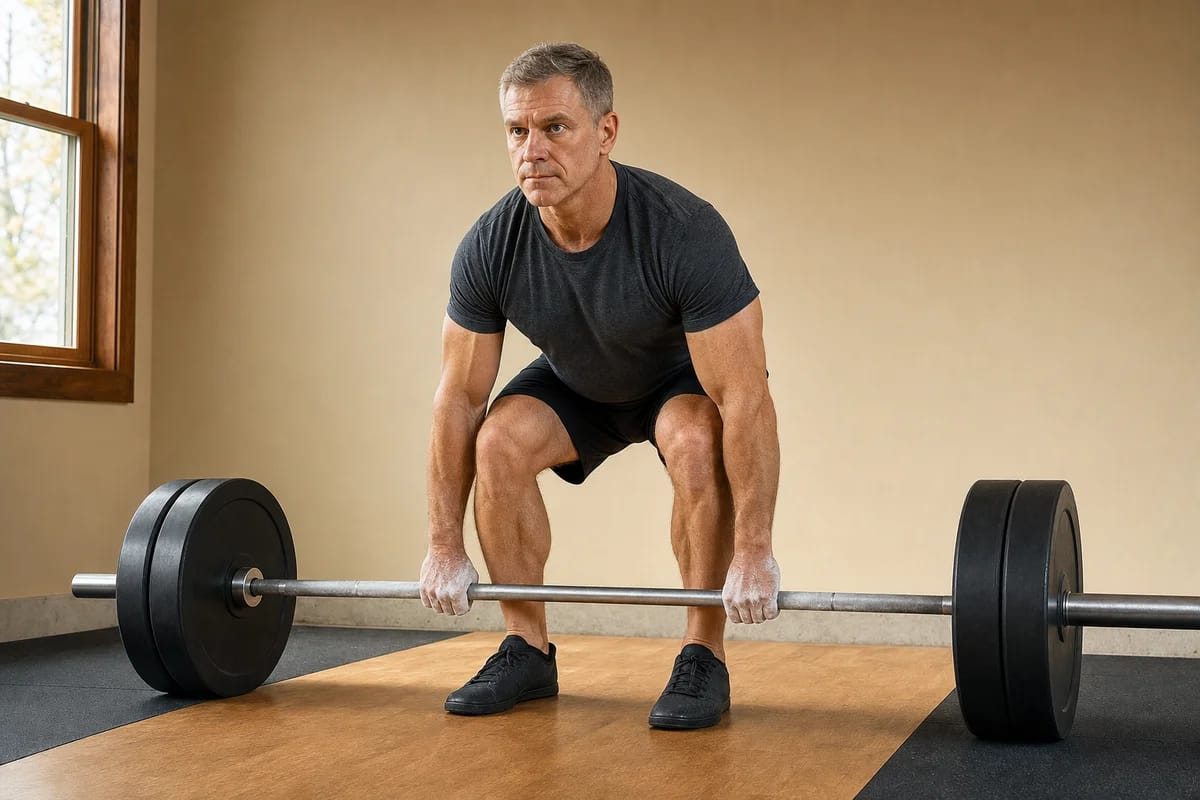
The movements that build bone are the ones that put big, fast strain through the skeleton. Heavy compound lifts do it best: deadlifts, squats, and overhead pressing load the spine and hip directly. Add impact where it's appropriate, jumping, hopping, skipping, since a landing delivers exactly the fast, high strain bone responds to.
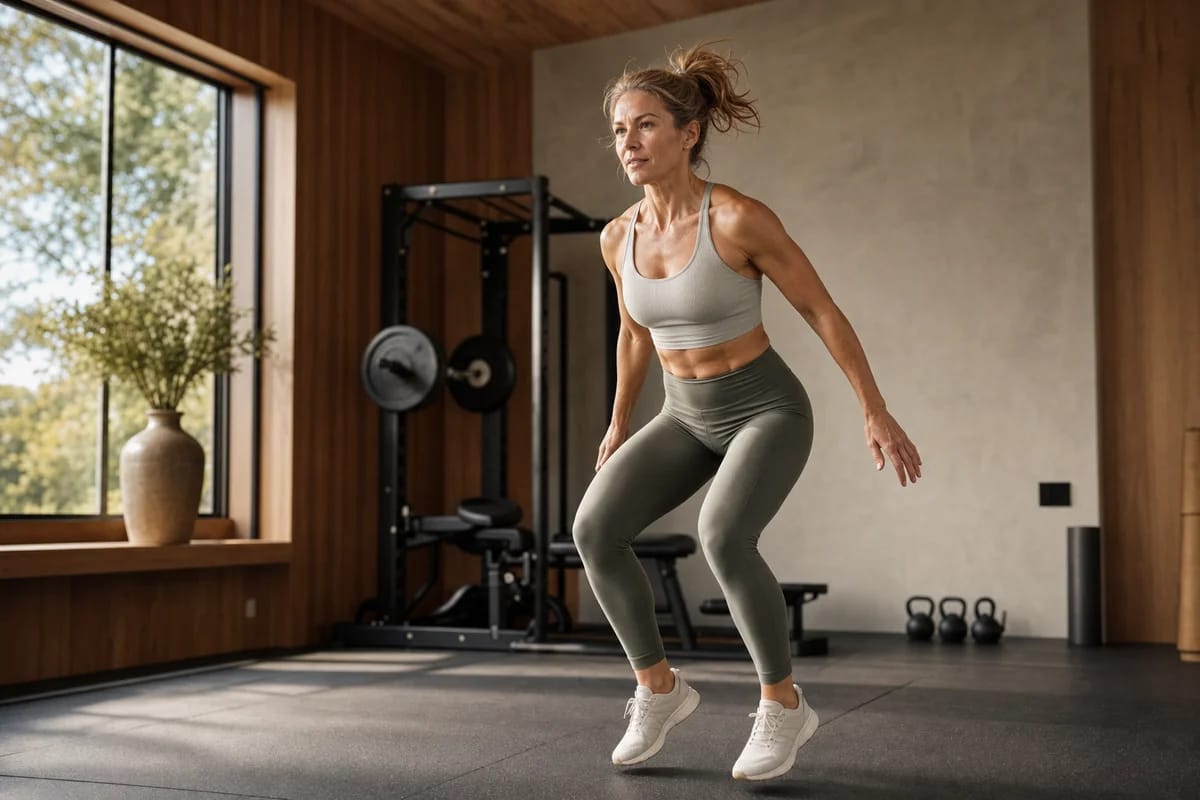
This list overlaps almost completely with the movements that build muscle, and that's not a coincidence. Muscle is an organ that does far more than move you, and every time it contracts hard against a heavy bar, it's pulling on the bone it's attached to.
One detail matters more than the exercise list: LIFTMOR's safety record was genuinely good, one minor back spasm across the entire eight-month program, and that came inside a study where a professional watched every set and corrected technique rep by rep. Heavy lifting near your limit is exactly where a small form error costs the most, and it's exactly where the trial proving this works also proved supervision is what keeps it safe. We've written before about why a coach watches every rep instead of reviewing a video the next day, and loading bone hard is about as clear a case for that as training gets.
If your bone density is already low
LIFTMOR worked with women who had low bone mass, not the more severe end of the spectrum, so its results don't automatically transfer to someone with established osteoporosis or a very different starting point. Individual response varies a lot here.
There's also a real mechanical risk. Loaded spinal flexion, rounding your back forward under weight, raises fracture risk once bone density is already low. That's exactly the kind of error a supervised program is built to catch, and an unsupervised one usually isn't.
None of this replaces medical care. If you've been diagnosed with osteopenia or osteoporosis, training belongs alongside a doctor's plan, not instead of one.
Putting it into practice
- Two strength sessions a week, built on heavy compound lifts, do more for bone than any amount of extra walking.
- Work in a lower rep range with real weight. LIFTMOR used five sets of five at more than 85% of a one-rep max, not high-rep sets with light weight.
- If it's safe for you, add a few short sets of jumping, hopping, or skipping a few times a week. Check with a doctor first if your bone density is already low.
- Get your technique checked before you load heavy, especially anything through the spine. The safety data behind this came from supervised training.
- Judge progress in years, not weeks, and retest bone density on whatever schedule your doctor sets.
Common questions
Does lifting weights actually raise bone density? Yes, under the right conditions. In the LIFTMOR trial, eight months of supervised heavy lifting and impact work raised spine bone density by about 2.9% in postmenopausal women with low bone mass, while a control group lost bone over the same stretch. The effect is real, but it depends on loading hard enough to cross the strain threshold, not just staying active.
Why doesn't walking build bone? Because it doesn't ask enough of your skeleton. Walking sits below the strain threshold that triggers new bone growth, so it maintains what you have without adding to it. It's still worth doing for your heart and your joints. Maintaining and building are just different jobs.
How long before training changes my bone density? Longer than you'd like. Most trials show measurable change over eight months to a few years, not weeks. A hard session triggers a response almost immediately at the cellular level, but turning that into density you'd see on a scan takes sustained months of training.
Is heavy lifting safe with low bone density? It can be, but the safety in the research came from supervision and clean technique, and some movements, loaded forward bending of the spine especially, carry real risk once bone is fragile. If you have osteopenia or osteoporosis, bring in a clinician and a coach before you load heavy.
The part that's hard to do alone
Every number in this piece came from people who trained hard for the better part of a year with someone checking their form the whole time. Take away either piece, the consistency or the supervision, and the LIFTMOR numbers might not hold.
Someone who already owns a barbell, squats and deadlifts with technique a coach has already checked, and has the patience to keep loading hard for a couple of years, can get everywhere this research describes on their own.
For everyone else, that's what our coaches are for. Every strength session at Bespoke Fit is live 1-on-1 video with a real coach who sets the load, watches your setup, and fixes a rounding back before it turns into a problem, then retests your markers over time. Your first month is $49, founding members pay $299 a month locked for life, and there are 25 founding spots left. The how it works page walks through what a session looks like.
Sources
-
Frost, 2003. Bone's mechanostat: a 2003 update. The Anatomical Record. ↩
-
Watson et al., 2018. High-Intensity Resistance and Impact Training Improves Bone Mineral Density and Physical Function in Postmenopausal Women With Osteopenia and Osteoporosis: The LIFTMOR Randomized Controlled Trial. Journal of Bone and Mineral Research. ↩
-
Allison et al., 2015. The Influence of High-Impact Exercise on Cortical and Trabecular Bone Mineral Content and 3D Distribution Across the Proximal Femur in Older Men: A Randomized Controlled Unilateral Intervention. Journal of Bone and Mineral Research. ↩
-
Kohrt et al., 2004. American College of Sports Medicine Position Stand: Physical Activity and Bone Health. Medicine & Science in Sports & Exercise. ↩