Healthspan vs lifespan: training for the gap
Lifespan is how long you live. Healthspan is how long you live well. The gap now averages about 10 years, and it responds to training.
Most longevity advice answers the wrong question. It asks how to add years to the end of your life. The better question is how many of the years you already have will be good ones.
Lifespan is how long you live. Healthspan is how long you live in good health, before chronic disease and disability move in. The space between the two now averages close to a decade, it's wider in rich countries than poor ones, and it's been growing for decades. That decade is where most people spend the end of their life.
Fitness is one of the few things that reliably shrinks it, not by tacking years onto the end, but by pushing back when the sick years start. Here's what the gap looks like, what the evidence says about closing it, and how to build a week of training around it.
The gap is about a decade, and it's growing
Lifespan is easy to measure. You count the years. Healthspan is harder, because "living well" needs a definition, usually years free of disabling disease.
Researchers use a number called healthy life expectancy, or HALE, to get at this. Say life expectancy is 73 and HALE is 63. That 10-year difference is time you're expected to be alive but not healthy. Public health researchers call it the morbidity gap.
The best current estimate pools health data across 204 countries through 2023. It puts the gap at 10.7 years, up from 8.8 in 1990, with people spending about 14.5 percent of their lives in poor health. The gap widened in 203 of those 204 countries.1
That surprises people: the gap is largest in the wealthiest countries, not the poorest. Living longer, on its own, tends to buy more sick years, not fewer. The top drivers are musculoskeletal problems, mental health conditions, sensory decline, and injuries.
Modern medicine has gotten good at keeping people alive through chronic disease and much worse at preventing it. The extra years we've won are disproportionately the frail ones.
Squeezing the bad years into a shorter window
The idea that you could shrink the gap instead of just surviving it isn't new. In 1980, the physician James Fries laid it out in the New England Journal of Medicine, in a paper called "Aging, natural death, and the compression of morbidity."2
His logic: there's probably a rough biological ceiling on how long humans live. If that ceiling is fixed, the only way to spend less of your life sick is to push the onset of chronic illness closer to the end. Delay the first heart attack, the first fall, the first year you can't manage the stairs, until they land near the finish line instead of a decade before it. The sick period gets squeezed into a shorter window. Researchers call this compression of morbidity.

The alternative, and the one the global data suggests is winning right now, is expansion of morbidity. We push death back but disease onset stays where it was, so the sick stretch just gets longer.
Adding years is only a good deal if they're good years. Compression is the bet that you die healthy after a short decline, instead of spending your final decade slowly losing function.
The four things that keep you independent
Independence isn't one skill. It's a set of everyday tasks, and each one has a physical threshold you have to clear. Drop below it and the task quietly becomes impossible. That's when disability starts. Break it into four reserves.
Aerobic capacity is your engine for sustained effort: walking to the shops, carrying luggage up a flight of stairs, keeping up with grandchildren. It also predicts how long you live better than almost any other single number, which we go into in why VO2 max predicts how long you will live.
Leg power, force produced quickly, is what gets you off a low couch, up a curb, and up off the floor. It fades faster than plain strength as you age, and it's the reserve that catches you when you trip. We covered why it beats raw strength for this in fall-proofing, why power matters more than strength.
Strength is your absolute force reserve. More of it means every daily task uses a smaller slice of your maximum, so a heavy bag of groceries stays light and safe.
Balance is the skill that prevents the single event most likely to end an older person's independence overnight: a fall that breaks a hip. It declines quietly, often before anyone notices, and it responds to practice like anything else.
You don't lose independence all at once. You lose it one threshold at a time, and each of these four reserves is one you can raise years before you'd otherwise cross it the wrong way.
Does training actually deliver this
This is the claim that matters, and the evidence leans strongly toward yes.
Start with the observational side. Researchers tracked 538 members of a running club and 423 healthy non-runners, all 50 and older, for 21 years (Archives of Internal Medicine, 2008).3 The runners carried consistently lower disability scores throughout the study, 0.17 versus 0.36 on the scale used. By year 19, 15 percent of the runners had died, against 34 percent of the non-runners. The telling detail is that the disability gap between the two groups didn't shrink as everyone aged. It widened, all the way into the ninth decade. The fit group stayed functional later and declined faster right at the end, which is compression of morbidity showing up on a graph.
That study is observational, so pair it with a trial. In 2014, JAMA published a randomized trial of 1,635 sedentary adults aged 70 to 89.4 Half were assigned a structured program of walking plus resistance and balance work; half got health education instead. Over about 2.6 years, the exercise group had significantly less major mobility disability, a hazard ratio of 0.82, and persistent mobility disability fell further, to a hazard ratio of 0.72. Because people were randomly assigned rather than self-selected, this is stronger evidence that the training itself caused the protection, not just that healthier people happen to exercise more.
Fit people don't just outlive unfit people. They spend a smaller share of their lives disabled, and at least some of that is the training doing the work.
A week built for healthspan
If lifespan were the only goal, you could make a decent case for pouring everything into aerobic fitness. Healthspan changes the math, because independence needs all four reserves and they don't cover for each other. Cardio does almost nothing for the leg power that gets you off the floor, and lifting does little for the aerobic base that gets you up a hill.
So a healthspan week is a portfolio, not a single bet:
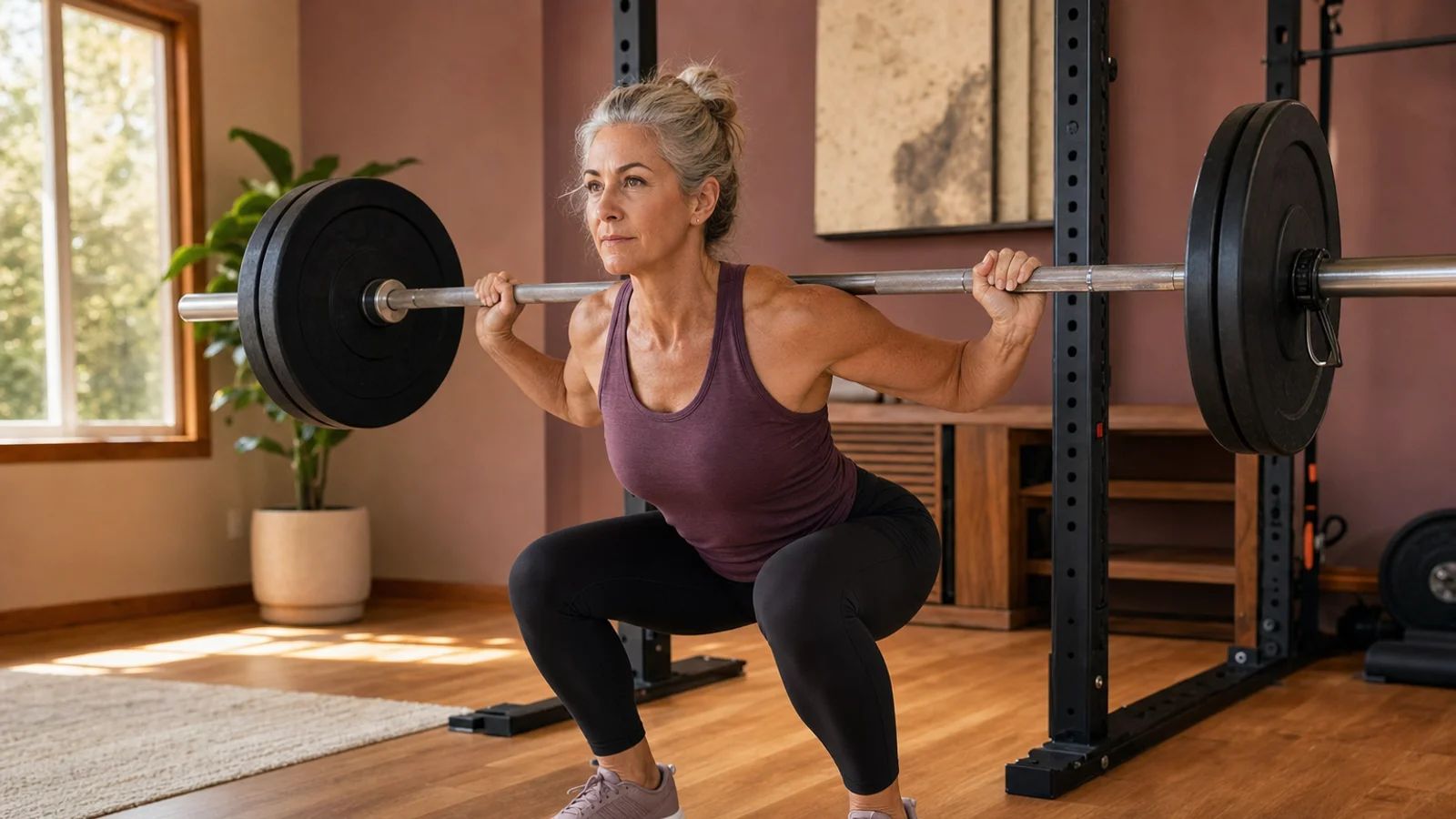
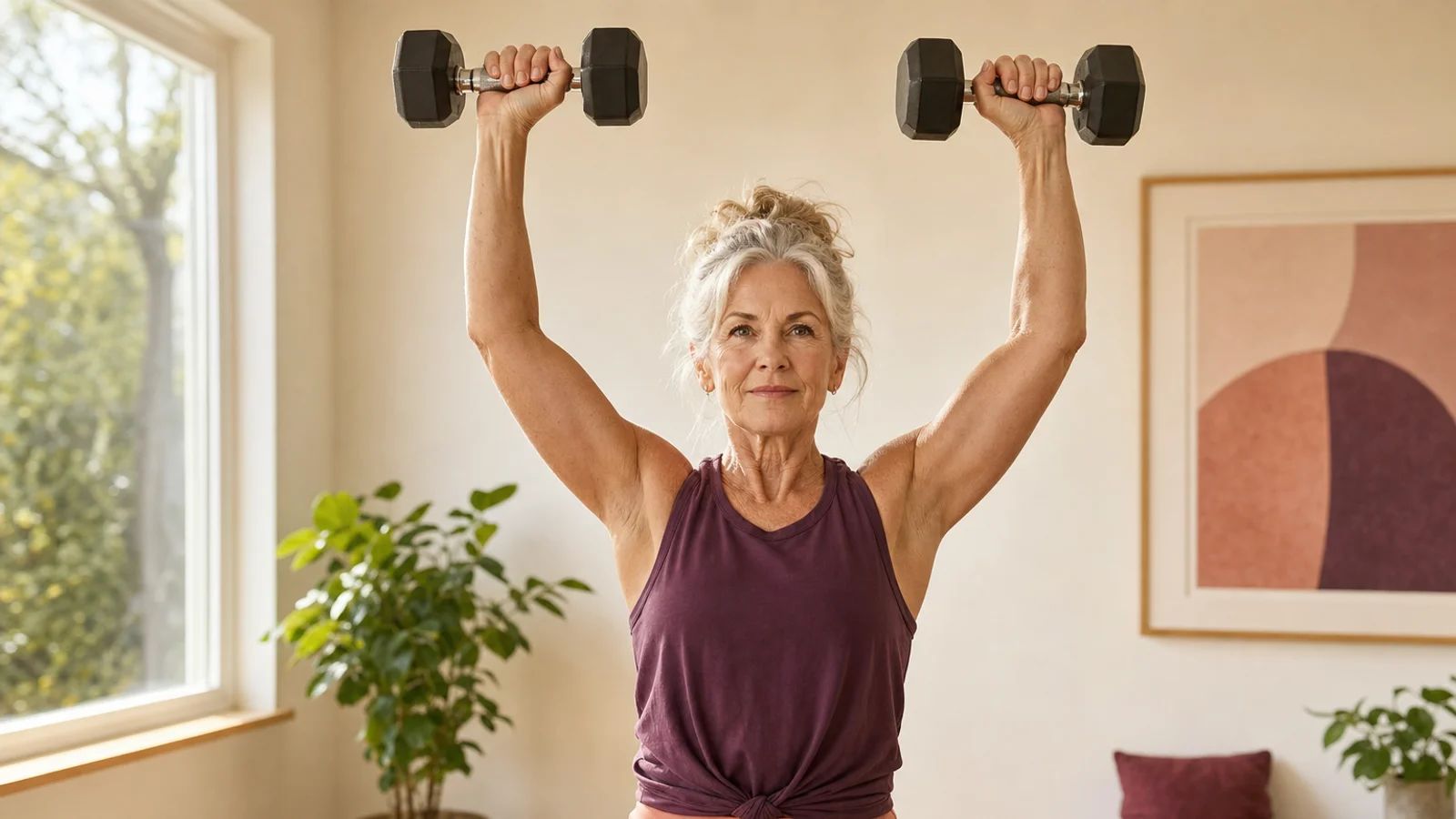
- Two full-body strength sessions, to build the force reserve that makes every daily task easier and protects bone.
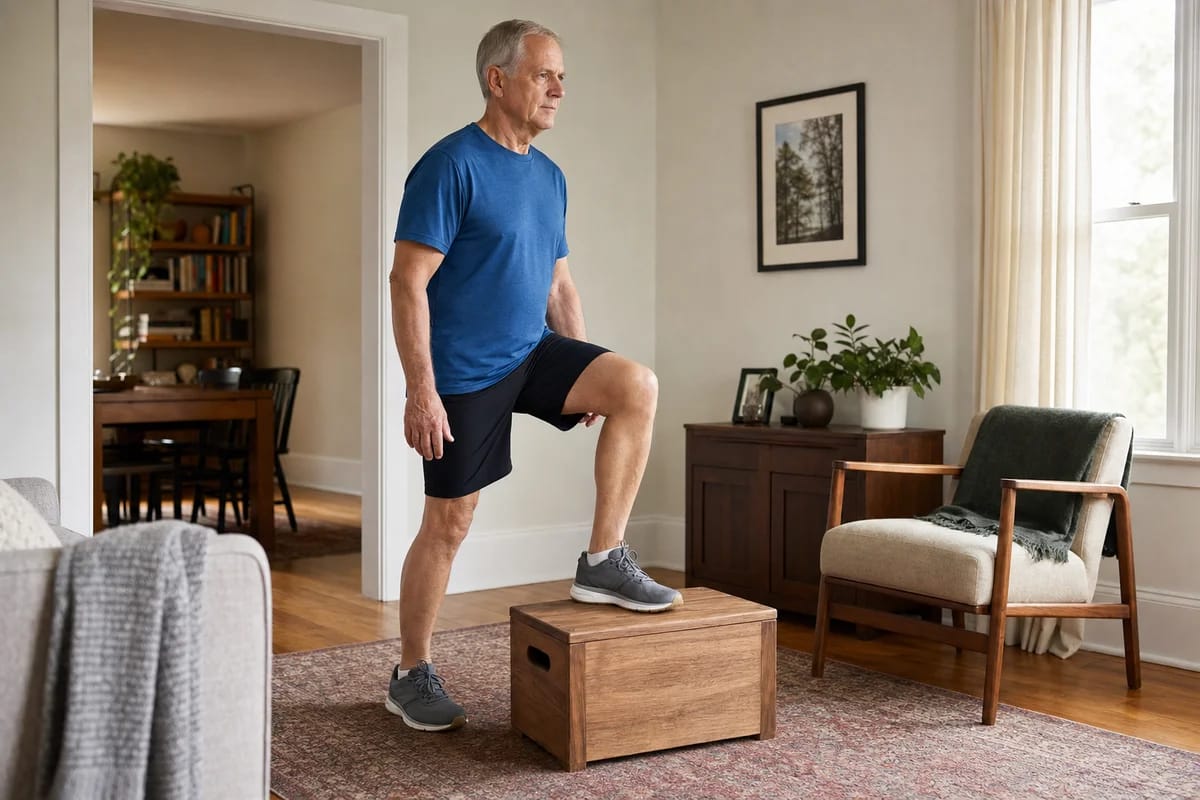
- A few sets of fast, powerful movement, step-ups, jumps, explosive sit-to-stands, to train the reserve that catches falls before they happen.
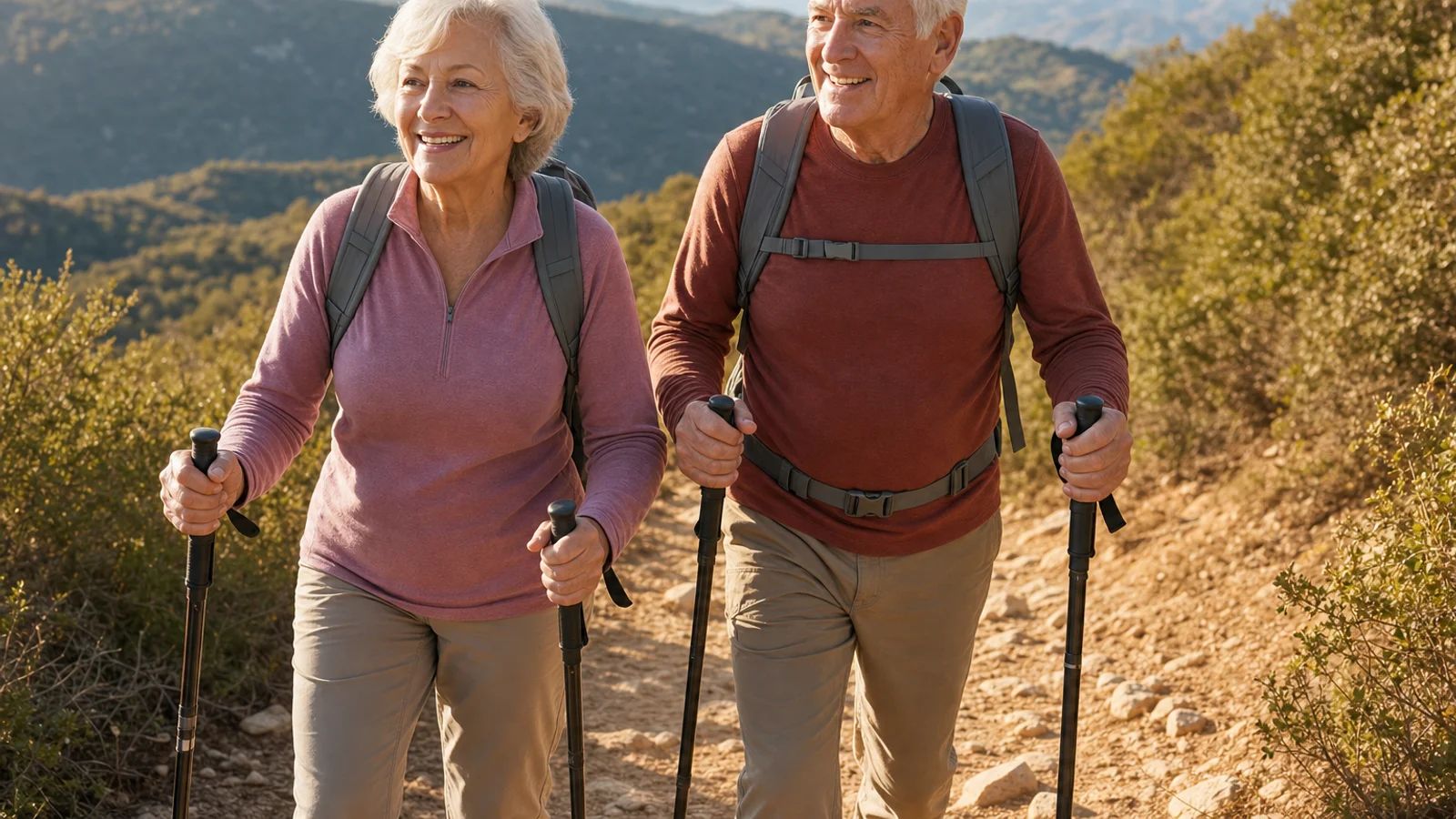
- An aerobic base most weeks (30 to 45 minutes at a conversational pace), with the odd harder session layered in.
- A couple of minutes of balance practice most days. Single-leg stands while you brush your teeth count.
That's the same logic behind planning your training backward from the person you want to be at 90, which we walk through in backcasting your training from age 90.
Track function once in a while too, not just weight or step count. Time yourself rising from a chair five times. See how long you can hold a single-leg stand. Both are cheap proxies for the reserves above, and both tend to move well before anything shows up on a scale.
Cardio alone might buy you years. It won't get you up off the floor.
Where the evidence gets thin
Healthspan is genuinely harder to measure than lifespan. Death is a fact. Healthy is a definition, and different studies draw the line differently, so the exact size of the gap moves depending on the method used.
Most of the strongest fitness-and-disability evidence is observational. Fit people differ from unfit people in dozens of ways a statistical model can't fully untangle, and reverse causation is a real worry: some people move less because an illness is already starting. The LIFE trial helps here, since random assignment cuts through that problem, but it only ran for under three years in people already in their 70s and 80s. It can't tell you what a lifetime of training does.
The compression-of-morbidity idea itself is supported but still debated. At the population level, the global gap is widening, which runs the opposite direction, even while fit individuals within those populations seem to compress their own decline. The fair summary: training reliably improves function and lowers disability risk. Whether it neatly squeezes your personal decline into a short final window is likely, not proven.
Common questions
Is healthspan or lifespan more important? For most people, healthspan. Extra years spent unable to climb stairs or live alone rarely feel like a win. The training that lengthens healthspan tends to lengthen lifespan too, so you're usually not choosing between them.
Can you really shrink the years you spend disabled? The evidence says you can improve function and lower your disability risk at any age, and fit people spend proportionally less of their lives disabled. Whether that perfectly compresses your personal decline into a short window is the part still being debated, but the direction is clear and the downside of trying is close to zero.
Isn't cardio enough for a long, healthy life? Cardio is the strongest single predictor of how long you'll live, but it doesn't build the leg power that gets you off the floor or the balance that prevents a hip fracture. Healthspan needs strength and power too.
When should I start training for healthspan? Now, whatever your age. Muscle, power, and aerobic capacity all respond to training into your 70s and beyond, the way the LIFE trial showed in people aged 70 to 89. Earlier is better, since you bank more reserve, but it's never too late to start.
What coaching adds to the recipe
The mistake most people make isn't skipping the gym. It's aiming for healthspan and quietly drifting into cardio only, because cardio is the easiest habit to build and the one that feels most obviously virtuous.
At Bespoke Fit, your coach programs the full portfolio, strength, power, aerobic base, and balance, weighted for where you actually are. They watch your power and balance work live, over video, so the fast reps get done at the right speed instead of turning into a knee injury. They retest your markers on camera so you can see the reserve actually rising, not just guess at it. Your first month is $49, and founding members lock in $299 a month for life, with 25 spots and a 30-day money-back guarantee. See how it works or the full pricing.
Sources
-
Hay SI, et al., 2026. Global, regional, and national trends in the morbidity gap and contributing diseases, injuries, and risk factors, 1990-2023: a systematic analysis for the Global Burden of Disease Study 2023. The Lancet Public Health. ↩
-
Fries JF, 1980. Aging, natural death, and the compression of morbidity. The New England Journal of Medicine. ↩
-
Chakravarty EF, Hubert HB, Lingala VB, Fries JF, 2008. Reduced disability and mortality among aging runners: a 21-year longitudinal study. Archives of Internal Medicine. ↩
-
Pahor M, et al., 2014. Effect of structured physical activity on prevention of major mobility disability in older adults: the LIFE study randomized clinical trial. JAMA. ↩