Fall-proofing: why power matters more than strength
Your one-rep max won't save you from a trip, how fast you can make force will. Why muscle power, not maximal strength, protects against falls with age.
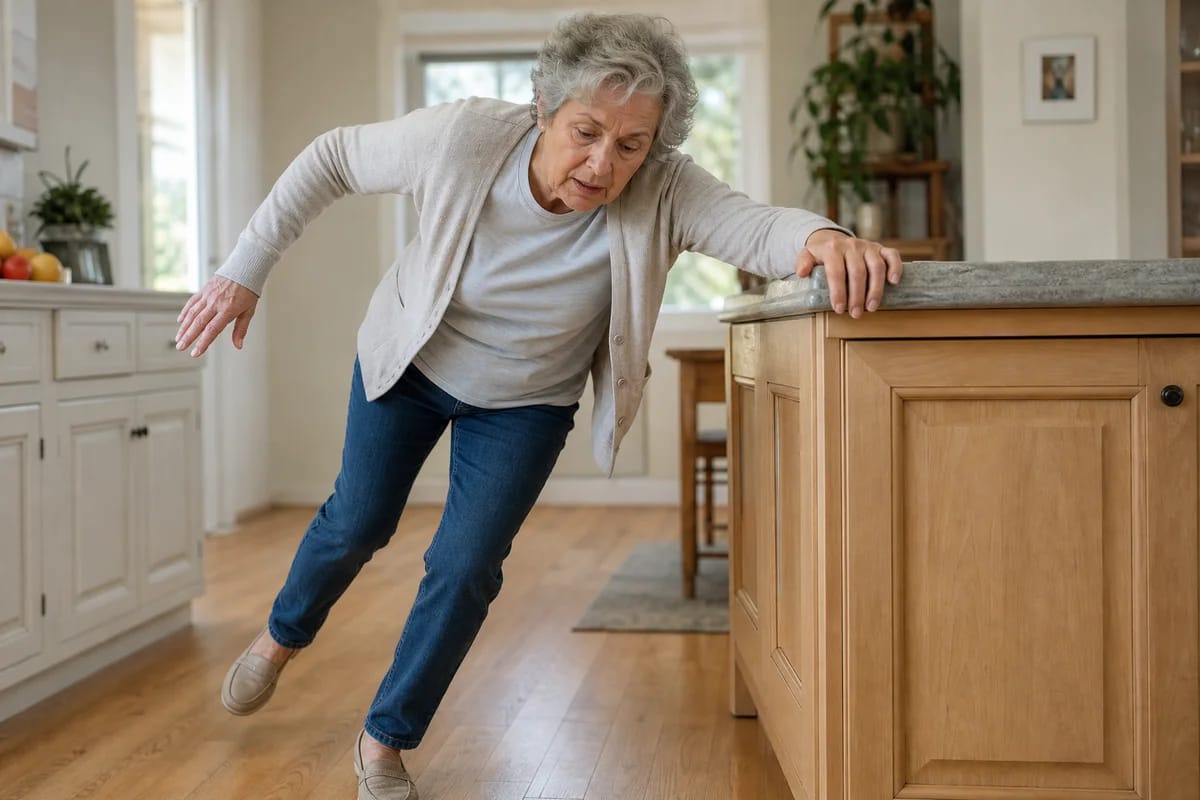
Your foot catches the edge of a rug and you get about half a second to keep yourself off the floor. That's not enough time to grind out a heavy lift. It's barely enough time to fire your leg and shove the ground away.
Whether you catch yourself has almost nothing to do with your one-rep max, the number you'd chase in a gym. It comes down to how fast your muscles can produce force, not how much force they can eventually reach. That quality is called power, and it's a different thing from strength. It also fades roughly twice as fast with age, which makes it the training gap almost nobody over 50 is filling.
What actually catches you when you trip
Muscles don't hit peak force the moment you ask them to. Force ramps up over a stretch of time, and reaching your true max takes longer than a stumble gives you. Researchers call the early part of that ramp rate of force development: how much force you can produce in the first fraction of a second, usually measured across the first 50 to 200 milliseconds. It tracks real-world walking speed far better than your peak strength number does.
The clearest look at what actually happens mid-trip comes from a 2005 study in the Journal of Biomechanics. Researchers tripped 12 adults mid-stride and found the standing leg fired within about 65 milliseconds and drove a push-off through the ankle of over 200 newton-metres to arrest the fall.1 The whole recovery was over in well under a second.
Your one-rep max plays out on a completely different clock. It's the peak of a slow, all-out effort with all the time in the world to build, and a trip never gives you that time. Strength is how big your engine is. Power is how fast it revs, and in a stumble, revs win.
Why power fades before strength does
Strength and power run on different muscle machinery, and aging hits power's machinery first.
One tracking study followed 100 healthy adults aged 65 to 89 and found isometric strength fell by roughly 1 to 2 percent a year, while leg power dropped by about 3.5 percent a year, close to double the rate.2
The reason lives inside the muscle fiber itself. You've got slow fibers built for endurance and fast fibers built for quick, forceful contractions. Power depends on the fast ones, and they're the first to waste away. A separate study comparing 25 young men with 26 men around 71 found the fast, type II fibers were about 29 percent smaller in the older group, while the slow fibers were largely untouched.3
Aging doesn't shrink your muscles evenly. The fast fibers go first, and they're exactly the ones that catch a fall.
How big the fall risk actually is
The World Health Organization estimates about 684,000 people die from falls every year worldwide, the second leading cause of death from unintentional injury. Another 37.3 million falls a year are serious enough to need medical care, and adults over 60 account for most of the fatal ones.4
Most falls are survived, so this isn't a scare story. It's about odds shifting while you're not looking. Falls get more likely and more costly as you get older, and power, the exact quality that prevents a lot of them, drains away in the background the whole time. You'd notice a strength plateau. You probably won't notice power leaving the same way. That's the case for training it before you need it.
Does training for power actually help?
Yes, for the parts researchers can measure directly. Nobody has proven it stops falls in a clean, controlled trial, and that gap is worth being honest about.
Start with what's solid. A review pooling 15 trials and 583 older adults found power training built more muscle power than traditional slow strength work, and it also improved speed-based tests like getting up out of a chair and moving.5 That's the exact machinery a trip recovery depends on, getting force out fast, not just having more of it eventually.
The harder claim to prove is the last step: that more power actually means fewer real-world falls. Counting falls accurately over years is difficult, so that link is still more inference than proof. It's not universal either. One large comparison found power training and regular resistance training worked about equally well for function, with only a small edge to power that wasn't statistically significant.6 Both approaches help. Add the fast version because it targets the exact machinery a trip uses, not because slow lifting stopped working.
How to train it without jumping
Power sounds like box jumps and burpees. It doesn't have to be, and if you're over 50 it probably shouldn't start there.
What actually builds power is intent: trying to move a load fast, even a light one. Your nervous system learns to fire quickly whether or not you ever leave the ground.
A few ways to build it without any impact:
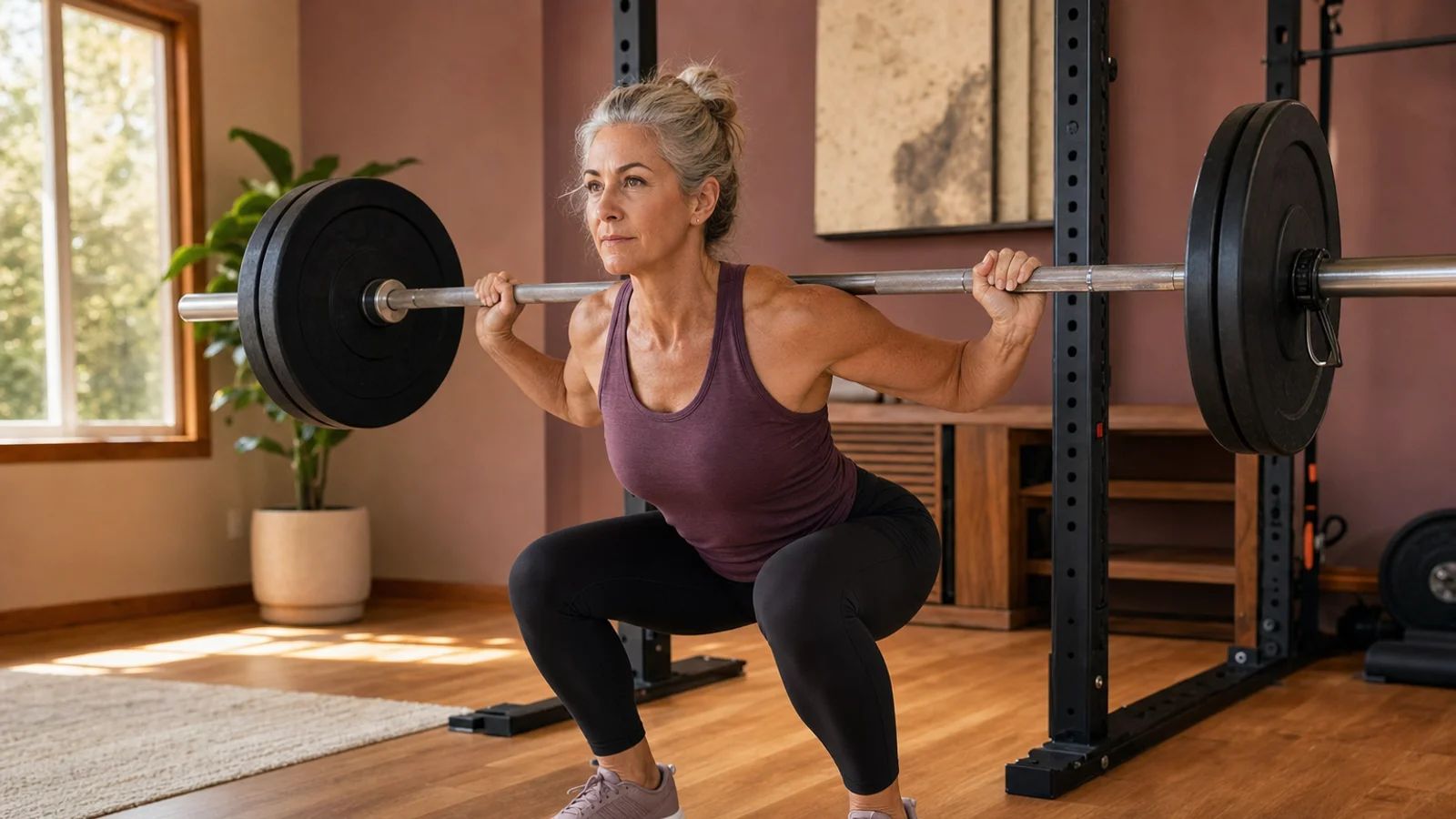
- Fast concentric lifts. Pick a manageable weight, about 40 to 60 percent of your max, and push, press, or stand it up as fast as you can, then lower it slowly. The intent to accelerate is what trains speed, even when the weight itself doesn't move fast.
- Sit-to-stand for speed. Stand up out of a chair as quickly as you safely can, then sit back down slowly. It's the closest gym move to actually righting yourself.
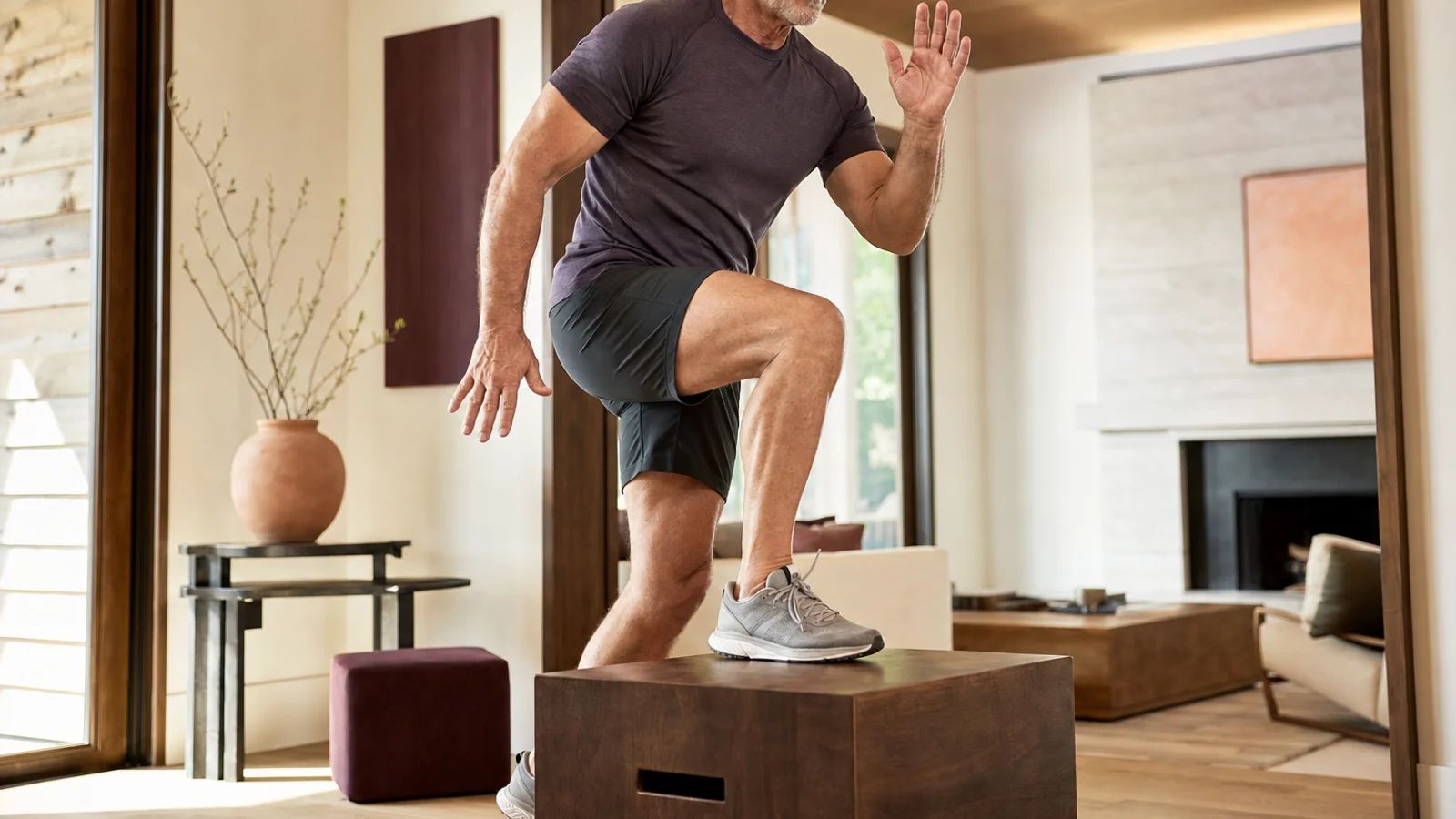
- Fast step-ups. Step onto a low box or stair, driving up hard and quick through the working leg.
- Medicine ball throws. Throwing lets you hit real speed and then release the load, so your joints never absorb a hard landing. It's one of the safest ways to train genuine power.
Learn each movement slowly first. Speed just magnifies whatever technique you already have, good or bad.
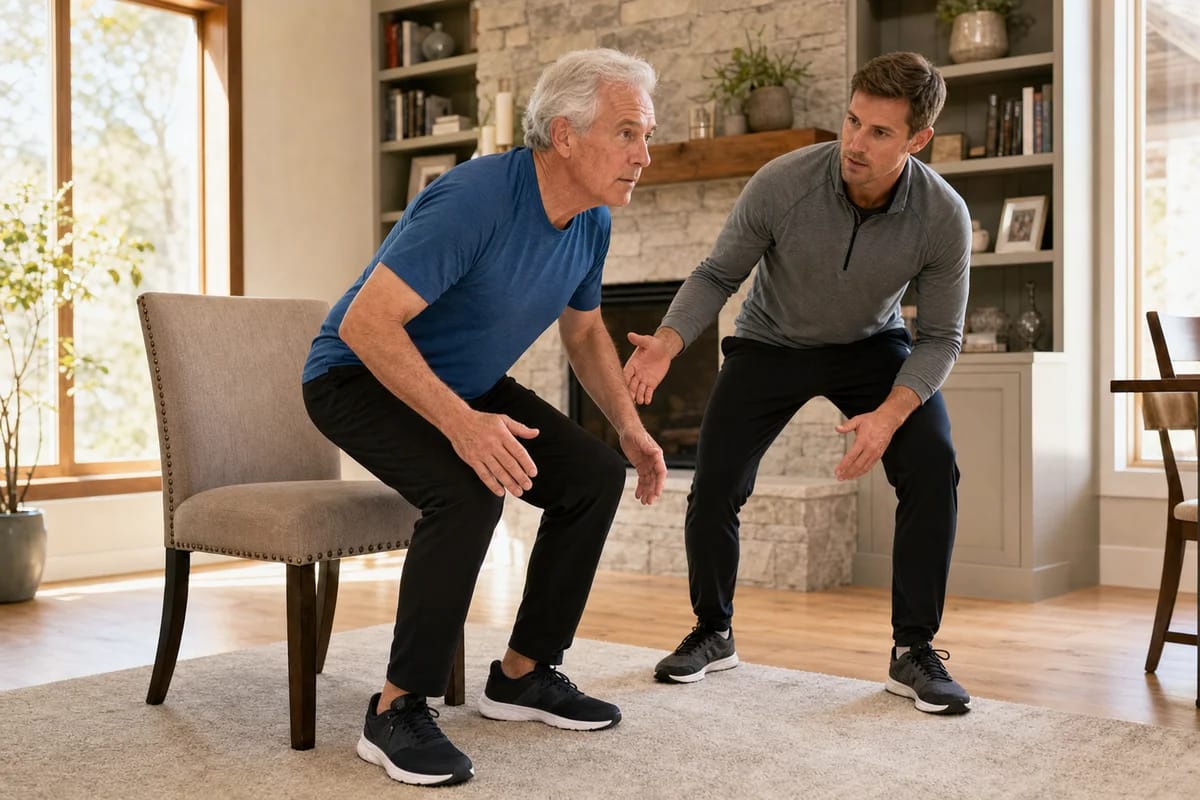
A simple way to start: two short power sessions a week. Use light-to-moderate loads for 3 to 4 sets of 6 to 10 reps, moving the lifting phase as fast as you can and lowering under control. Add sit-to-stand for speed too, as many fast, safe stand-ups as you can manage in 30 seconds, 2 to 3 rounds. It maps directly onto the movement that catches a trip.
Common questions
Is power training safe in your 70s? Yes, if it's scaled sensibly. Light loads moved with intent, medicine ball throws, and fast sit-to-stands train speed without jumping or heavy impact. Good technique matters most early on, which is a good reason to have someone watch your first few sessions.
Do you have to jump to train power? No. Jumping is one way to express power, but for most people past 50 it's neither necessary nor the best place to start. Moving a moderate weight fast, or throwing a ball, trains the same fast-firing quality with far less stress on your joints.
I've already lost a lot of power. Is it too late to get it back? No. The same fiber study that found smaller fast-twitch fibers in older men also found resistance training grew those fibers back by about 24 percent. The fibers that drive power respond to training well into old age.
How is training for power different from just lifting faster? It's the load and the intent together. You pick a lighter weight so you can actually accelerate it, aim for maximum speed on the way up, and rest enough that every rep stays fast instead of fatigued. Grinding a heavy weight slowly is strength work, not power work.
What's the actual difference between strength and power? Strength is the most force you can eventually produce, no matter how long it takes to get there. Power is how much force you can produce quickly. You can be strong and slow, and for catching yourself mid-trip, slow doesn't help.
The one thing you can't watch yourself do
Power is where technique matters most, because speed makes bad form obvious fast. A rep that's a touch too quick for your control, or a knee that caves on the way up, either builds the reflex that catches you or grooves the exact fault that causes a fall.
That's the part a live coach watches for. Every session at Bespoke Fit is 1-on-1 HD video with a real coach, never AI, who watches your velocity and landing mechanics on each rep, adjusts the load and tempo based on what they see, then retests your numbers over the weeks to check power is climbing. It's the same logic behind how it works, and it connects to the bigger case for training muscle at all, in muscle is an organ, what it does beyond moving you. Your first month is $49, founding members lock in $299 a month for life, and there are 25 founding spots.
Ask yourself this before deciding whether you need a second pair of eyes: when you add speed to a lift, would you actually catch your own knee caving in, or your form breaking down as you tire? If yes, a dumbbell, a sturdy chair, a medicine ball, and two fast sessions a week will get you there. If you're not sure you'd catch it, that's the gap coaching closes.
Sources
-
Pijnappels M, Bobbert MF, van Dieën JH, 2005. How early reactions in the support limb contribute to balance recovery after tripping. Journal of Biomechanics. ↩
-
Skelton DA, Greig CA, Davies JM, Young A, 1994. Strength, power and related functional ability of healthy people aged 65-89 years. Age and Ageing. ↩
-
Nilwik R, Snijders T, Leenders M, Groen BB, van Kranenburg J, Verdijk LB, van Loon LJ, 2013. The decline in skeletal muscle mass with aging is mainly attributed to a reduction in type II muscle fiber size. Experimental Gerontology. ↩
-
El Hadouchi M, Kiers H, de Vries R, Veenhof C, van Dieën J, 2022. Effectiveness of power training compared to strength training in older adults: a systematic review and meta-analysis. European Review of Aging and Physical Activity. ↩
-
Sklivas AB, Robinson LE, Uhl TL, Dupont-Versteegden EE, Mayer KP, 2022. Efficacy of power training to improve physical function in individuals diagnosed with frailty and chronic disease: a meta-analysis. Physiological Reports. ↩