Zone 2 and strength, a longevity week
VO2 max and strength predict lifespan better than almost anything we can measure. Here's a simple weekly plan that trains both, and why it works.
Updated

Six sessions, two ingredients, one day genuinely off. Three strength sessions and three easy cardio sessions a week, repeated for years. That's the whole plan.
It looks thin next to most programs, and that's deliberate. Most plans are built to change how you look by summer. This one answers a different question: will you still be able to hike, carry your own bags, and get up off the floor without help at 80?
If that's the goal, variety stops being useful. Two things you do every week beat nine things you do in bursts. Below is how we lay the week out for members training for longevity, and why those two things earn the hours. It's the same structure I train on myself.
Six sessions and a real day off
- Monday: lower body strength, live with your coach
- Tuesday: zone 2, about 40 minutes, on your own
- Wednesday: upper body strength, live
- Thursday: zone 2, on your own
- Friday: full body strength, live
- Saturday: zone 2, or a long walk with real hills
- Sunday: off, actually off
There's no mobility day, and that's on purpose. Mobility goes into the warm-up of every strength session instead, because almost nobody sustains a seventh training block. A plan you'll follow beats a prettier plan you quit in week three. If you want the fuller version, with intervals and balance work in it, that's the five-system week.
The structure scales to any starting point. In week one, Monday might be bodyweight squats to a chair and Tuesday might be a brisk 25-minute walk. Only the load changes, and it grows with you.
Why just these two things
If you could know only two things about a stranger and had to bet on how long they'll live, you'd want their VO2 max and their strength.
VO2 max is how much oxygen your body can use when you're working hard. It's the size of your engine. In a JAMA Network study of about 122,000 patients, the gap in death rates between the least fit people and the fittest was bigger than the gap between smokers and non-smokers.1 Sit with that one. In that dataset, being very unfit looked worse than smoking.
Strength shows the same pattern. Grip strength, of all things, tracks mortality closely across very large studies. Not because squeezing things keeps you alive. Grip is a cheap stand-in for how much muscle you're carrying, and muscle matters more than most people think.
Neither number is fixed. Both respond to training at any age, including your seventies and beyond.
It's worth knowing what kind of evidence this is. These are observational studies, not trials. Fit, strong people differ from unfit people in plenty of ways researchers can't fully account for, so some of that gap belongs to the rest of their lives. What survives the objection is the direction, which shows up study after study, and the fact that both numbers move when you train them.
How easy should the easy days be?
Zone 2 is an effort where you can hold a conversation but would rather not. Full sentences are possible. They're just mildly annoying. If you're gasping, you've gone past it. If you could chat happily for an hour, you're under it. That talk test is close enough to start with, no heart rate strap required, and there's more on finding the pace here.
Why that specific effort? It's the best stimulus we know of for building mitochondria, the little structures in your cells that turn food and oxygen into energy. More of them and you burn fat more easily, handle blood sugar better, and recover faster from everything else in the week.
It also builds a reserve you'll want later. VO2 max drops roughly 10 percent per decade once you're past your thirties, and the slide gets steeper after that.2 Whether you can climb a long flight of stairs at 80 without stopping mostly comes down to how much aerobic capacity you banked in the decades before. Zone 2 is how you make the deposits. Cheap, boring, and it adds up.
In practice: 30 to 45 minutes on a bike, a treadmill at an incline, a rower, or an easy jog. Three of those is about two hours a week. We went through how that dose compares to doing more separately.
Muscle does three jobs nothing else can
Every coach on our team reads Peter Attia's Outlive before their first member session. The line that sticks hardest is that muscle is the organ of longevity. An organ, doing work nothing else in your body can take over.
The first job is storing sugar. Muscle is your biggest glucose sink, so when you eat carbs, trained muscle pulls that sugar out of your blood. Carry less muscle and the sugar hangs around longer, which is the road toward insulin resistance and type 2 diabetes.
The second is storing protein. When you're seriously ill or recovering from surgery, your body breaks muscle down to feed the immune system and repair tissue. Someone who arrives at a hospital stay with more muscle has more to spend. It's a savings account you hope you never touch.
The third is catching you when you trip. The fast-twitch fibers that fire when you stumble are the first ones to go with age, which is a lot of why falls get so dangerous later on. Hip fractures past 70 are deadlier than most people assume, with studies putting one-year mortality somewhere around 20 to 30 percent.3
And the default is a slow leak. From your thirties on, you lose roughly 3 to 8 percent of your muscle per decade if you don't train it.4 Somewhere in there, strength work stops being about how you look. It's maintenance on an organ.
Strength gets a coach, zone 2 doesn't
Not every session needs somebody watching.
Zone 2 doesn't. It's steady, it's simple, and it's hard to do dangerously wrong. So we program it, you do it when it fits your day, and your coach checks that it happened and how it felt. Paying someone to watch you pedal at a conversational pace would be a waste of your money.
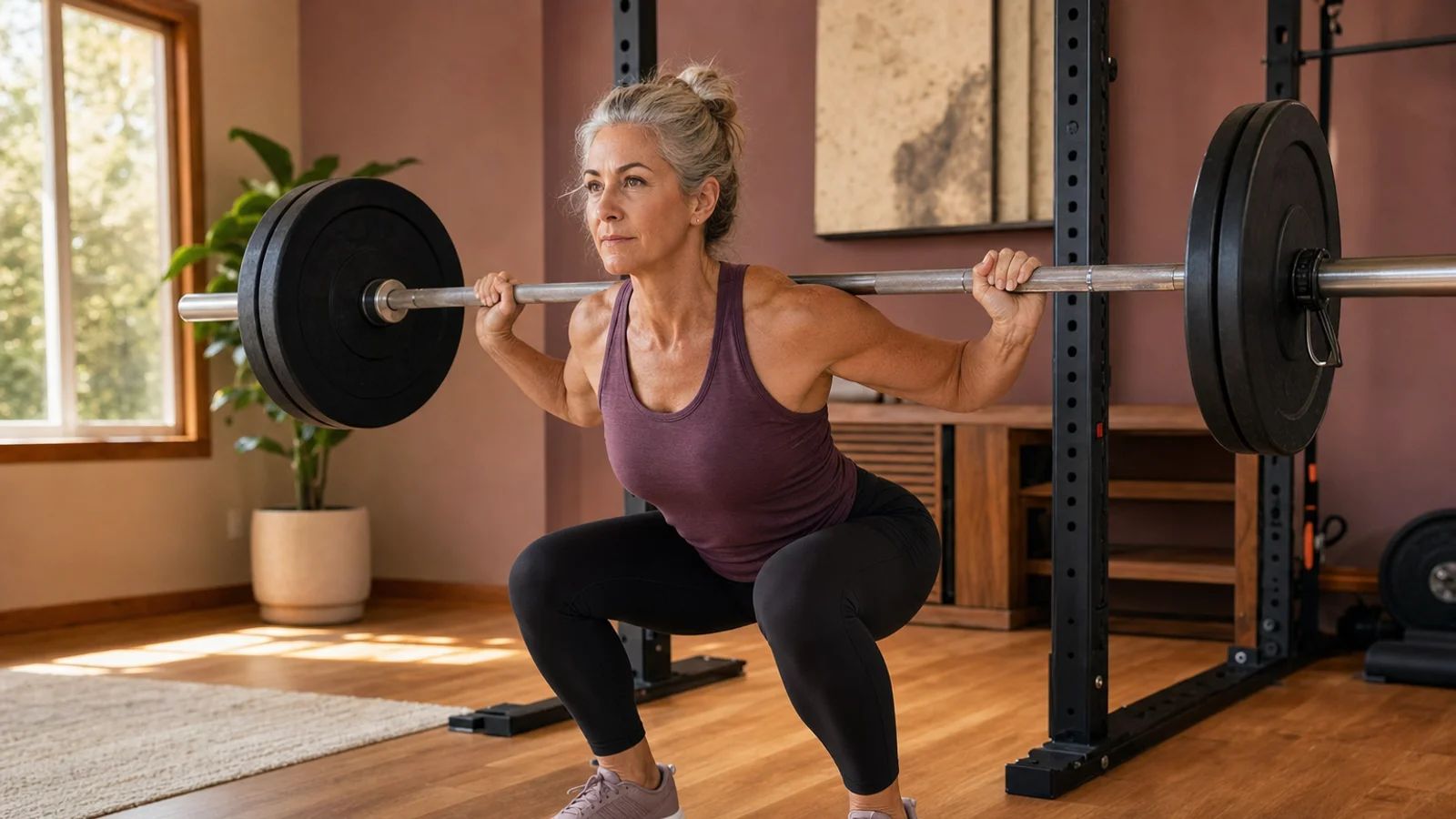
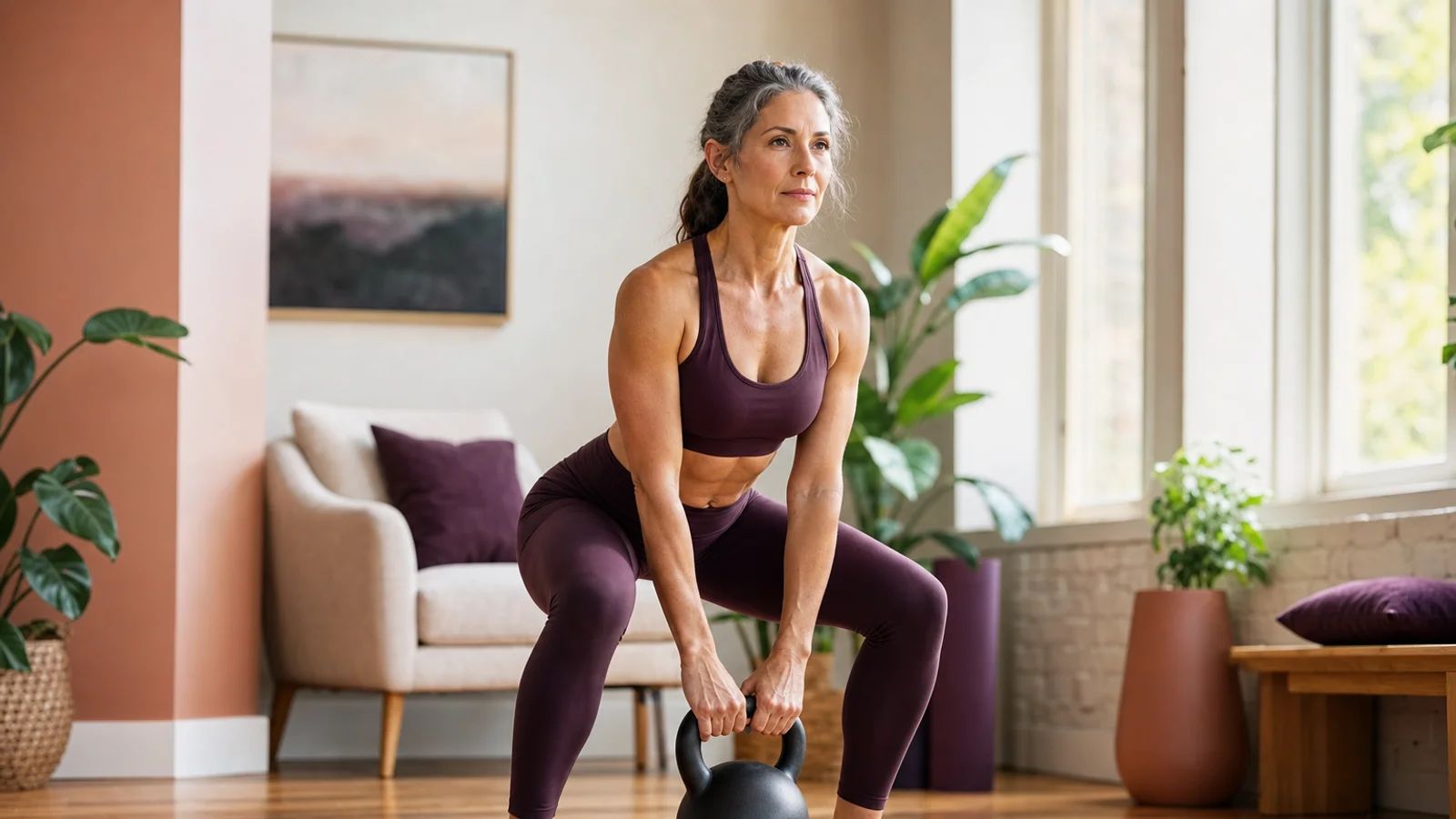
Strength is a different animal. Load, depth, back position, tempo, when to add weight and when to back off. Those get fixed in the moment, while the rep is happening, and that's what changes the outcome over months and years. So every strength session at Bespoke Fit is a live 1-on-1 video session with a real coach who knows your history. How the sessions run covers the setup, and you can meet the coaches who do them.
Two ingredients and a calendar
That combination gets the job done on its own. Somewhere to ride or walk uphill, something heavy to pick up, and the patience to repeat the same week for years is the whole prescription. It doesn't need an app or a subscription.
What we sell is the harder half: a real coach on the screen for every strength session, adjusting the load while the set is happening, and an appointment that gets you there on the days you'd rather skip. Your first month is $49. After that, founding members pay $299 a month, locked for life, with unlimited live sessions. There are 25 founding spots and a 30-day money-back guarantee if it turns out not to be for you. The pricing page has the rest.
Either way, pick a week that trains your engine and your muscle, then repeat it for years. Those two numbers are the closest thing we have to a bet on your future self, and both are still in your hands.
Sources
-
Mandsager and colleagues, 2018. Association of Cardiorespiratory Fitness With Long-term Mortality Among Adults Undergoing Exercise Treadmill Testing. JAMA Network Open. ↩
-
Hawkins and Wiswell, 2003. Rate and mechanism of maximal oxygen consumption decline with aging: implications for exercise training. Sports Medicine. ↩
-
Panula and colleagues, 2011. Mortality and cause of death in hip fracture patients aged 65 or older: a population-based study. BMC Musculoskeletal Disorders. ↩
-
Volpi, Nazemi, and Fujita, 2004. Muscle tissue changes with aging. Current Opinion in Clinical Nutrition and Metabolic Care. ↩