How many hours of zone 2 a week actually move the needle
The mortality data has a clear shape: big gains in the first hours, a plateau near 300 minutes a week. Here's how much zone 2 you actually need.
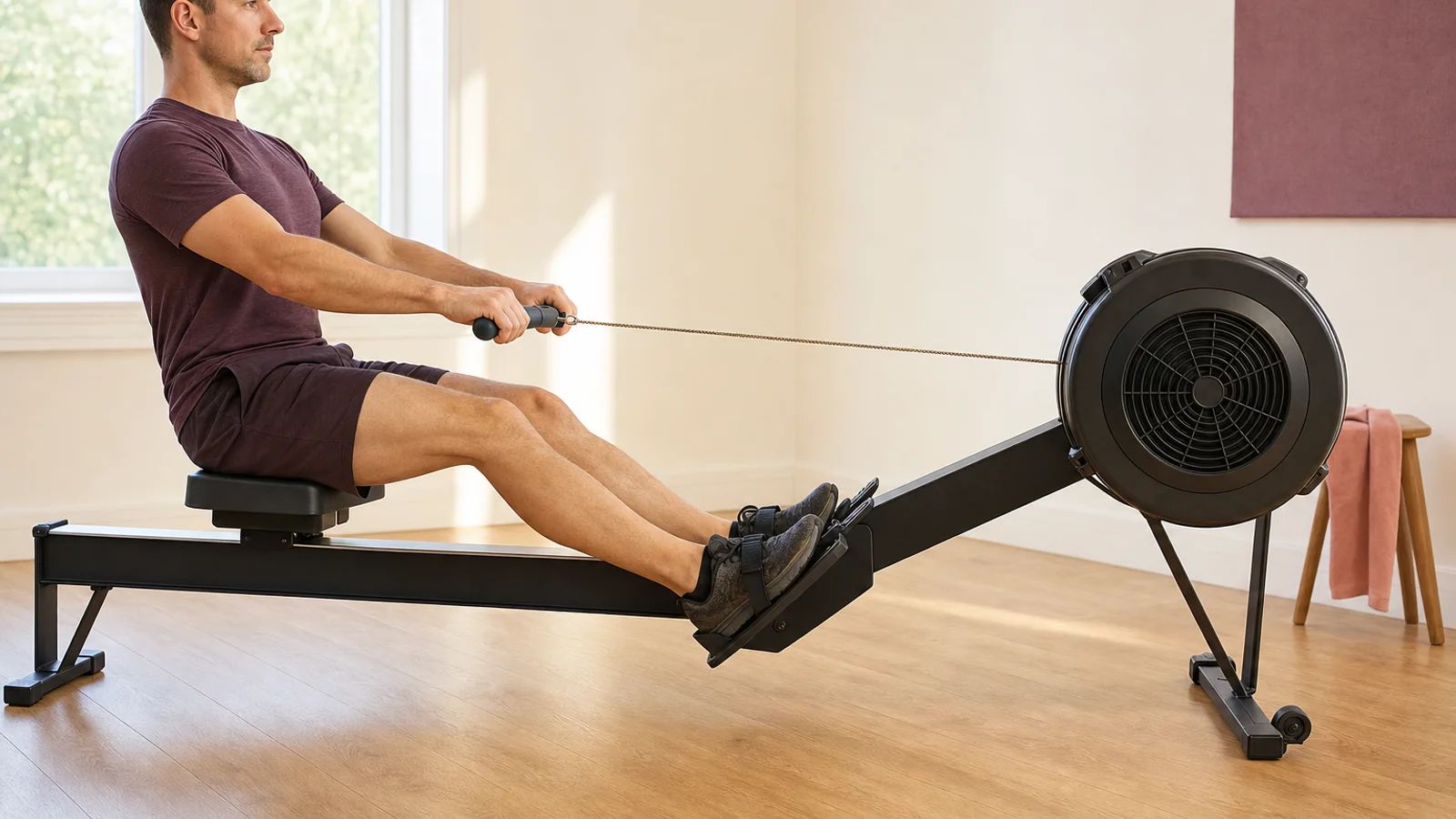
Two and a half hours a week of easy cardio buys you most of the prize. Five hours buys a bit more. Ten hours buys nothing extra, at least in terms of how long you live.
That's the short version, and it comes from mortality data on well over a million people. The payoff curve for aerobic work climbs steeply at the start, then flattens. Knowing roughly where it flattens is the useful part, because everything past that point is time you're spending on something other than your lifespan.
So: where the curve bends, what that is in actual zone-2 hours, and how to pick a dose you'll still be doing next year. If you're not sure what zone 2 even is, start with the basics. This post is only about the dose.
The curve, in three numbers
Ninety minutes a week is the floor, and it's a real one. A Taiwanese cohort of 416,175 adults found that 15 minutes a day of moderate activity, about 90 minutes a week, was linked to 14 percent lower all-cause mortality and roughly three extra years of life compared with doing nothing at all.1 Each additional 15 minutes a day trimmed another 4 percent off. If you're currently at zero, this is the biggest single jump available to you in all of fitness.
150 to 300 minutes a week is the official target. That's the World Health Organization's 2020 number for moderate activity, or 75 to 150 minutes if you'd rather go hard.2 Steady zone 2 sits in the middle of the moderate band, so every easy minute counts toward it directly.
Somewhere around 300 to 450 minutes is where it flattens. The clearest look at this pooled six cohorts in JAMA Internal Medicine back in 2015: 661,137 adults, 116,686 deaths, a median of 14 years of follow-up.3 People who just met the guideline minimum had 31 percent lower mortality than people doing nothing. People doing three to five times the minimum did best, at 39 percent. Past that, the line went flat. A separate 30-year follow-up of 116,221 US adults found the same shape, with near-maximum benefit landing around 300 to 600 minutes of moderate work a week.4
Past that point, more easy cardio doesn't hurt you. It just stops adding years. The pooled data showed no sign of harm even at ten times the minimum, so if you love a five-hour Sunday ride, ride. You're still building fitness, and fitness is worth having on its own account, which is the subject of why VO2 max predicts how long you'll live. You're just not buying more mortality protection with hours six through ten.
Why the first hour beats the fifth
Your body adapts hardest to what it hasn't adapted to yet. A sedentary system has the most room to improve, so the first regular aerobic work you give it produces the biggest gains in mitochondrial density, capillary growth around the muscle, and total blood volume. There's simply the most missing. Once those are half built, the next hour has less left to build.
While we're here, one gym myth deserves a kicking. "The first 20 minutes don't count" and "you only start burning fat after 20 minutes" are both wrong. You burn a mix of fat and carbohydrate from the first minute, and the fat share is highest at easy zone-2 efforts, not lowest. The true version of "the first bit matters most" is about the shape of your week, not a switch that flips partway through a session.

Turning minutes into zone-2 hours
Here I have to be upfront about the arithmetic, because those studies measured all moderate activity, not zone 2 in a lab. Nobody has run the trial you actually want.
The conversion goes through METs. The 150-minute floor is about 7.5 MET-hours a week. Three to five times that is roughly 22 to 38 MET-hours. An easy zone-2 effort runs about five or six METs. Do the division and you land somewhere near four to six hours a week.
Peter Attia, whose book Outlive our coaches read, prescribes about three hours, usually as four sessions of 45 minutes. That number is reasoned from the dose-response data plus physiology. No trial has pitted three hours against five and counted the graves, so treat it as a good bet rather than a proven dose.
Population data says roughly 300 minutes of moderate work. The zone-2 people say about three dedicated easy hours. Both land in the same neighborhood.
Where the number gets fuzzy
Three things to hold loosely.
The mortality data is observational. People who exercise a lot differ from people who don't in dozens of ways, and no amount of statistical adjustment fully fixes that. The effect turns up at a similar size across huge, separate populations, which is reassuring. But "linked to" is the accurate phrase here, not "causes".
The zone-2 hour targets are extrapolated. The MET math above is approximate, and your own zone-2 intensity in METs drifts as you get fitter, so the same four hours means something slightly different this year and next.
And extra hours aren't free. Past the plateau you're adding overuse and overtraining risk if your recovery isn't keeping pace, and you're spending time that would pay better elsewhere.
Pick a dose you'll actually repeat
- 90 to 135 minutes. Two or three sessions of 30 to 45 minutes. That puts you at or just under the guideline floor, on the steepest part of the curve. You don't get the extra 8 points the four-hour crowd gets, but you've banked the large majority of the benefit for a fraction of the time. For a lot of busy people this is the right answer, not the disappointing one.
- Around 300 minutes, or three to four dedicated zone-2 hours. Usually four sessions of 45 minutes or so. This is the plateau. If you've got the time and the appetite, aim here.
- Four to six hours. A fine place to be if you enjoy it. Just be clear that you're now training for fitness and for fun, not for extra years.
What I'd push back on is grinding out hours five and six purely because you read somewhere that zone 2 is good for you. Those hours are cheap in longevity terms and expensive in life terms. Most people get more back by putting them into strength work and one or two hard interval sessions, which cover what steady easy work doesn't. Zone 2 and strength, a longevity week lays out how the pieces fit into seven days.
Common questions
Is 150 minutes a week really enough? It's enough to capture the large majority of the longevity benefit. There are extra gains up to about 300 minutes, but the jump from zero to 150 dwarfs the jump from 150 to 300. If 150 is what fits your life, that's a genuinely good dose.
Can I do too much zone 2? Not on health grounds. The studies found no harm even at ten times the minimum. The real limits are recovery and time. Piling on easy hours while skimping on sleep and strength work is a bad trade, not because the cardio hurts you but because of what it crowds out.
Does the plateau mean more fitness stops mattering? No. The plateau is about all-cause mortality in population data. If you're chasing a VO2 max number, an event, or a performance goal, more volume still builds fitness. It's the longevity return on the extra hours that gets small, not your fitness.
Does it all have to be zone 2, or does anything count? Anything moderate counts toward the mortality numbers. Zone 2 is an efficient way to bank those minutes because it's easy enough to repeat often, but a brisk hike or an easy bike commute counts too. The dose is what matters. The label is just how you organize it.
The number isn't the hard part
The plan fits in a sentence: get to two or three easy sessions a week, build toward three or four hours if you've got the room, and stop fretting about anything past that.
Where it usually comes apart is drift and gaps. Your "zone 2" quietly turns into a mediocre hard session, or three good weeks become a month off and you slide back down the steep part you worked to climb. That's the job a coach does: your dose gets set from where you actually are, your sessions get watched live over video, and the plan moves as your fitness moves. Your first month is $49. After that, founding members pay $299 a month, locked for life, with unlimited live 1-on-1 sessions, 25 founding spots, and a 30-day money-back guarantee. How it works covers the rest.
Sources
-
Wen et al., 2011. Minimum amount of physical activity for reduced mortality and extended life expectancy: a prospective cohort study. The Lancet. ↩
-
Bull et al., 2020. World Health Organization 2020 guidelines on physical activity and sedentary behaviour. British Journal of Sports Medicine. ↩
-
Arem et al., 2015. Leisure Time Physical Activity and Mortality: A Detailed Pooled Analysis of the Dose-Response Relationship. JAMA Internal Medicine. ↩
-
Lee et al., 2022. Long-Term Leisure-Time Physical Activity Intensity and All-Cause and Cause-Specific Mortality: A Prospective Cohort of US Adults. Circulation. ↩