Zone 2 training explained: what it is and how to start
Zone 2 is the highest easy effort where fat still fuels you. Here's the physiology, how to find your pace with the talk test, and a 4-week starter plan.
Updated

Zone 2 is the pace where you can still finish a sentence, but you'd rather not have to.
Underneath that, it's the hardest you can work while your muscles clear lactate as fast as they make it. Go one notch harder and lactate starts piling up in your blood. That tipping point has a name, the first lactate threshold, and zone 2 sits right below it.
The payoff is worth the physics lesson. This slow, slightly dull effort is the strongest signal we know of for building the machinery your cells use to burn fat and make energy. Here's what's happening at that pace, how to find yours without a lab, and a four-week plan to start.
What's going on at that pace
Your muscles make a trickle of lactate all the time, even while you're sitting down, and your body clears it just as fast. At an easy effort those two rates stay matched, so the level in your blood stays low and flat. Zone 2 is the top of that range: the hardest you can work with production and clearance still tied.
Push past it and production wins. Lactate climbs, your breathing deepens, and you've crossed the first lactate threshold, which is the ceiling on the zone. That's why zone 2 feels almost too easy. It's defined as the effort that stays just under the point where things start to burn.
Fuel is the other half of what makes this range useful. At low intensities your body leans on fat, and it keeps leaning on fat across a wider band than most people expect. Lab work measuring fat burning across a range of efforts put the peak at about 64 percent of VO2 max, roughly 74 percent of maximum heart rate, with fat use staying near that peak anywhere from about 55 to 72 percent of VO2 max.1 Zone 2 lives in the lower half of that window.
So it's the fastest easy. Hard enough to count, gentle enough that you're mostly burning fat and barely making lactate.
Why the easy stuff builds the engine
What changes is mitochondria, the small engines inside your cells that turn fat, sugar and oxygen into usable energy. Train easy and often enough and your muscles build more of them. This is old, settled biology, not a wellness trend.
The detail that matters for how you train came later. Researchers pooling the human training studies in Sports Medicine in 2018 concluded that training volume is the main driver of how much mitochondrial content you build, while intensity matters more for how well those mitochondria function.2 Zone 2 is where the volume comes from, because it's gentle enough that you can do a lot of it.
More of them, working better, changes three things you'll notice. Fat gets easier to burn, which spares the small store of carbohydrate you're carrying. Lactate clears faster, so the same pace feels easier month by month. And your muscles get better at pulling oxygen out of the blood and using it, which is a big slice of aerobic fitness.
How do you find it without a lab?
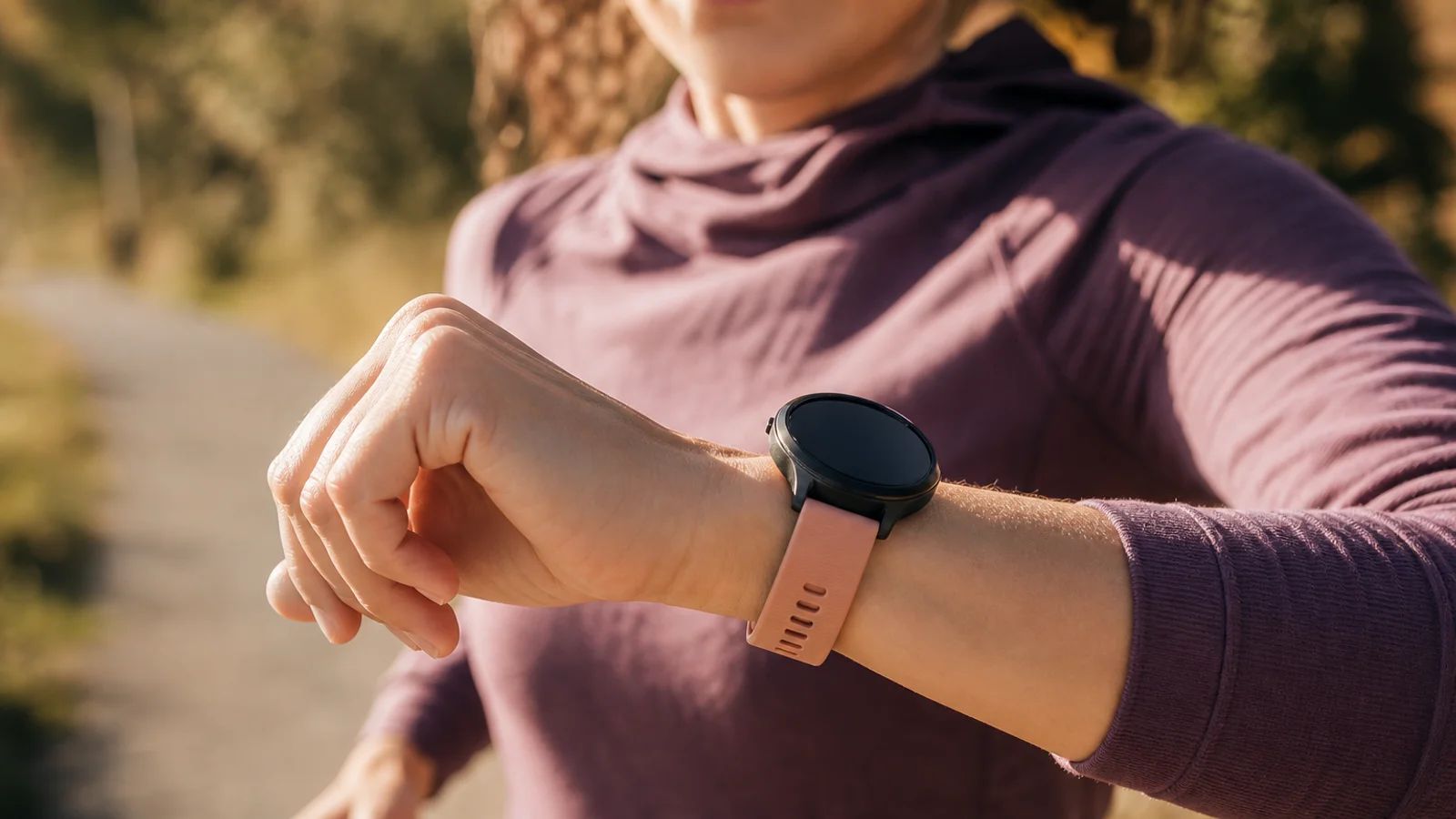
Start by ignoring the number on your watch.
The talk test is the anchor. At the right effort you can speak a full sentence, but it should be mildly annoying to do it. Conversational, not comfortable. If you can chat happily for a paragraph, you're too easy. If you're squeezing three words out between breaths, you've gone over the top of the zone. When researchers tested it against lab measurements, it tracked closely with the ventilatory threshold that sits right around the top of zone 2, and it repeated reliably from session to session.3
The popular alternative is a heart-rate formula: 220 minus your age, then 60 to 70 percent of that. It's a fine place to begin, but it describes an average person, not you. A meta-analysis of maximum heart rate data found that 220 minus age underestimates the real number in older adults, and that 208 minus 0.7 times your age fits better.4 Even that's a population average. Any one person can sit well above or below it, so a zone built from arithmetic alone can be off by a fair margin.
Nose breathing is a decent backup check. If you can keep breathing through your nose only, you're almost certainly in an easy aerobic range. The moment you have to open your mouth to keep up, you're near the edge. It's crude, but it's hard to fake.
Pick a pace where talking is possible but slightly irritating. Then let the heart-rate number describe what that felt like, instead of deciding it for you.
A four-week on-ramp
You don't need much structure to start. You need repetition. This is a plain ramp for someone doing little or no regular cardio right now.
- Week 1: two sessions, 25 minutes each, at talk-test pace. The goal is proving to yourself you can hold an easy effort.
- Week 2: three sessions, 30 minutes each. Same easy pace.
- Week 3: three sessions, 35 to 40 minutes each. If holding a conversation is getting easier at the same pace, that's the adaptation showing up.
- Week 4: three sessions, 40 to 45 minutes each. Roughly the dose to hold and build from.
Two rules matter more than the exact minutes. Keep it genuinely easy, because the usual way zone 2 fails is drift: you start easy, settle a bit harder without noticing, and end up doing mediocre hard work for weeks while wondering why nothing changes. We go through the rest of that trap in why your easy days are too hard. The second rule is to be consistent before you're ambitious. Three repeated easy sessions beat one heroic one you dread.
Once the habit sticks, the next question is how much to do long term. We worked through the mortality data on that in how many hours a week actually move the needle.
What to do it on
Almost any steady activity works, as long as you can hold the effort without stopping.
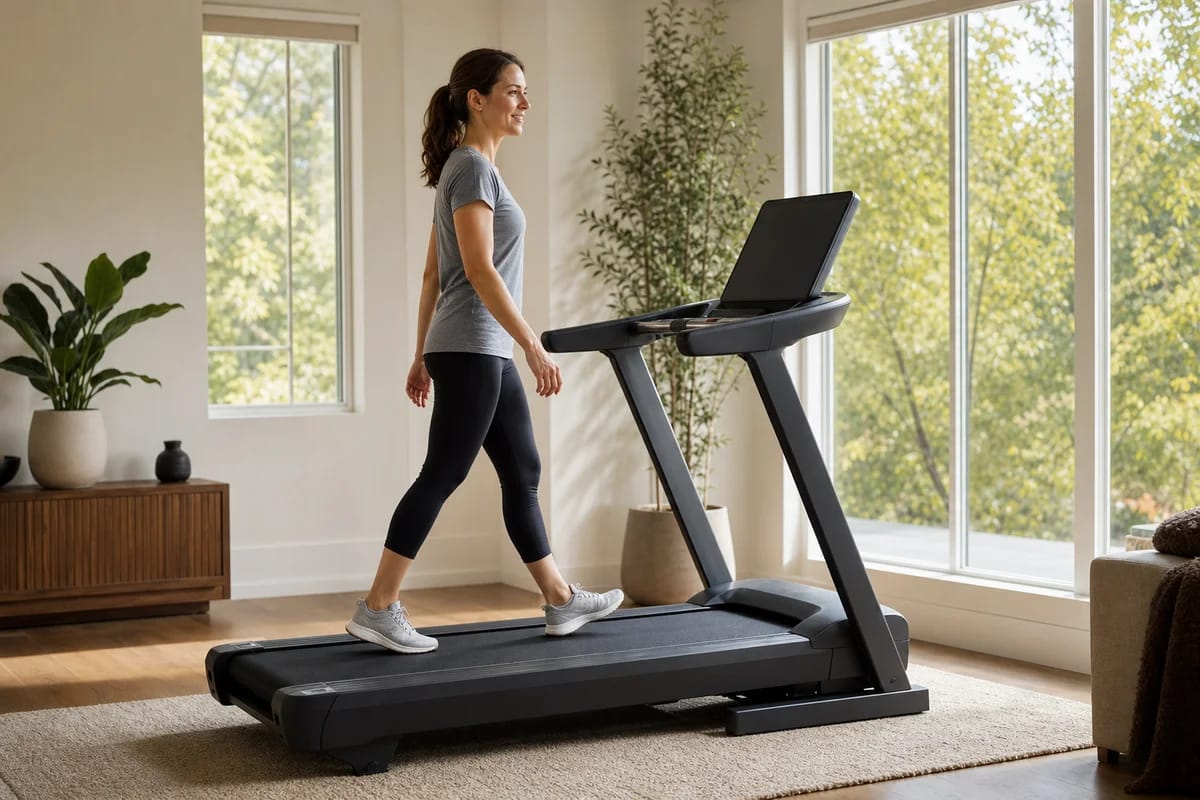
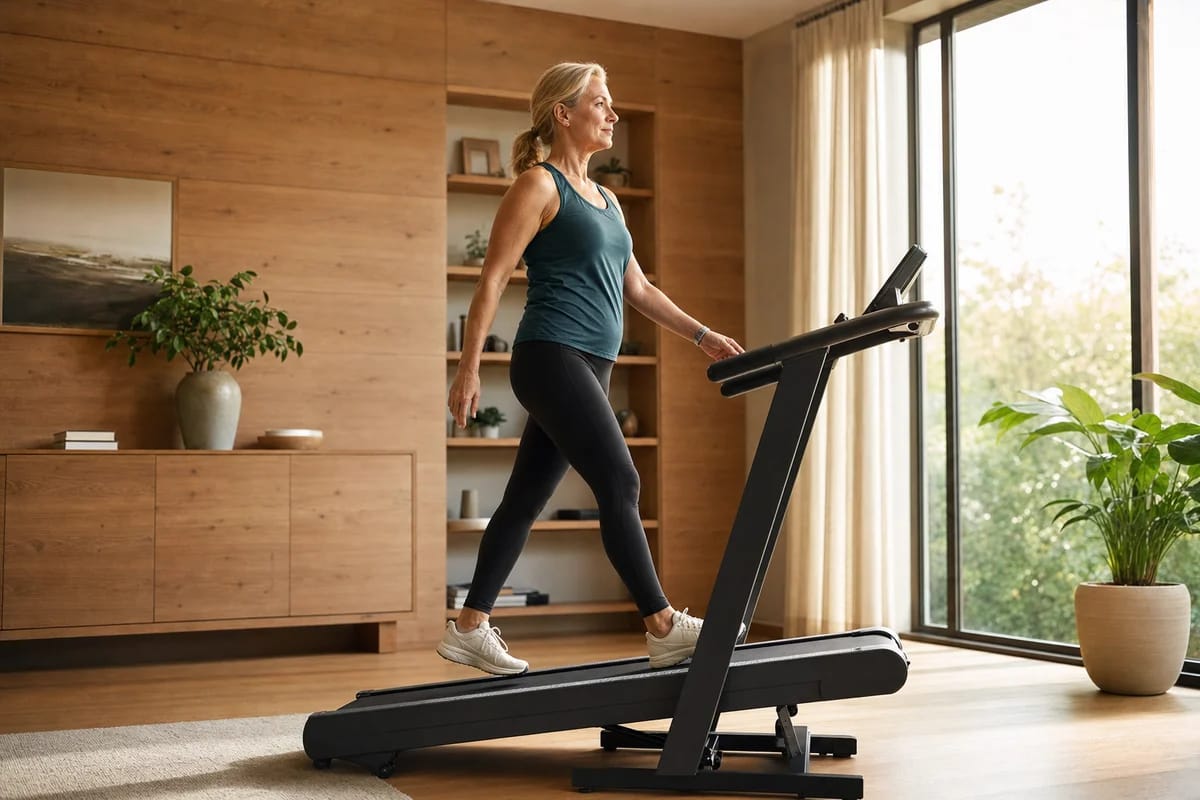
A stationary bike is the easiest place to hold a precise steady effort, and it's kind to knees. An incline treadmill walk is underrated: a brisk walk on a 5 to 10 percent grade puts most beginners straight into zone 2 without running at all. A rower brings in more muscle and stays low impact, though even pacing takes a bit of practice. An easy jog or a hilly outdoor walk costs nothing and works fine, as long as the pace stays conversational.
Running is the one to watch. For plenty of beginners even a slow jog sits above zone 2, and the talk test fails in the first minute. If that's you, walk the hills instead. Pick the lowest-impact option you'll repeat: an incline walk you actually do beats a run you skip.
How it feeds VO2 max and blood sugar
Aerobic fitness has two sides. Zone 2 works on the muscle side, the mitochondria and capillaries that pull oxygen out of the blood and burn it. Hard intervals work on the heart's pumping capacity, which sets the upper limit. You want both, and the easy work comes first, because it's what makes the hard sessions repeatable. The top end is its own story, and we tell it in why VO2 max predicts how long you'll live.
The metabolic payoff runs through the same mitochondria. Muscle is the biggest place your body parks blood sugar, and muscle rich in well-functioning mitochondria handles glucose and fat more efficiently. That's the mechanism behind zone 2's reputation for improving insulin sensitivity. More engines, running cleaner, in the tissue that does most of your metabolic work.
For where the zone sits inside a full week alongside lifting, we lay that out in the weekly structure. This post is the deep dive on the zone itself.
Where the numbers get soft
The clean lactate boundaries above are individual, and they're defined in a lab. Pinning your exact first threshold takes a blood-lactate test or gas-exchange analysis. The talk test gets you close, and close is the right word for it.
Your watch's "zone 2" is an estimate stacked on an estimate. It usually starts from a formula-based maximum heart rate, then slices that into zones. Good for tracking your own trend over months, not precise enough to treat as a verdict. When you're unsure, go easier rather than harder.
The 80/20 split you'll read about, mostly easy training with a small slice of hard, comes from watching what top competitive endurance athletes do. That's a useful frame, not a rule handed down for everyone. Recreational trainers, older beginners and people short on time can do well on a different mix. The fat-burning peak moves too, with training status and diet, so those percentages are averages rather than your personal readout.
Common questions
How is zone 2 different from just walking? For some beginners a brisk uphill walk is zone 2. For fitter people, flat walking is too easy and they'll need a bike, a rower, or an incline. The zone is defined by effort relative to you, not by the activity. Use the talk test to check, not the label on the machine.
Do I need a heart-rate monitor to do zone 2? No. The talk test alone gets most people into the right range, and a chest strap or watch just adds a trend line to track over time. If you buy one thing, a chest strap reads more accurately during steady effort than a wrist sensor.
How long until zone 2 does anything? Give it 4 to 6 weeks of consistent sessions. The early sign isn't a number on a test. It's the same pace feeling easier, or your heart rate settling lower at the effort you started with.
Is zone 2 enough on its own, or do I need hard intervals too? Zone 2 builds the aerobic base and does a lot of the metabolic work by itself. To raise your VO2 max ceiling fastest you'll eventually want one or two harder interval sessions a week on top, but the easy base comes first and makes the hard work possible.
If your easy days keep drifting hard
A chest strap, an honest talk test and the discipline to hold a pace that feels too slow will get most people the whole benefit, and if you're happy following a plan nobody's watching, that's the cheaper route and the right call.
Drift is where the rest of us slip. At Bespoke Fit your coach sets your zone from how you actually respond, watches your strength sessions live on video, and adjusts the plan session by session as your fitness changes. Your first month is $49. After that, founding members pay $299 a month locked for life, with unlimited live 1-on-1 sessions, 25 founding spots, and a 30-day money-back guarantee. How it works covers the rest.
Sources
-
Achten, Gleeson, and Jeukendrup, 2002. Determination of the exercise intensity that elicits maximal fat oxidation. Medicine and Science in Sports and Exercise. ↩
-
Granata, Jamnick, and Bishop, 2018. Training-induced changes in mitochondrial content and respiratory function in human skeletal muscle. Sports Medicine. ↩
-
Persinger, Foster, Gibson, Fater, and Porcari, 2004. Consistency of the talk test for exercise prescription. Medicine and Science in Sports and Exercise. ↩
-
Tanaka, Monahan, and Seals, 2001. Age-predicted maximal heart rate revisited. Journal of the American College of Cardiology. ↩