What deep sleep does for muscle repair and recovery
Deep sleep is when your body actually repairs muscle. Here is the recovery physiology, from growth hormone to overnight protein synthesis, explained plainly.

You don't build muscle in the gym. You break it down there. The rebuilding happens later, and most of it happens while you're asleep, in the deepest stage of the night.
That's not a motivational line, it's physiology. Deep sleep is when your body releases the single biggest hormone pulse of your day, and it's when muscle protein synthesis keeps running through the night if you've given it something to work with. Cut that stage short and you blunt both. Below is the actual mechanism, where the evidence holds up, and where old gym lore ran ahead of the data.
Key takeaways
- Your biggest daily pulse of growth hormone fires within minutes of falling asleep, tied to your first block of deep sleep. Cut deep sleep short and you blunt that pulse.
- Muscle protein synthesis keeps running overnight if you've eaten enough. A dose of slow-digesting protein before bed measurably raises it further.
- Diet on too little sleep, and more of the weight you lose comes from muscle instead of fat, even on the same calories.
- One week of 5-hour nights dropped daytime testosterone in healthy young men by 10 to 15 percent, close to what a decade of normal aging does.1
- Bad sleep makes the same workout feel harder, and in teen athletes it's linked to more injuries. That injury data is observational, so read it as a signal, not proof.
- Aim for 7 to 9 hours, protect your first few sleep cycles, and treat a bad night as a reason to ease off, not push through.
Deep sleep triggers the biggest hormone pulse of your day
Growth hormone doesn't trickle out evenly across the day. It comes in bursts, and the single largest, most reliable burst of the whole 24 hours arrives soon after you fall asleep, riding your first stretch of slow-wave sleep.
A 1996 review in The Journal of Pediatrics by Van Cauter and Plat, still one of the clearest write-ups on this, found that in men, roughly 70 percent of sleep-time growth hormone pulses line up with slow-wave sleep, and how much gets released tracks how much deep sleep you get.2 That first, biggest pulse of the day fires within minutes of falling asleep.
The same review flagged something worth knowing: both slow-wave sleep and sleep-related growth hormone release drop off sharply through your thirties. That's one reason recovery gets harder as you age, and one reason protecting deep sleep matters more the older you get.
Deep sleep is when your body opens the tap on its main repair hormone. Shallow, broken sleep leaves that tap half-closed.

Does your body really build muscle while you sleep?
Yes, as long as it has something to build with. Muscle is in constant turnover, breaking down and rebuilding, and after training the rebuilding side runs hot for many hours. Overnight is a big chunk of that window, and usually the longest stretch you go without eating.
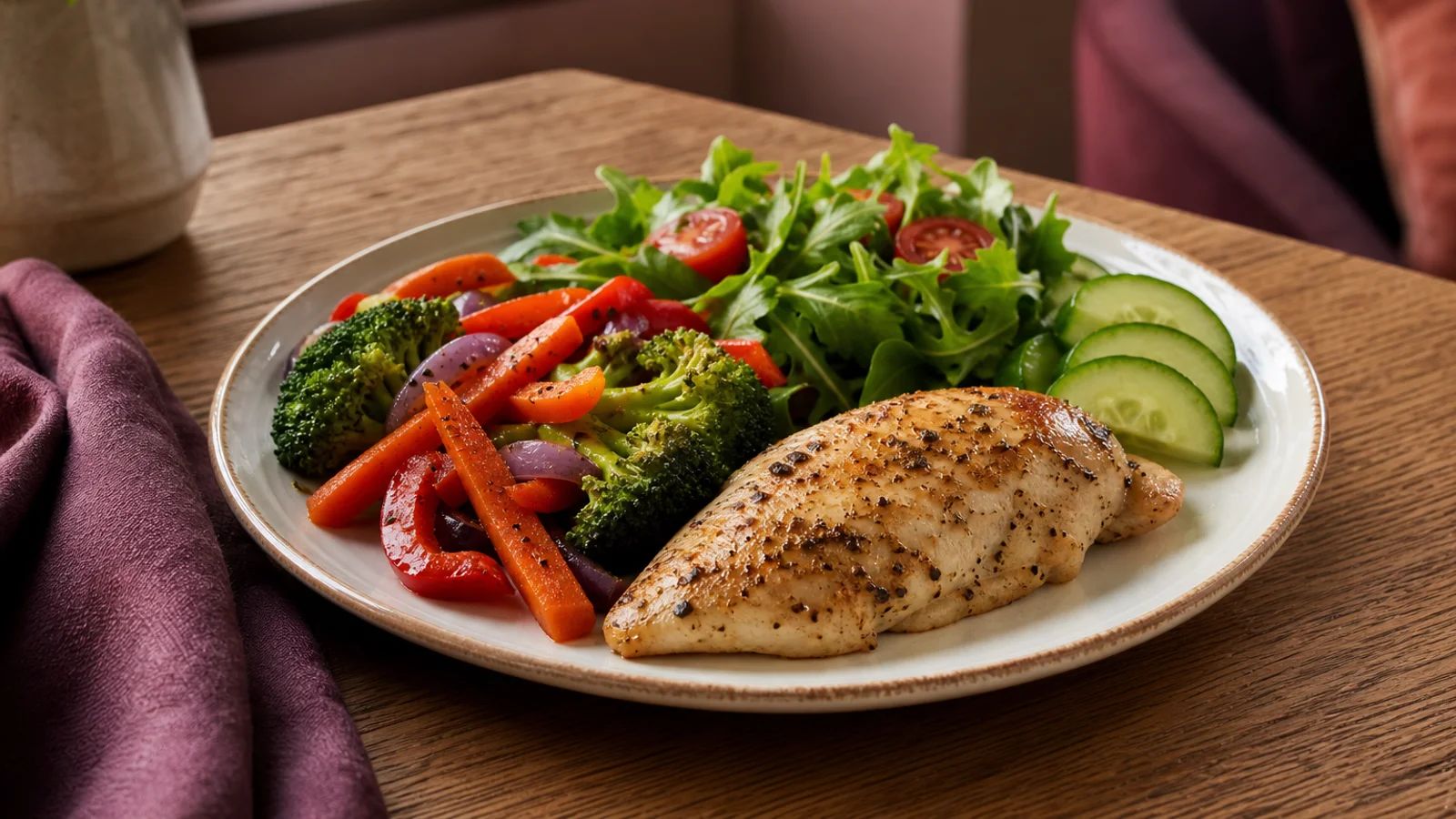
That gap is what one small trial went after. Sixteen young men did an evening leg workout, ate a normal dinner, then got either 40 grams of a slow-digesting casein protein or a placebo half an hour before bed. The protein digested fine overnight, raised whole-body protein synthesis, and pushed net protein balance positive. Muscle protein synthesis itself ran about 22 percent higher with the pre-sleep protein, a difference that landed just short of statistical significance.3
The lesson isn't to eat protein powder at midnight. It's that overnight is real building time, and going to bed with some amino acids still in the tank helps you use it. Casein just happens to digest slowly, which suits a long fast.
Short sleep steals from your muscle, not your fat
This is where it gets uncomfortable, because the effects land on exactly what people train for.
Start with body composition. Researchers put 10 overweight adults through two matched two-week diets: one sleeping 8.5 hours a night, one sleeping only 5.5. Total weight lost came out about the same either way. What changed was where it came from. On short sleep, fat loss dropped by more than half, 0.6 kg versus 1.4 kg, while loss of fat-free mass, which includes muscle, climbed from 1.5 kg to 2.4 kg.4 Same diet, and short sleep quietly shifted the loss from fat toward muscle.
Then there's the hormonal side. Another trial capped 10 healthy young men, average age 24, at 5 hours in bed for 8 nights. Their daytime testosterone fell 10 to 15 percent, roughly what a decade or more of normal aging does, from a single week of short sleep.
Neither trial is large, and I'll get to those caveats below. But the direction holds: skimp on sleep and you work against both the hormonal environment for building muscle and your body's willingness to spend fat instead of muscle.
What a rough night does to today's workout
Sleep loss shows up before injury even enters the picture. A review that pulled together the research on sleep loss and exercise found performance tends to suffer, and it hits sport-specific and endurance work harder than a single max lift.5 It also tilts your nervous system in a way that mimics overtraining and raises how hard the same effort feels, so a submaximal set feels heavier than it should.
You'll notice that part yourself. On a bad night's sleep, the warm-up weight feels heavy and your working set feels like a grind. That's not weakness, it's a measurable shift in how your body reads effort.
There's an injury signal too, worth taking seriously without overselling it. The clearest data comes from 112 teenage athletes: those sleeping fewer than 8 hours a night were about 1.7 times more likely to have been hurt than those sleeping 8 or more, one of the stronger predictors researchers found.6 Take it with a grain of salt, though. It's adolescents, not 45-year-olds. It's observational, so it shows a link, not proof of cause. And the confidence interval brushed right up against 1.0, meaning the real effect could be smaller than the headline suggests. Tired kids might also be over-scheduled kids, and busy schedules cause their own injuries. Still, the mechanism is plausible: sleep loss dulls reaction time and coordination, so you're a half-step slow right when your form starts to break down.
Where the science gets shakier
I want to correct the biggest myth first: that sleep floods you with growth hormone, and growth hormone is what builds your muscle. The first half is true. The second mostly isn't. One study followed 56 young men through a weight-training program and found the after-workout spikes in growth hormone and testosterone barely tracked with how much strength they gained.7 In healthy adults, muscle growth comes far more from training and protein than from these hormone surges. So deep sleep matters for recovery, but not mainly through the growth-hormone "anabolic window" that 90s gym magazines sold.
The rest of the evidence has real limits too. Several of these trials are small, 10 to 16 people, and run on young, mostly male subjects, so the exact numbers may not carry over to a 50-year-old woman. The diet and testosterone findings are short and tightly controlled, useful for cause and effect but a long way from real life. The injury numbers are observational and come from teenagers. And people vary a lot: some feel wrecked after one short night, others shrug it off for a while. Trust the direction of all this. Treat the exact figures as rough.
Common questions
How many hours of deep sleep do I need? There's no clean target to hit, and most trackers only estimate it anyway. Deep, slow-wave sleep tends to run 13 to 23 percent of a normal night, front-loaded into your first few cycles. The practical move isn't chasing a deep-sleep number, it's getting enough total sleep (7 to 9 hours) on a steady bedtime so those early deep cycles happen at all.
Does protein before bed really help, or is that a supplement pitch? The overnight benefit is real: in the trial above, a pre-sleep protein dose raised overnight muscle protein synthesis in trained young men. It's a modest effect, not magic, and it only matters if your total daily protein is already solid. It's a bonus on top of good daily habits, not a replacement for them.
Will one bad night ruin my progress? No. One short night mainly makes today's session feel harder. The real problems in the research come from repeated short sleep over days and weeks. An occasional rough night is normal. A steady pattern of 5-hour nights is what to fix.
Is the growth hormone from sleep what builds my muscle? Not really, in healthy adults. Deep sleep does release most of your daily growth hormone, but the size of those spikes doesn't track well with how much muscle people gain. Sleep helps recovery through several channels at once, hormones, protein synthesis, a reset nervous system, not growth hormone alone.
I train in the evening. Does that hurt my sleep? For most people, no, as long as you're not going all-out in the last hour before bed. If evening training is when you'll train consistently, keep it. We covered that trade-off in our piece on how to build a longevity week around zone 2 and strength.
Why we ask how you slept
A program written two weeks out has no way to know how you slept last night. That gap is where a lot of tweaks start: the plan says squat heavy, you barely slept, and grinding through the prescribed weight anyway is exactly when a normal set turns into an injury.
That's why our coaches ask how you slept before setting the day's load, live, over video. Rough night, and the coach eases off the intensity or shifts to technique work. Slept great, and that's the day to push. It's the same thinking behind treating muscle as an organ you maintain for the long run instead of a number to max out every session. You can see how the live sessions and readiness calls work on our how it works page. Founding membership starts at $49 your first month, then $299 a month, locked for life, for the first 25 members.
Sources
-
Leproult R, Van Cauter E, 2011. Effect of 1 week of sleep restriction on testosterone levels in young healthy men. JAMA. ↩
-
Van Cauter E, Plat L, 1996. Physiology of growth hormone secretion during sleep. The Journal of Pediatrics. ↩
-
Res PT, Groen B, Pennings B, et al., 2012. Protein ingestion before sleep improves postexercise overnight recovery. Medicine & Science in Sports & Exercise. ↩
-
Nedeltcheva AV, Kilkus JM, Imperial J, et al., 2010. Insufficient sleep undermines dietary efforts to reduce adiposity. Annals of Internal Medicine. ↩
-
Fullagar HH, Skorski S, Duffield R, et al., 2015. Sleep and athletic performance: the effects of sleep loss on exercise performance, and physiological and cognitive responses to exercise. Sports Medicine. ↩
-
Milewski MD, Skaggs DL, Bishop GA, et al., 2014. Chronic lack of sleep is associated with increased sports injuries in adolescent athletes. Journal of Pediatric Orthopedics. ↩
-
West DW, Phillips SM, 2012. Associations of exercise-induced hormone profiles and gains in strength and hypertrophy in a large cohort after weight training. European Journal of Applied Physiology. ↩