Shift work and exercise: training on a rotating schedule
Rotating shifts break every fixed workout time. The fix is to anchor training to a repeatable point in your shift, not the clock. Plus why sleep matters more.
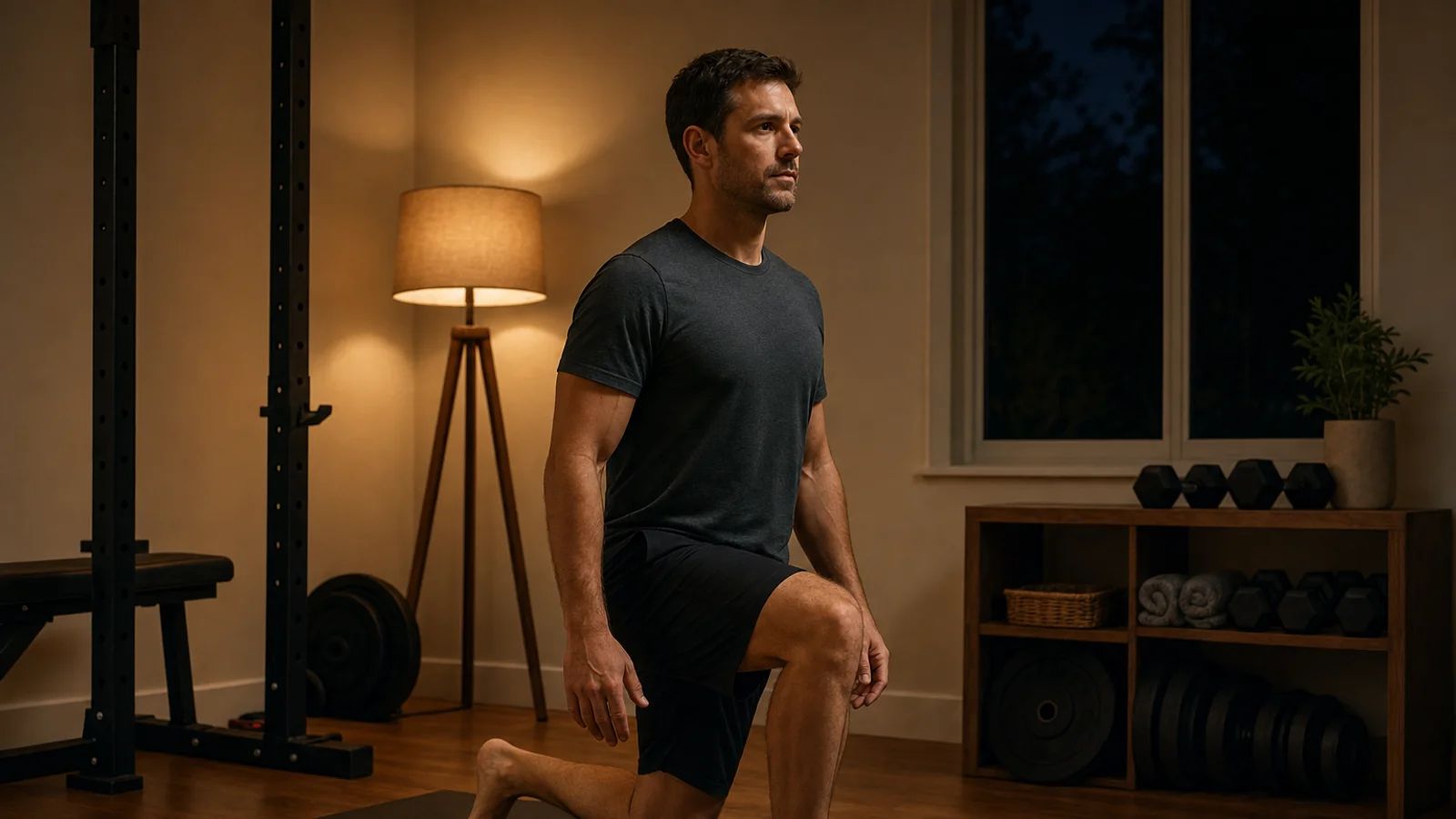
In this article9
You've probably been told to find your best time to work out and stick to it. That works fine on a normal week. It falls apart on a rotating one, because the same clock hour lands in a completely different part of your body clock every time your shift changes. A 6am session that's easy on a day rotation is the middle of your sleep on nights.
The fix isn't a better clock time. There isn't one, because the clock keeps moving under you. The fix is to stop training by the clock and start training by a point in your shift that repeats no matter what the rotation looks like: always right after you wake up, always right before you clock in. The hour on the clock changes every week. The anchor doesn't.
Why the usual timing advice doesn't survive a rotation
Most "best time to work out" advice is really about chronotype, whether you're wired as a morning person or a night owl, and it holds up fine for someone whose Tuesday looks like their Wednesday. I cover that decision in morning versus evening workouts for busy professionals. But that whole conversation assumes a stable schedule to hang a habit on. Take the stable schedule away and the advice falls apart.
Think about what "5pm" means across a rotation. On days it's after work. On a swing shift it's the warm-up for a shift that ends at 11pm. On nights it might be the deepest part of your sleep. Same hour on the clock, three completely different demands on your body. You didn't lose discipline. You picked an anchor that can't hold still.
What a rotating schedule does to your metabolism
Your body runs on a roughly 24‑hour rhythm built to eat in daylight and sleep in the dark. Shift work asks it to do the opposite, and the cost shows up in real numbers. A 2015 meta-analysis pooling 12 studies and more than 226,000 workers, published in Occupational and Environmental Medicine, linked shift work to a higher risk of type 2 diabetes, and rotating shifts carried the strongest link of any schedule type.1 The average effect was modest, but it grew the longer people stayed on the schedule.
The mechanism is easy to see in a lab. Researchers forced ten adults to eat and sleep about 12 hours out of sync with their body clock, the same misalignment a night shift creates, and tracked what happened after the exact same meals. Post-meal blood sugar rose about 6 percent. Insulin jumped about 22 percent. Three of eight subjects briefly showed responses that would count as prediabetic.2 Nothing about the food changed. Only the timing did.
Your body handles an identical meal worse at the wrong point in its clock, and a rotating schedule makes "the wrong point" your normal for a good chunk of the month.

Sleep pays for the workout, and shift work taxes it first
That same lab experiment found something else: forcing people out of sync with their clock cut their sleep efficiency by about 20 percent.2 They were being asked to sleep when their body was on alert, so the sleep they got was thinner and more broken, even when the hours on the clock looked fine. Shift workers live inside that penalty every rotation. Eight hours in bed can bank less real recovery than a day worker gets from seven.
That matters because sleep is where training actually pays off. Training creates the need to adapt. Sleep is when your body does it. Train hard and then sleep badly and you've paid for a result you don't fully collect. So when a hard session on four ragged hours of sleep is up against a lighter one that leaves your sleep intact, take the lighter one. You'll get more back from it. What deep sleep does for muscle repair and recovery goes deeper on that mechanism.
The anchor: after you wake, before you clock in
Pick a moment that repeats inside every rotation and staple the workout to it. The two that survive almost any schedule are right after waking and right before leaving for the shift. Both happen on days, swings, and nights. Both stay in the same relationship to your sleep no matter where the clock hands land, so when the rotation changes, the workout slides with it automatically.
Say you pick "after waking, before the shift." On days that might be 6:30am. On a swing it's closer to 1pm. On nights it could be 8pm. Three different clock times, one identical trigger: wake up, have coffee, train, go. That sequence travels with you in a way "5 o'clock" never will.
This works because of habit science, not physiology. Habits attach to cues, and the most reliable cue on a rotating schedule isn't a time of day, it's the shape of the shift itself. Waking is a cue. Walking out the door is a cue. Both fire on schedule no matter what the clock says that week.
Can training reset your body clock?
Exercise isn't neutral toward your circadian rhythm. It's a signal that can nudge it. In 2019, researchers tracked 99 adults across eight different exercise times and mapped how each one moved the body clock, publishing the results in the Journal of Physiology.3 Training around 7am or in the early afternoon, roughly 1 to 4pm, pulled the clock earlier. Evening training, roughly 7 to 10pm, pushed it later. The size of the shift was in the same range as a dose of bright light, the strongest clock-setting tool there is.
That's a lever most shift workers don't know they're holding. Coming off a run of nights and trying to flip back to daytime life on your days off? A morning workout in daylight helps drag the clock earlier. Heading into a stretch of nights and need to stay up later? An evening session leans it the other way.
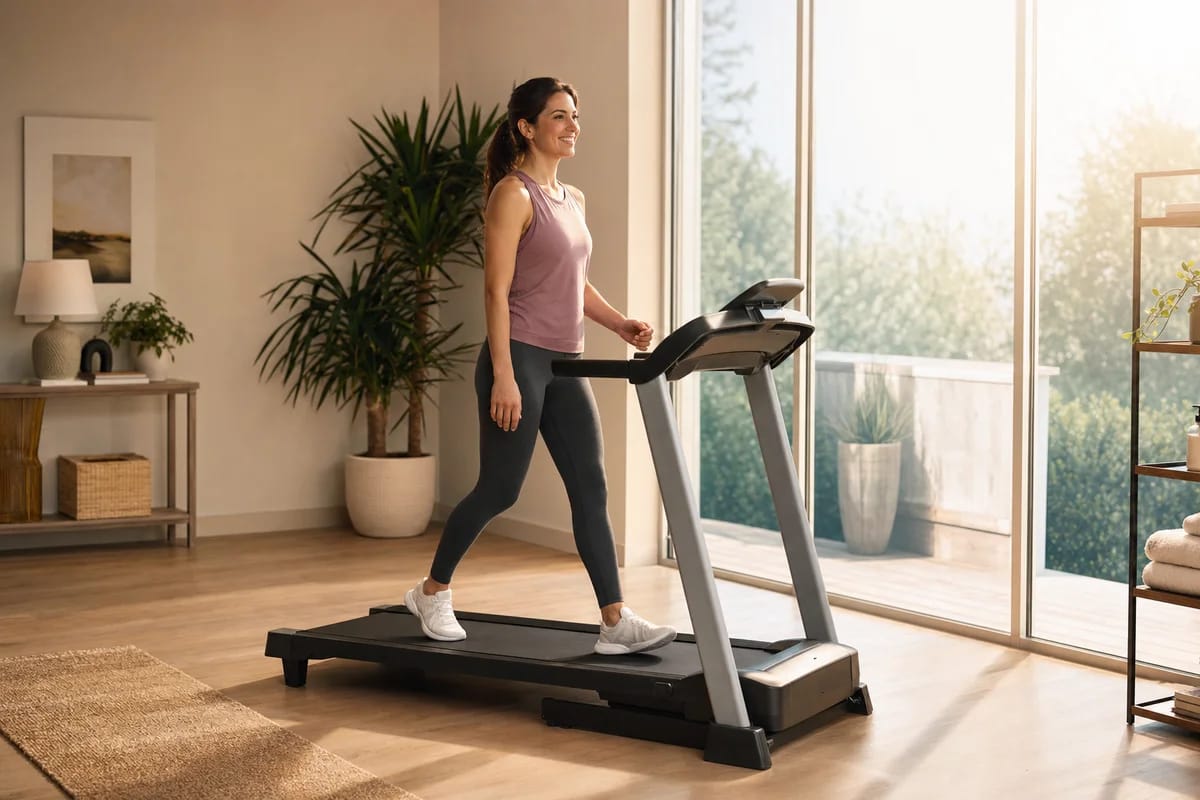
Build the plan around your worst week, not your best
The mistake is building an ambitious plan around your easiest week and watching it collapse the moment nights roll around. Flip that. Ask what you can realistically do on your hardest rotation, and make that the floor. Anything better than the floor is a bonus, not a baseline you're failing against.
In practice that usually means three anchored sessions a cycle, not five, and kept short: two lifting sessions and a walk, built from a pair of full-body workouts you know cold so you never stand there deciding. On a brutal night rotation the goal isn't a personal best. It's keeping the chain alive and letting the good weeks pull the average up.
Two things flex independently here. Volume can move with the rotation. The anchor shouldn't. Scale the workload up or down as your sleep allows, but keep the session stapled to "after waking" or "before the shift" every single time. Three anchored workouts you actually finish will out-build five perfect ones you keep skipping.
Where these numbers get soft
The lab work on blood sugar and insulin ran on ten people for a matter of days in a tightly controlled setting, so it shows the mechanism clearly but not its size over years. The diabetes meta-analysis is observational: it shows shift work and diabetes risk moving together, not proof the schedule alone causes it, and the average effect was modest. The clock-shifting research tracked hormonal markers over a few days, so treat "morning training pulls your clock earlier" as a gentle lever, not a switch. People vary a lot here, and none of this replaces your own clinician's advice if you have a metabolic or sleep condition.
Common questions
What's the best workout schedule for shift workers? The one anchored to your shift, not the clock. Attach training to a repeatable moment, like right after waking or right before your shift, so it moves automatically when your rotation changes. Aim for a realistic floor of two to three short sessions a cycle, something you can hit even on your hardest week.
Should I work out before or after a night shift? Before is usually easier to stick with. It's a clean, repeatable anchor, and you're not fighting post-shift exhaustion to get there. A hard session right after a night shift can also make it harder to fall asleep, since intense exercise keeps your temperature and alertness up right when you need them coming down.
Is it bad to exercise when I'm sleep deprived from shift work? A light to moderate session is usually fine, and can even help. A hard, draining one on badly broken sleep is where you get diminishing returns, because sleep is when the adaptation happens. On a low-sleep day, keep the workout and drop the intensity.
How do I stay consistent when my schedule keeps changing? Anchor the habit to a cue that fires every rotation, waking up or leaving for work, not to a time of day. Then set the bar at a floor you can clear on nights, and keep the workouts simple enough that you never have to plan them.
Does training time change my results if I work shifts? Barely, for building muscle and strength. Consistency matters far more than the clock hour. Where timing does help is your body clock: morning and evening sessions can gently nudge your rhythm earlier or later, aimed wherever your rotation needs it to go.
What makes the anchor stick
A phone alarm timed to the shift and two workouts already memorized will carry this plan on their own. What a coach adds is smaller than it sounds but real: the session gets booked around your actual rotation instead of a class timetable that only exists at 6am and 6pm, so you're not renegotiating it every week. A real coach watching live over video also notices when your sleep is shot and scales the session down instead of pushing you through it, which matters more for a shift worker than for almost anyone else training. How it works covers how the scheduling actually works.
The anchor is the part that matters, whether it's your own alarm holding you to it or a coach on the other end of the call. Stop stapling workouts to a number on a clock. Staple them to the thing that happens every single rotation: waking up, and walking out the door.
Sources
-
Gan and colleagues, 2015. Shift work and diabetes mellitus: a meta-analysis of observational studies. Occupational and Environmental Medicine. ↩
-
Scheer and colleagues, 2009. Adverse metabolic and cardiovascular consequences of circadian misalignment. Proceedings of the National Academy of Sciences. ↩ ↩2
-
Youngstedt and colleagues, 2019. Human circadian phase-response curves for exercise. The Journal of Physiology. ↩
More on