The leucine threshold: why protein timing changes with age
Older muscle needs more leucine per meal to trigger growth. Here is the threshold, why it climbs with age, and how to clear it across three or four meals.
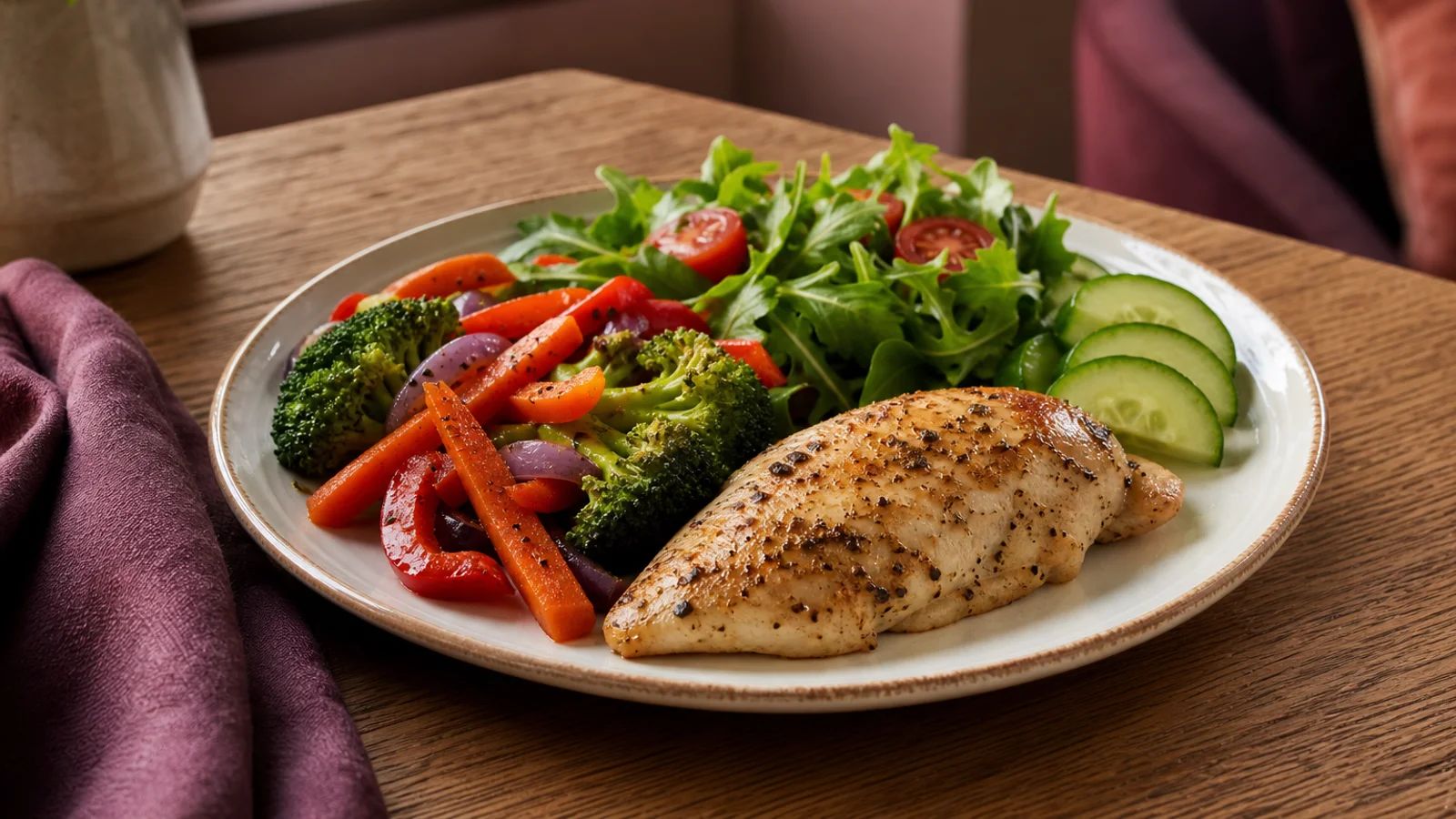
Feed a 25-year-old a chicken breast and the muscle-building signal fires almost instantly. Feed a 70-year-old the same meal and the response is far weaker, sometimes close to nothing. Same food, same protein, a much smaller signal.
That gap is why "just eat more protein" is incomplete advice once you're past your 30s or so. The missing piece is a single amino acid, leucine, and a threshold your muscles have to clear at each meal before they build anything. Clearing it is easy at 25. By your 60s or 70s the bar has moved higher, and the same plate that used to work stops being enough.
The fix is straightforward once you see the mechanism: split your protein across three or four meals that each clear that bar, instead of loading it into one big dinner.
Muscle building works like a switch, not a dial
Your muscle is always breaking down and rebuilding. The building side is called muscle protein synthesis, or MPS. Eat protein, and MPS rises for a few hours before settling back down. Whether you gain, hold, or lose muscle over months comes down to that running total.
Here's the part most people miss: MPS doesn't creep up in proportion to how much you eat. It behaves like a switch with a minimum trigger. Below a certain amount in a meal, the response is weak. Above it, you get a strong, near-maximal burst, and eating still more adds surprisingly little.
In young adults, that trigger sits at roughly 20 to 30 grams of high-quality protein per meal. Feeding trials that compare single doses, 0, 10, 20, and 40 grams of whey in one sitting, find the same pattern every time: the jump from 0 to 20 grams raises the muscle-building response by around half, and going from 20 to 40 grams adds almost nothing on top.1 Past that point, more protein at one sitting mostly gets burned for energy instead of built into muscle.
Leucine is why the switch flips where it does. Of the twenty-odd amino acids in protein, leucine does most of the signaling. It's not just a building block, it's a messenger that tells the cell the raw material has arrived and it's time to start building. It does that by releasing the brakes on mTOR, a growth switch inside your cells that ramps up new muscle protein when leucine rises. Other amino acids supply the material. Leucine gives the order to start.
A 25-gram scoop of whey happens to carry about 2.5 to 3 grams of leucine, right at that trigger point. That's not a coincidence. It's why whey shows up so often in this research: it's the easiest way to hit the leucine mark in one drink.
Why the trigger climbs as you get older
As you age, the same meal produces a smaller building response. Researchers call this anabolic resistance, and it's one of the quieter drivers of muscle loss later in life. The signal still works. It's just turned down, so it takes more leucine to make the same amount of noise.
The clearest number on how much more comes from a 2015 pooled analysis of feeding studies in the Journals of Gerontology: younger men hit their maximum muscle-building response at about 0.24 grams of protein per kilogram of body weight in a single meal, while older men needed closer to 0.40 grams per kilogram to get there.2 For an 80-kilogram person (about 176 pounds), that's the difference between roughly 19 grams and about 32 grams, just to produce the same result. As a rough guide, 0.4 g/kg works out to about 0.18 grams per pound.
The leucine link is direct, not just a coincidence of timing. One trial gave young and older adults the same small dose of essential amino acids, but in two blends: a normal mix, 26 percent leucine, and one enriched to 41 percent. Young muscle responded to both blends. Older muscle only responded to the leucine-heavy one.3 The standard ratio wasn't enough to clear their higher bar. The extra leucine got them over it.
With age, the doorbell needs a harder push before anyone answers.
Why one big protein hit a day doesn't work
You might guess the fix is to eat a huge amount of protein once a day and be done with it. The biology doesn't go along with that.
When you eat protein, MPS climbs, peaks, and shuts off again, even with plenty of amino acids still circulating in your blood. Tracking people after a whey drink shows the muscle-building response peaking around 45 to 90 minutes in, then falling back toward baseline over the next couple of hours, well before the amino acids in the bloodstream have cleared out.4 Researchers call this the "muscle-full" effect: the building site can only take one delivery before it needs to reset.
Amino acids above the threshold in a single meal don't stretch that window. They get oxidized or routed elsewhere in the body. To get another building pulse, you need to let things settle and clear the threshold again at the next meal.
One giant dinner buys you one pulse a day. Three solid meals buy you three.
Where the leucine actually is
Since leucine is the trigger, its density in your food matters more than the protein grams on the label.
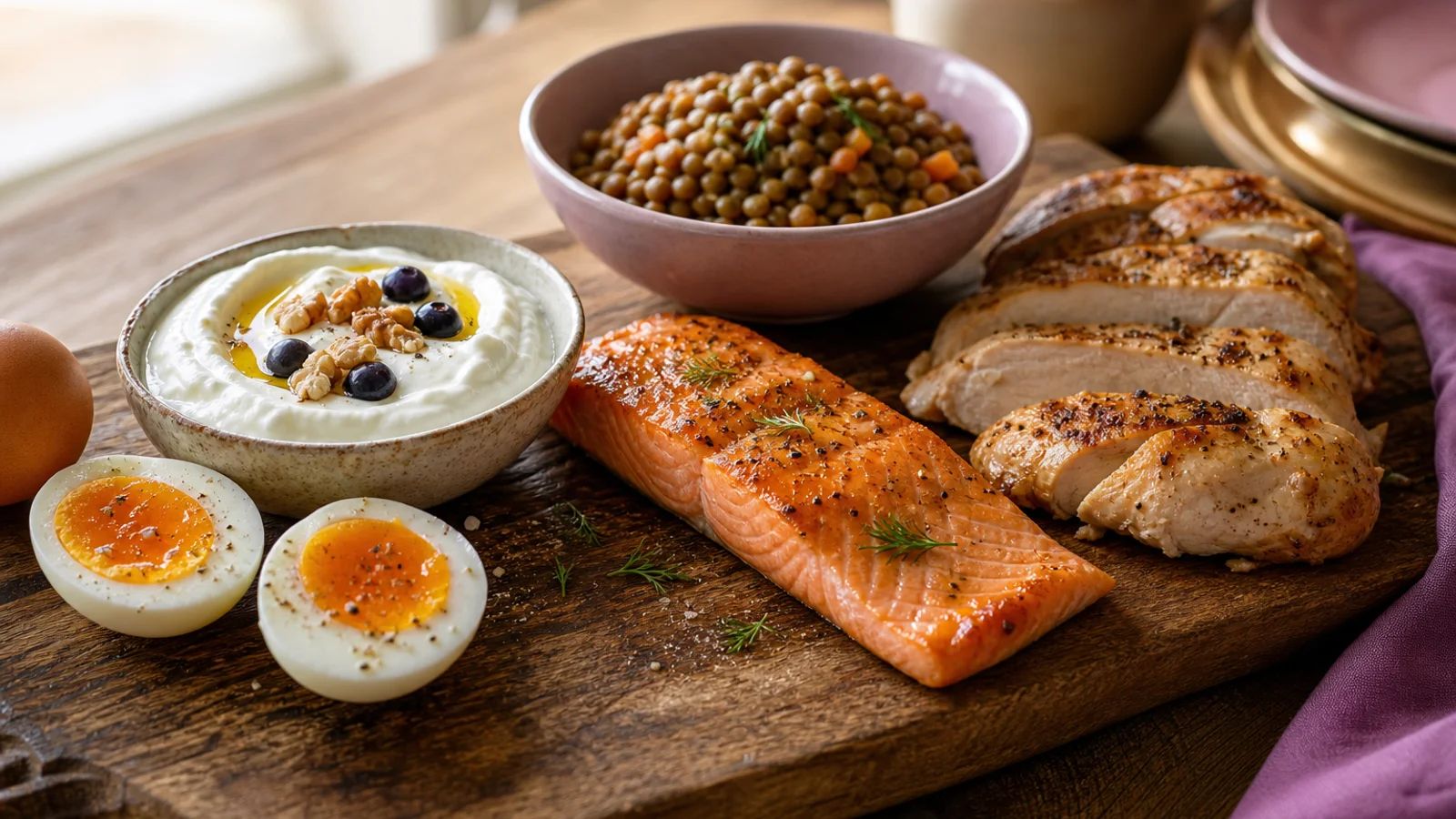
Animal protein is leucine-rich across the board. Whey sits near the top at around 10 to 11 percent leucine by weight, which is how a single scoop clears the threshold on its own. Eggs, dairy, meat, and fish all carry enough leucine to clear the bar at a normal serving.
Most plant proteins carry less leucine per gram. That doesn't make them a bad choice, it means the servings need to be bigger, or the sources mixed, to hit the same target. The gap matters more for older adults, since their bar is already higher.
What the research can't promise you
Short-term MPS measurements are a well-supported mechanism, not a guarantee about the scale. Studies that track the muscle-building spike after a single meal or workout don't always predict how much muscle someone builds over months of real training, so treat the leucine threshold as the logic behind good timing, not a promise that hitting it perfectly shows up in the mirror on any set schedule.
Most of the feeding research behind these numbers also comes from young men or small groups of older adults, tested in lab conditions with amino acid tracers over hours, not years of ordinary eating. Individual thresholds vary. And if you're eating well below your protein needs in the first place, raising your daily total will do more for you than fine-tuning when you eat it. Timing is a refinement that matters most once the basics are already in place, and it matters most of all for older adults fighting anabolic resistance.
Turning this into a normal day
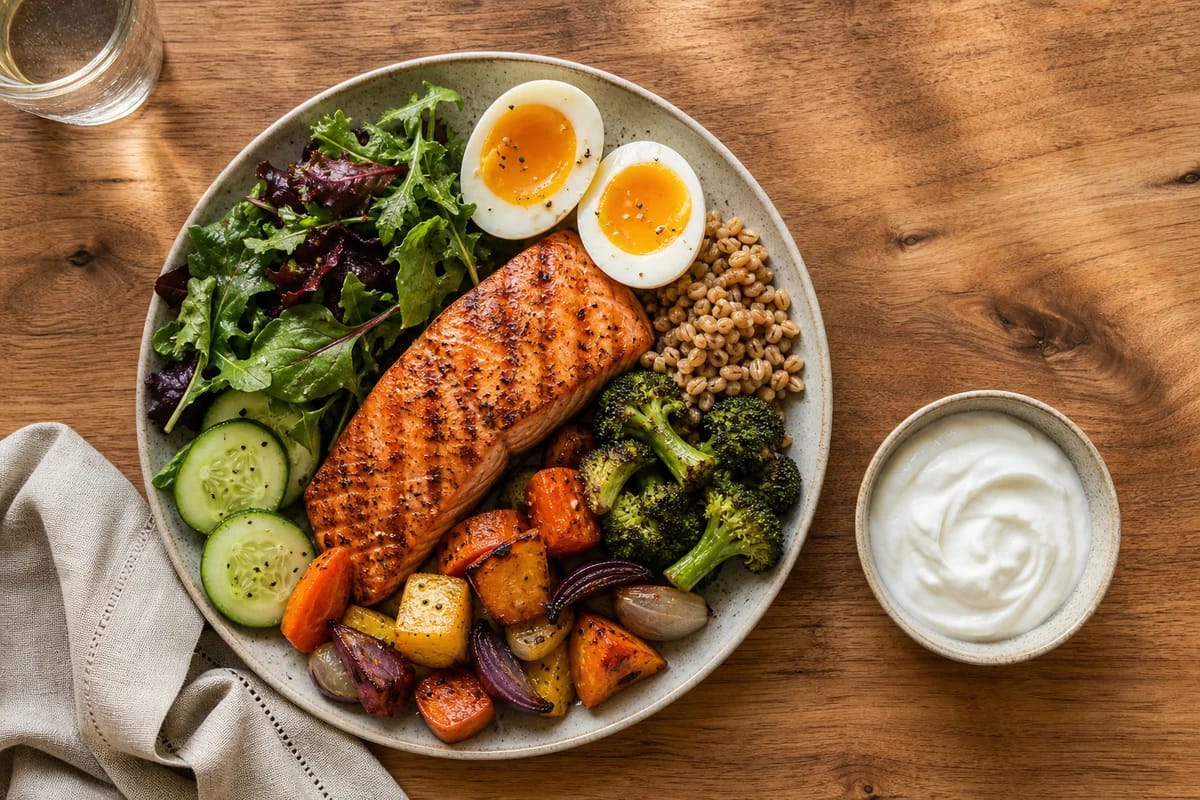
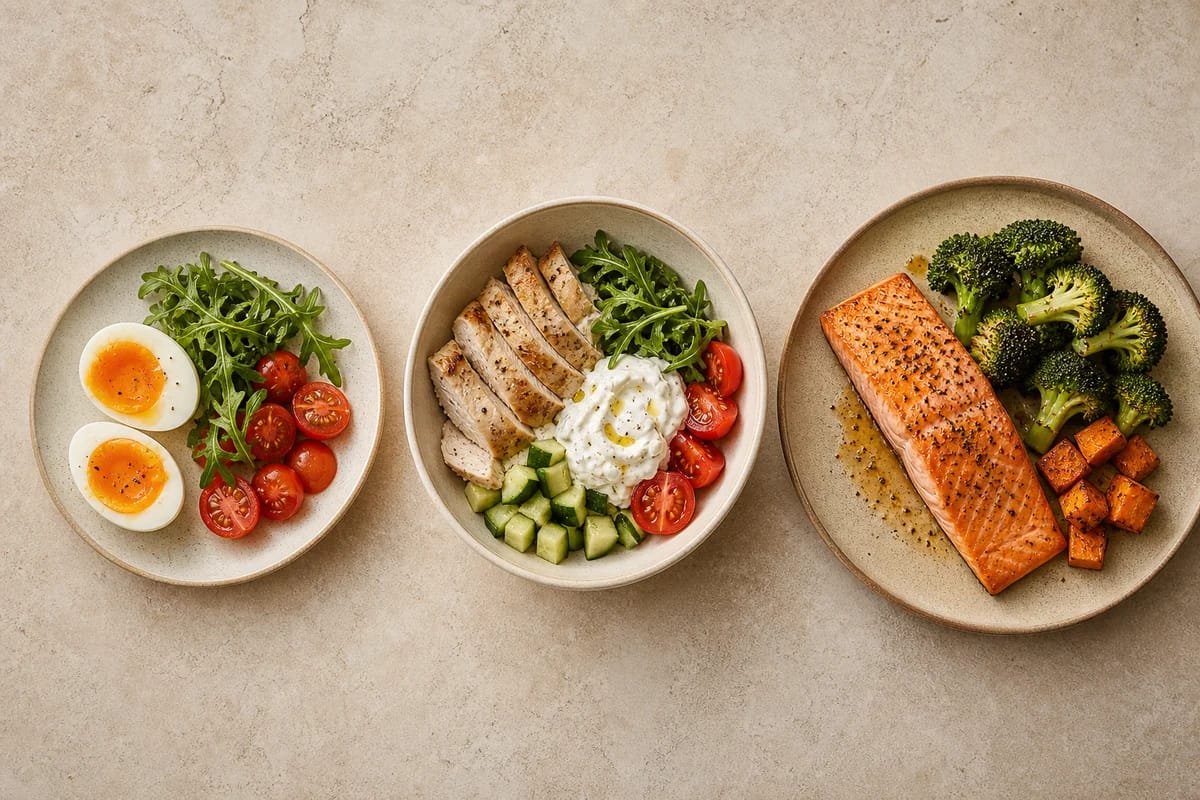
For most people over 40, that means treating breakfast, lunch, and dinner each as a real protein event, something like 30 grams or more, not a token breakfast and a big dinner. Skimping in the morning and backloading at night gives you one good pulse a day when three were available.
Your daily total still has to be high enough first. We cover that number in how much protein you actually need after 40: even the right daily total does less if it all lands in one meal. And for why any of this is worth the effort, muscle does far more than move you around, which is the subject of muscle is an organ: what it does beyond moving you.
Key takeaways
- MPS behaves like a switch, not a dial: about 25 to 30 grams of quality protein (2.5 to 3 grams of leucine) triggers a near-max response in younger adults.
- With age, that trigger rises. Older adults may need closer to 0.4 g/kg of body weight in a single meal, about 0.18 g per pound.
- Each meal buys roughly one building pulse, peaking within an hour or two and shutting off even with amino acids still in your blood.
- Whey, eggs, dairy, meat, and fish are leucine-dense. Most plant proteins aren't, so plant meals need to be bigger.
- Aim for three or four meals a day that each clear the threshold, rather than one big protein hit at dinner.
Common questions
What is the leucine threshold in older adults? It's the amount of leucine a meal needs to trigger a strong muscle-building response. In younger adults, about 2.5 to 3 grams of leucine, roughly 25 to 30 grams of quality protein, does it. Older adults need more, with feeding studies pointing to about 0.4 g/kg of body weight in a single meal, because aging muscle responds less to the same signal.
Do I need a leucine supplement? Most people don't. Eat leucine-dense protein at each meal and clear the threshold, and added leucine on top isn't doing much. It matters more for people who struggle to eat enough protein, or for plant-based eaters whose meals fall short, and even then, whole food usually solves it first.
Is it better to eat all my protein at dinner? No. Because of the muscle-full effect, one big meal gives you one building pulse. Splitting the same protein across three or four meals lets you clear the threshold several times a day, which looks better for holding onto muscle as you age.
Does this matter if I don't lift weights? Yes, though training amplifies it. Resistance exercise makes muscle more sensitive to protein and partly offsets anabolic resistance. Even without it, hitting the threshold across meals helps you keep the muscle you already have.
Is meal timing more important than total daily protein? For most people, no. Your daily total is the bigger lever, and timing is a refinement on top of it. The exception is older adults, where anabolic resistance makes clearing the threshold at each meal genuinely matter more.
Where this usually breaks down
Knowing the threshold is the easy part. The hard part is turning it into an actual Tuesday: protein at breakfast and lunch, not just dinner, repeated for a year without fail.
Do it yourself and the recipe is short. Put real protein on your plate at breakfast. Split your daily total across three or four meals instead of two. Keep whey, eggs, yogurt, or fish on hand for the days you're behind on both. Check in on yourself every couple of weeks, and adjust when your schedule changes.
A coach doesn't change any of that biology. What one adds is somebody watching your actual week: noticing that breakfast quietly turned into just coffee three days running, or that lunch shrank once work got busy, and adjusting before the pattern sets in. That ongoing check is most of what live coaching does. You can see how the sessions work on the how it works page. Founding membership is $49 your first month, then $299 a month locked for life for the first 25 spots.
Sources
-
Witard et al., 2014. Myofibrillar muscle protein synthesis rates subsequent to a meal in response to increasing doses of whey protein at rest and after resistance exercise. American Journal of Clinical Nutrition. ↩
-
Moore et al., 2015. Protein ingestion to stimulate myofibrillar protein synthesis requires greater relative protein intakes in healthy older versus younger men. Journals of Gerontology Series A. ↩
-
Katsanos et al., 2006. A high proportion of leucine is required for optimal stimulation of the rate of muscle protein synthesis by essential amino acids in the elderly. American Journal of Physiology-Endocrinology and Metabolism. ↩
-
Atherton et al., 2010. Muscle full effect after oral protein: time-dependent concordance and discordance between human muscle protein synthesis and mTORC1 signaling. American Journal of Clinical Nutrition. ↩