Skip to main content
Unlimited live 1‑on‑1 sessions. Try 14 days free, then $299/mo.

Beginners

43 articles on beginners from the coaching floor.

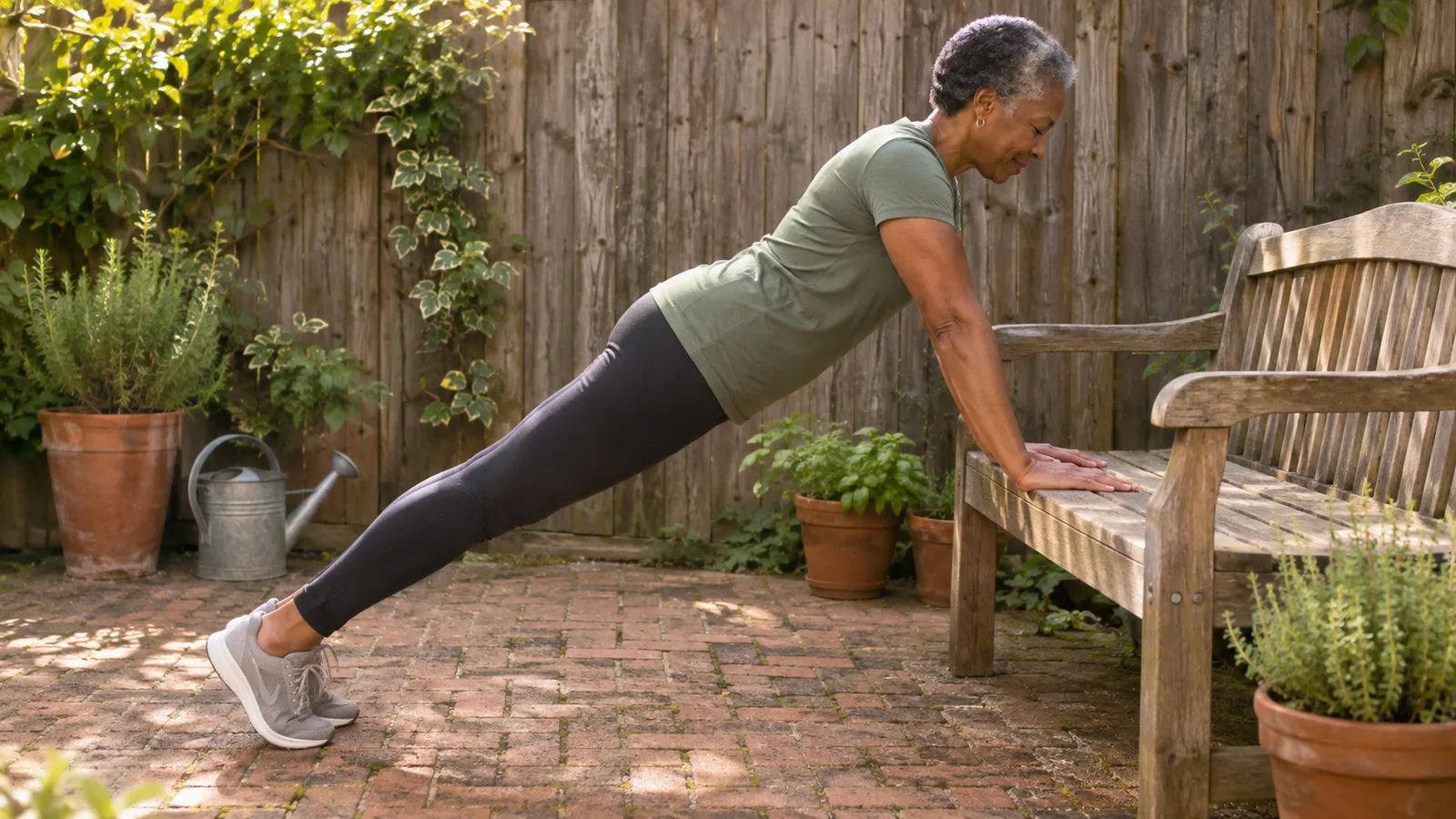
A woman in her late 50s doing a push-up with her hands on a wooden garden bench on a brick patio, her body in one straight line from head to heels

How to do a proper push-up, even if you can't do one yet

Hands just wider than your shoulders, one straight line, elbows angled back, chest to a fist from the floor. The faults to fix, and the ladder to your first.
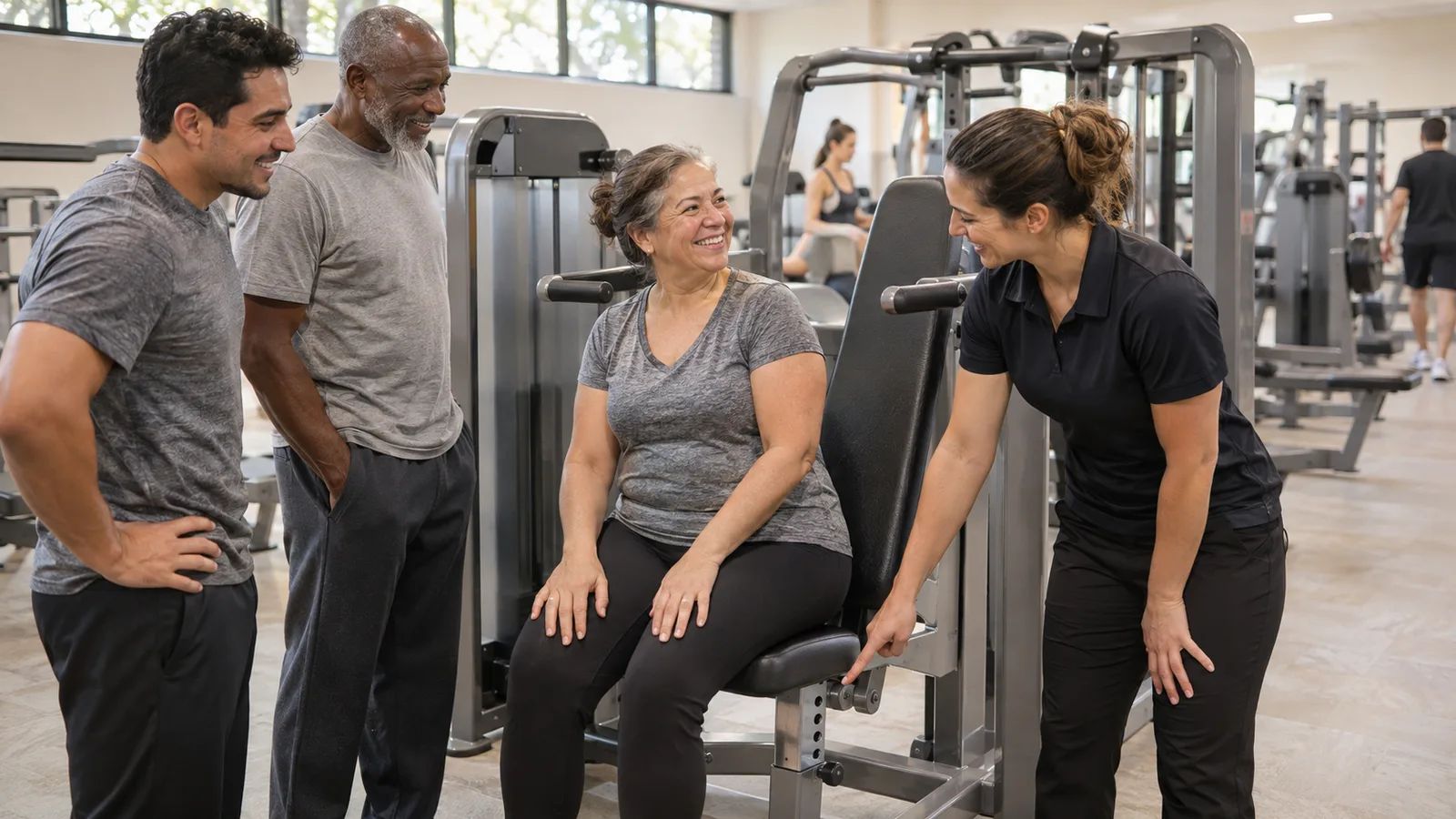
A trainer shows three gym members how to set up a chest press machine in a bright, busy gym

Does Planet Fitness have personal trainers? Free, in groups

Free trainers come with every Planet Fitness membership, but they teach small groups, not 1-on-1. What PE@PF covers, and where to go when you want more.
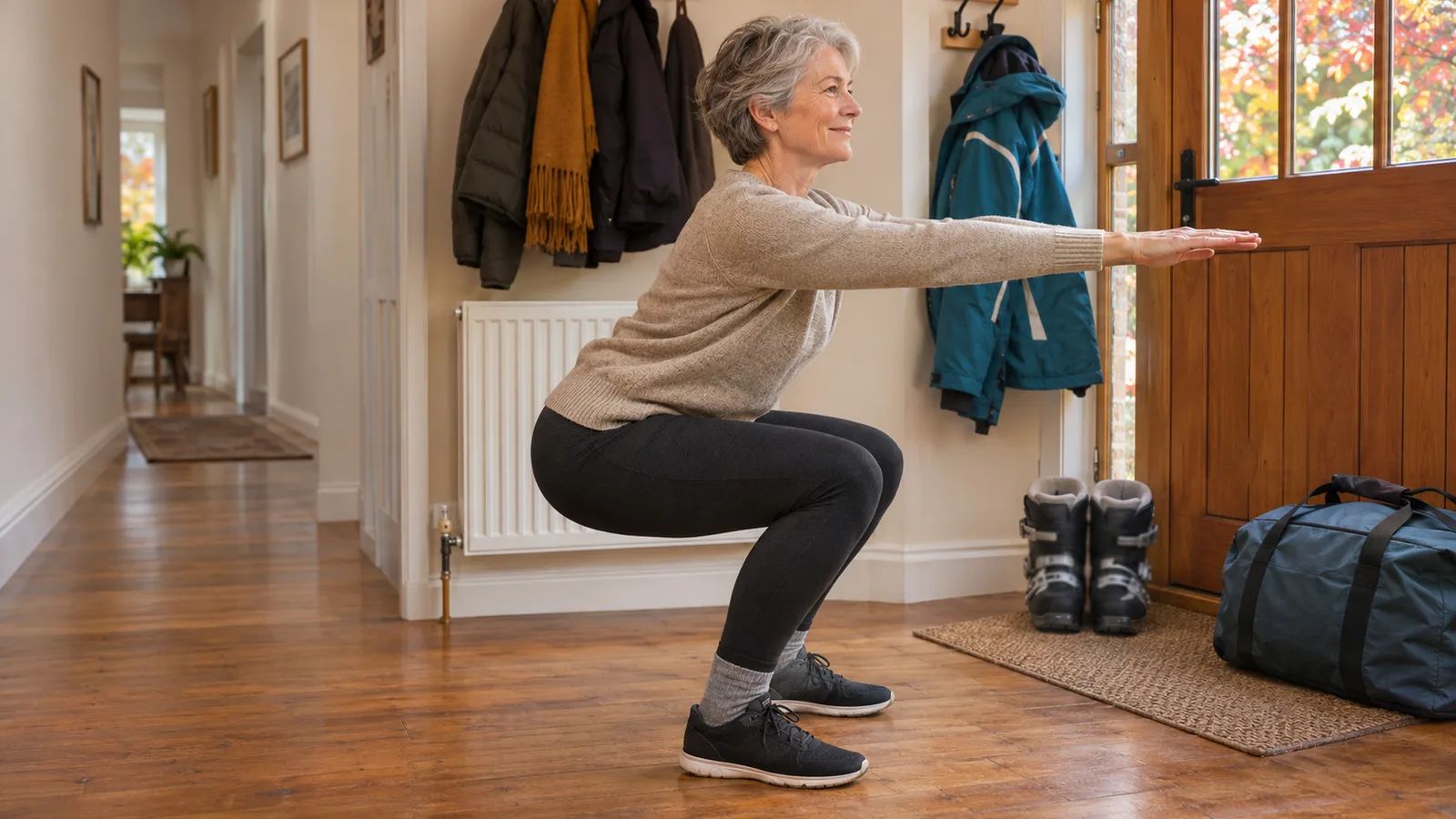
A woman in her late 50s doing a slow bodyweight squat in her front hallway, ski boots and a packed duffel bag by the door in autumn light

How to train for skiing: an 8-week plan, or a 3-week one

How to train for skiing at home with six moves for ski legs, a plan for however many weeks you have left, and how to pace day one so your legs last.
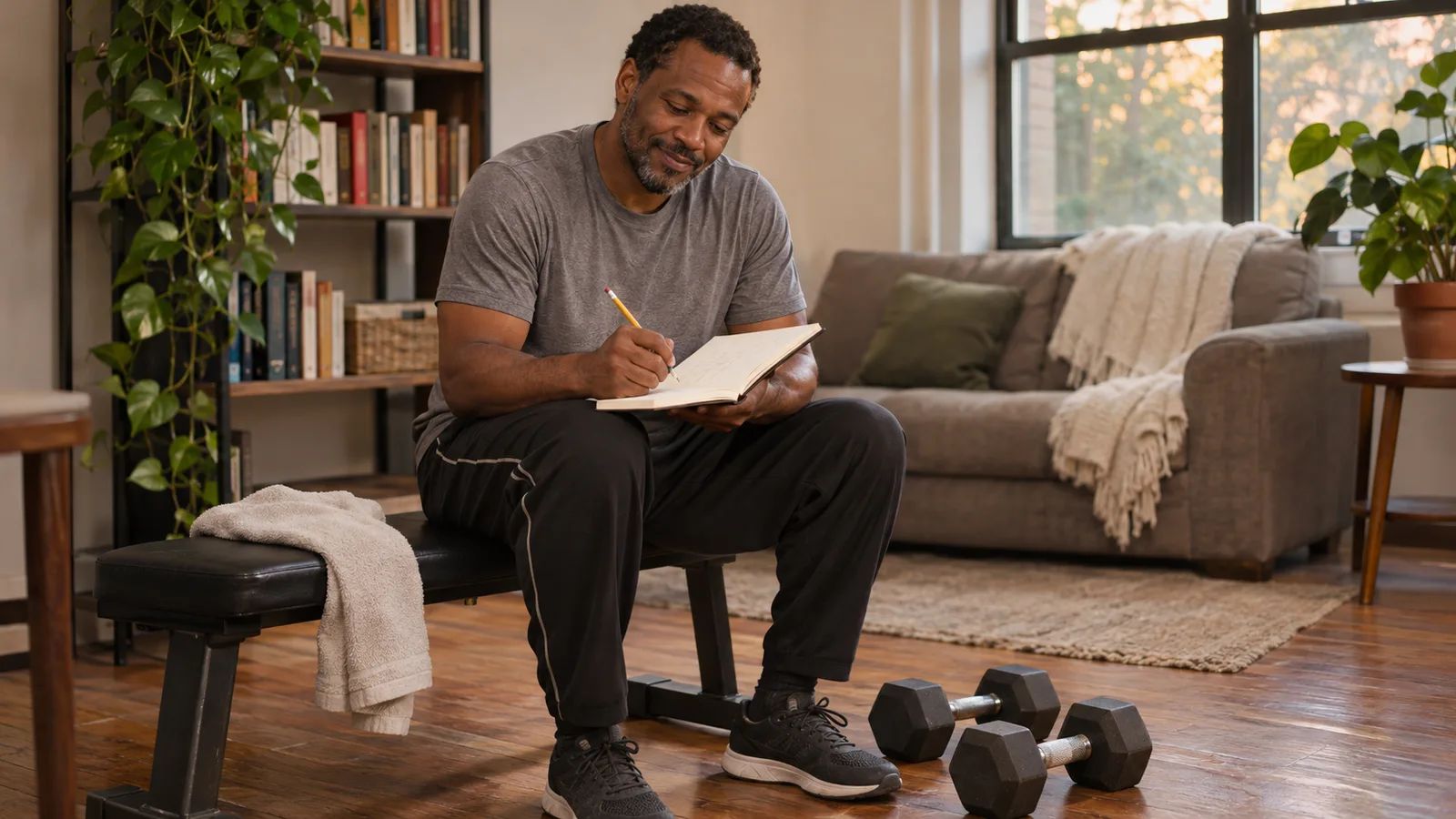
A man in his 40s sitting on a weight bench in a small apartment, writing in a paper notebook between sets, a pair of dumbbells at his feet

How to create a workout plan: 6 steps a coach follows

Pick the days you can count on, fill four slots, set the dose and write the rule for adding weight. Two worked examples and a blank plan to copy.
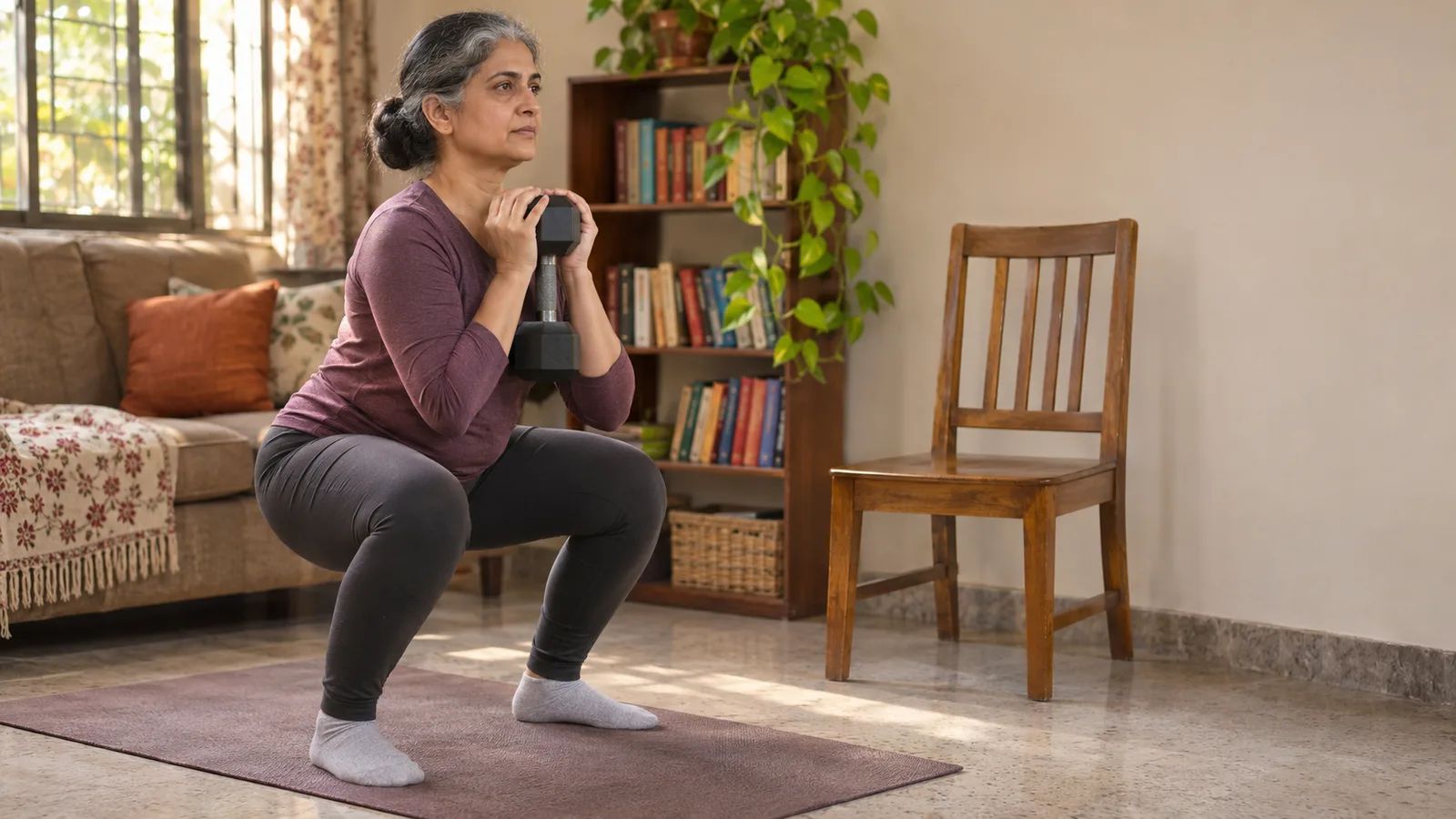
A woman in her 50s doing a goblet squat with one dumbbell held at her chest, on a mat in a sunlit living room, a wooden chair beside her

Workout plans for women: 4 free routines for home or the gym

Four free workout plans for women: new at home, new at the gym, home with dumbbells, or coming back after a break. Sets, reps and when to add weight.
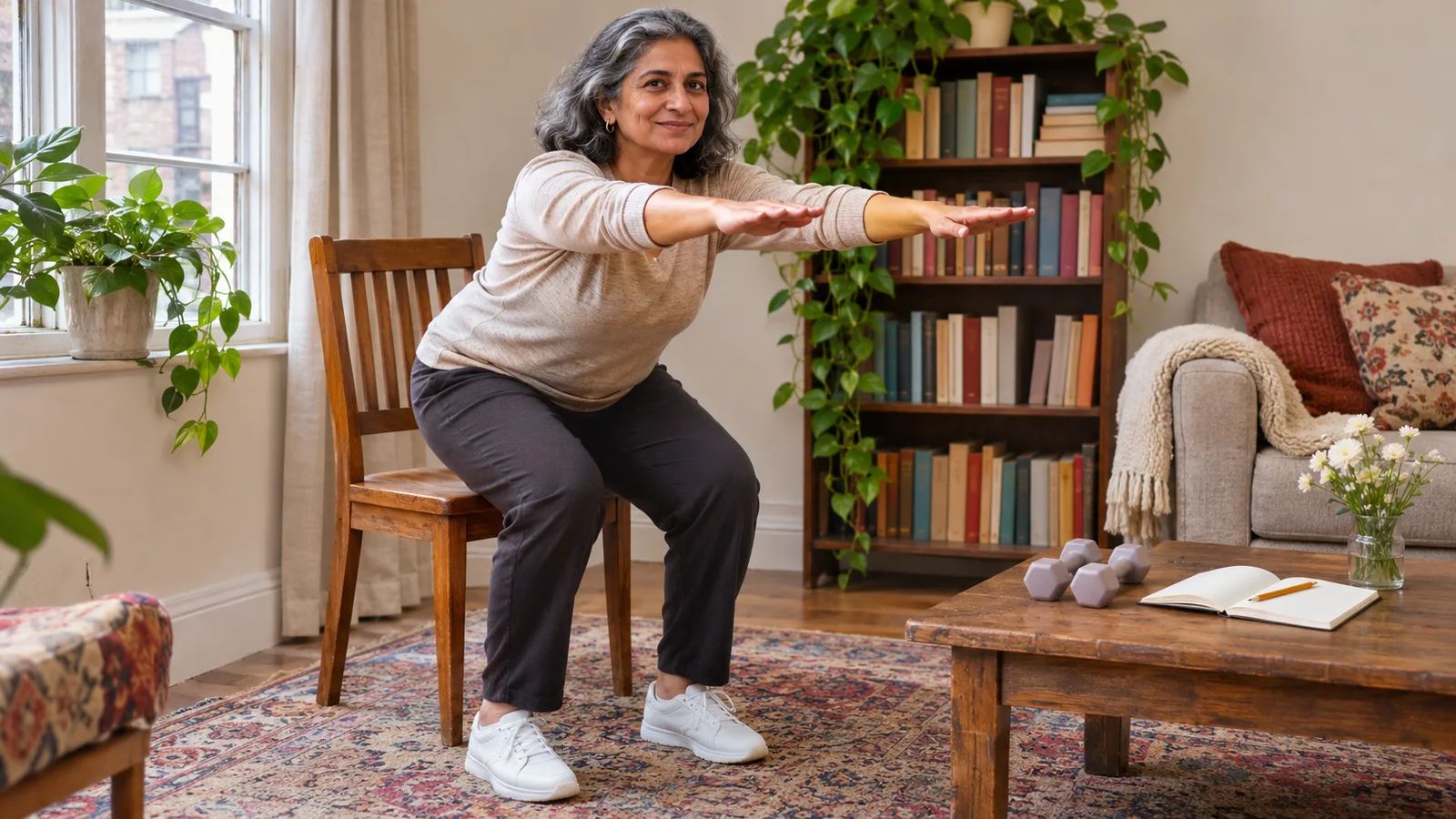
A woman in her fifties in a small city flat doing a chair sit-to-stand, light dumbbells and an open notebook on the coffee table beside her

Workout plan for beginners: your first 4 weeks, home or gym

Two full-body workouts of about 30 minutes, for home or a gym: every move, the weights to start with, and exactly what to do in weeks 1 to 4.
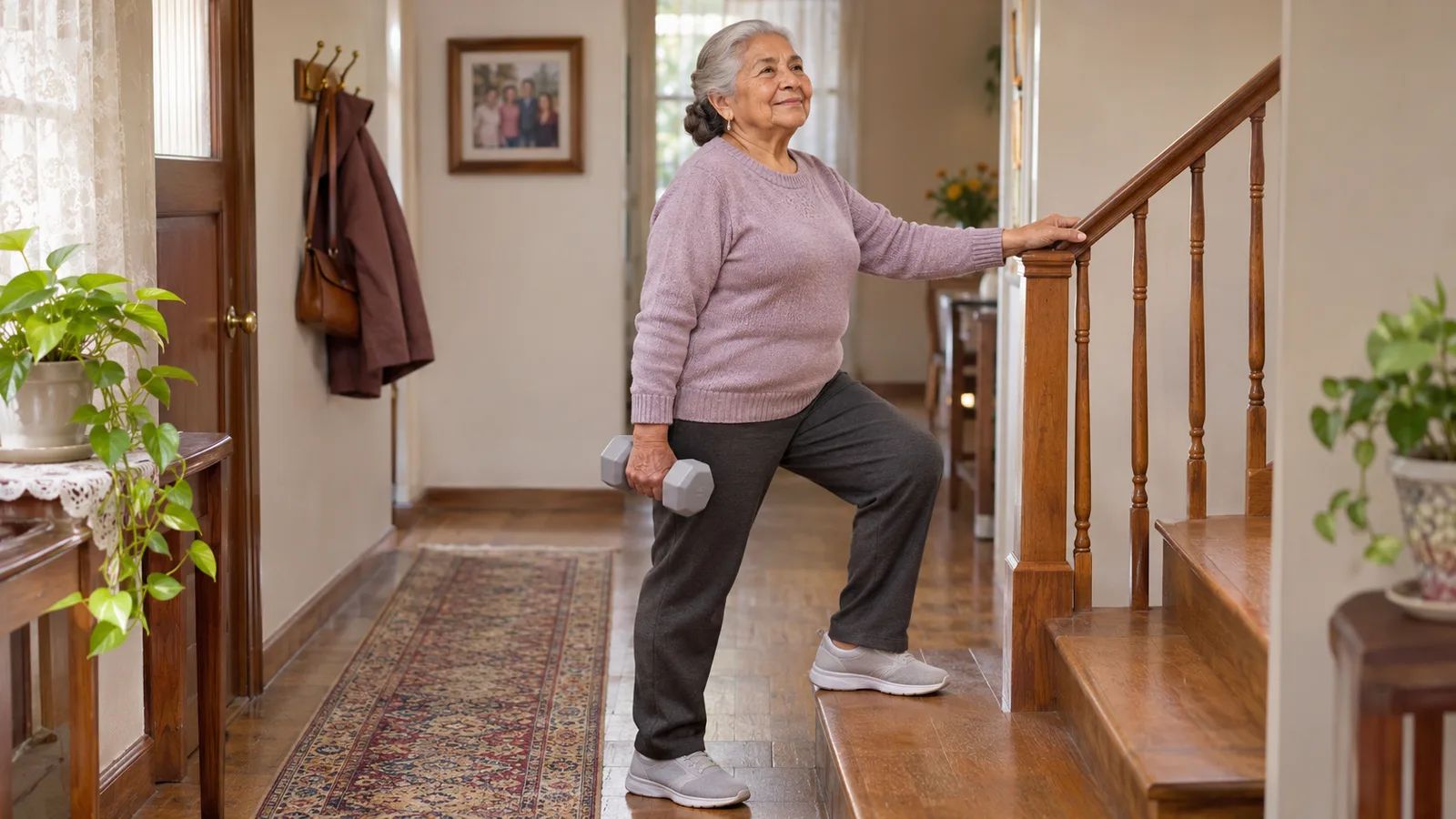
A woman in her late seventies steps up onto the bottom stair at home, one hand on the banister and a light dumbbell in the other

Strength training for seniors: where to start at any age

Twice a week, every major muscle, until the last reps feel hard. A 30-second chair test sets your starting point, then how to choose help that fits.
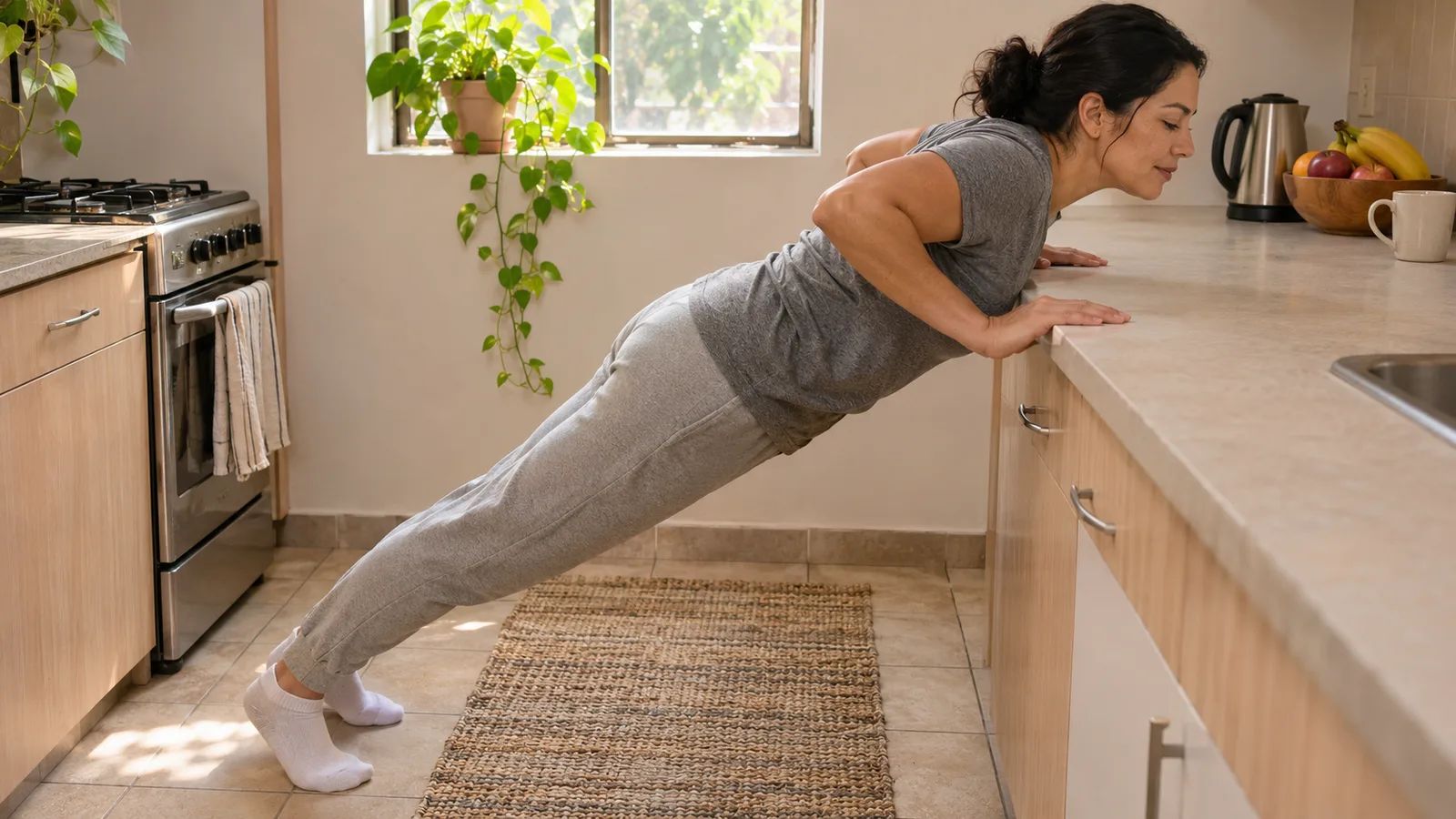
A woman in her late thirties doing a push-up with her hands on the edge of a kitchen counter in a small flat, morning light through the window

At-home workout plan without equipment: 12 weeks, any level

A 12-week at-home workout plan with no equipment. Find your starting version of each move, then train 2 or 3 times a week as the moves get harder.
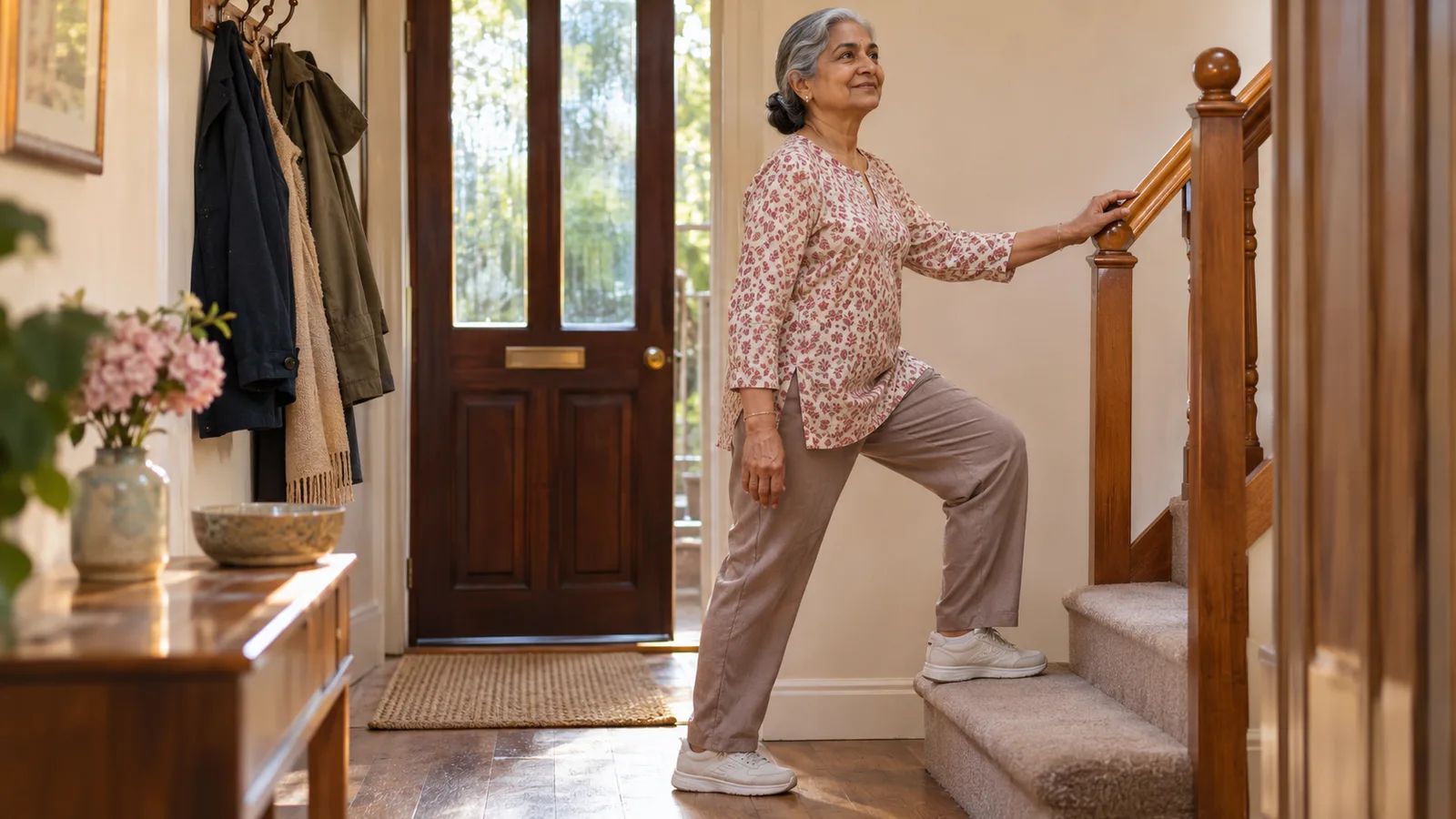
A woman in her 60s stepping up onto the bottom stair of her hallway at home, one hand on the banister, in everyday clothes and morning light

Low-impact workouts: 3 no-jump routines and a weekly plan

Low impact means nothing lands hard, not that it's easy. Jump-free swaps for every move, three home routines, a sample week, and what to add for your bones.
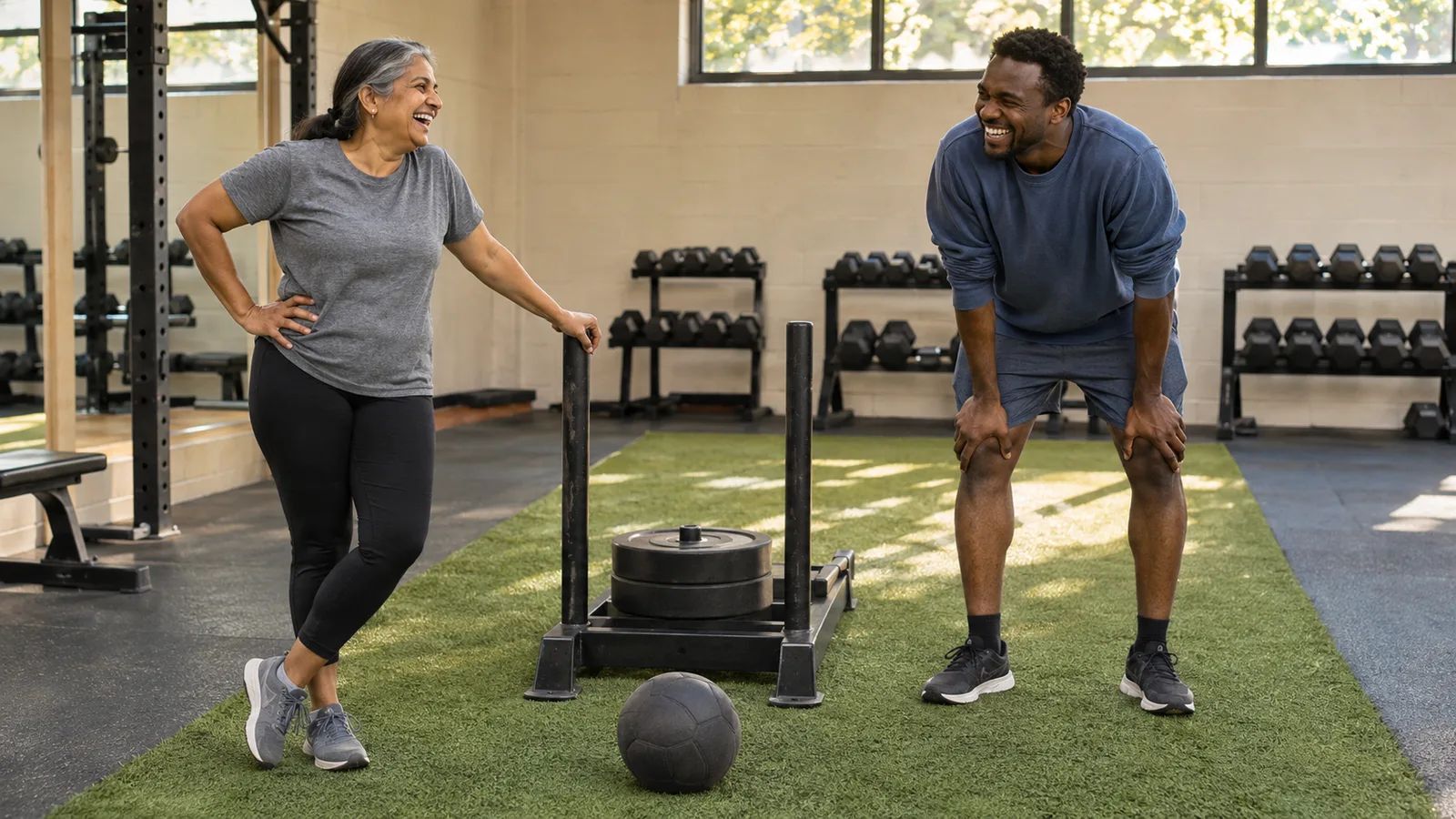
A woman in her 50s and a man in his 30s laughing between efforts beside a loaded sled on gym turf, a wall ball resting on the floor by their feet

Hyrox workout and training plan: 12 weeks to race day

A free 12-week Hyrox plan for a first race, 3 or 4 days a week, with every station and weight, swaps for a gym without a sled, and how to pace race day.
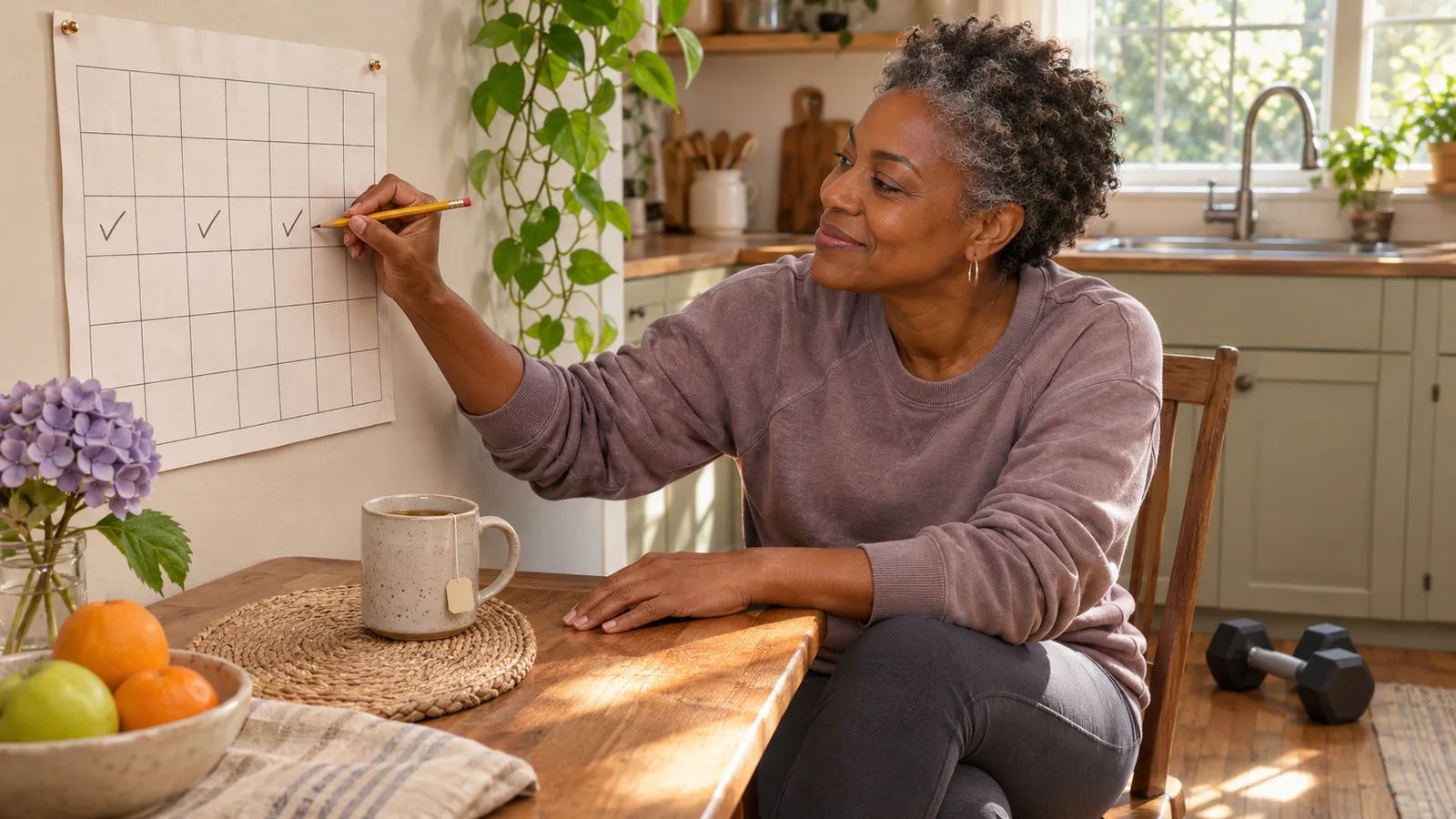
A woman in her 50s at a kitchen table ticking a third day on a paper wall calendar, a pair of dumbbells on the floor behind her chair

Best workout split for 2 to 6 days a week at any level

The best workout split depends on two things: the days you can count on in a bad week and how long you've lifted. A clear pick for 2 to 6 days.
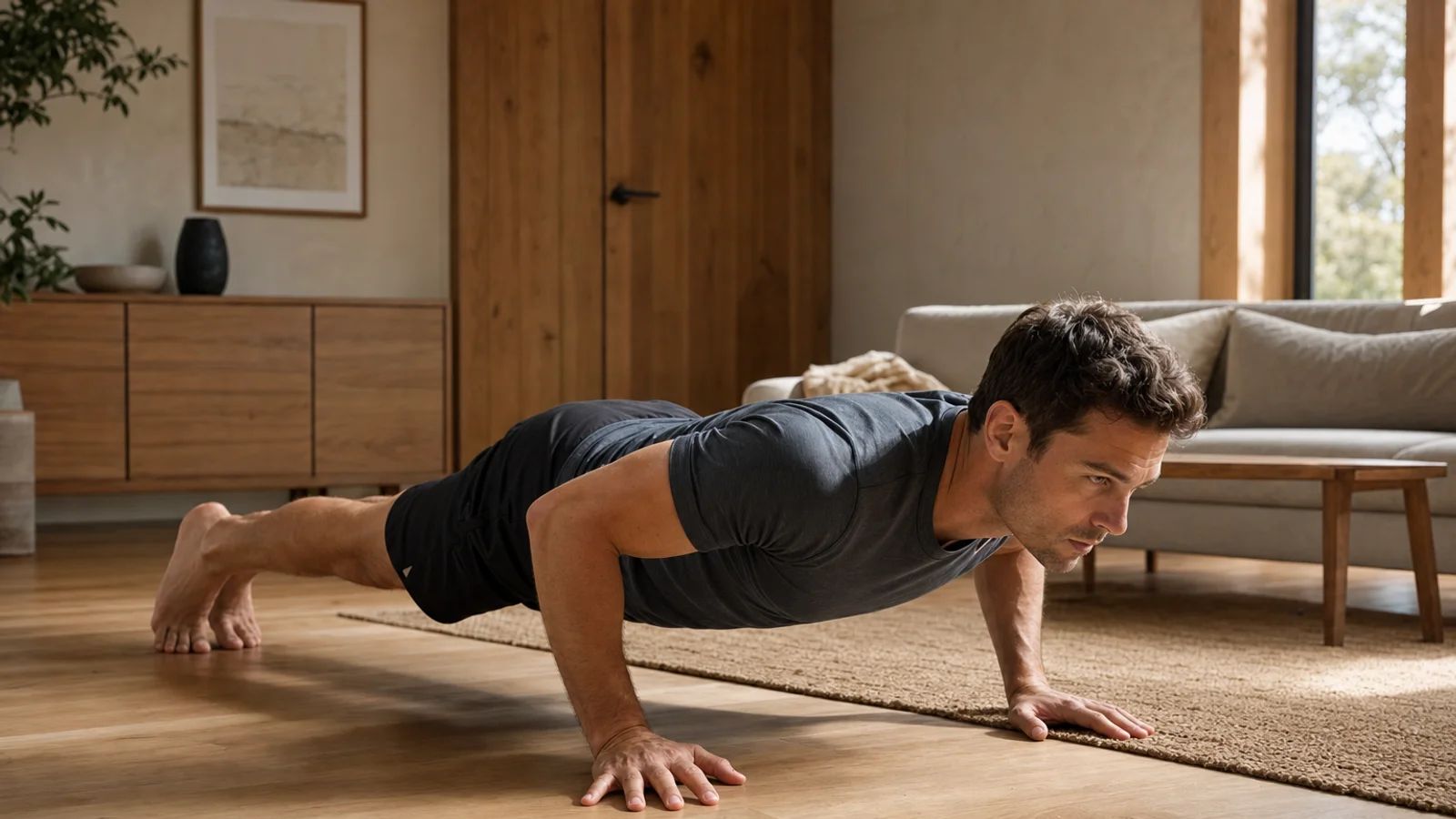
A man in his forties in a sweatshirt and socks doing a push-up with his hands on a carpeted stair in his hallway, coats and a shoe rack behind him

Progressive overload at home without adding weight

You can keep getting stronger at home with light dumbbells or none. Add reps to about 25, then move to a harder version. Ladders that start at the wall.
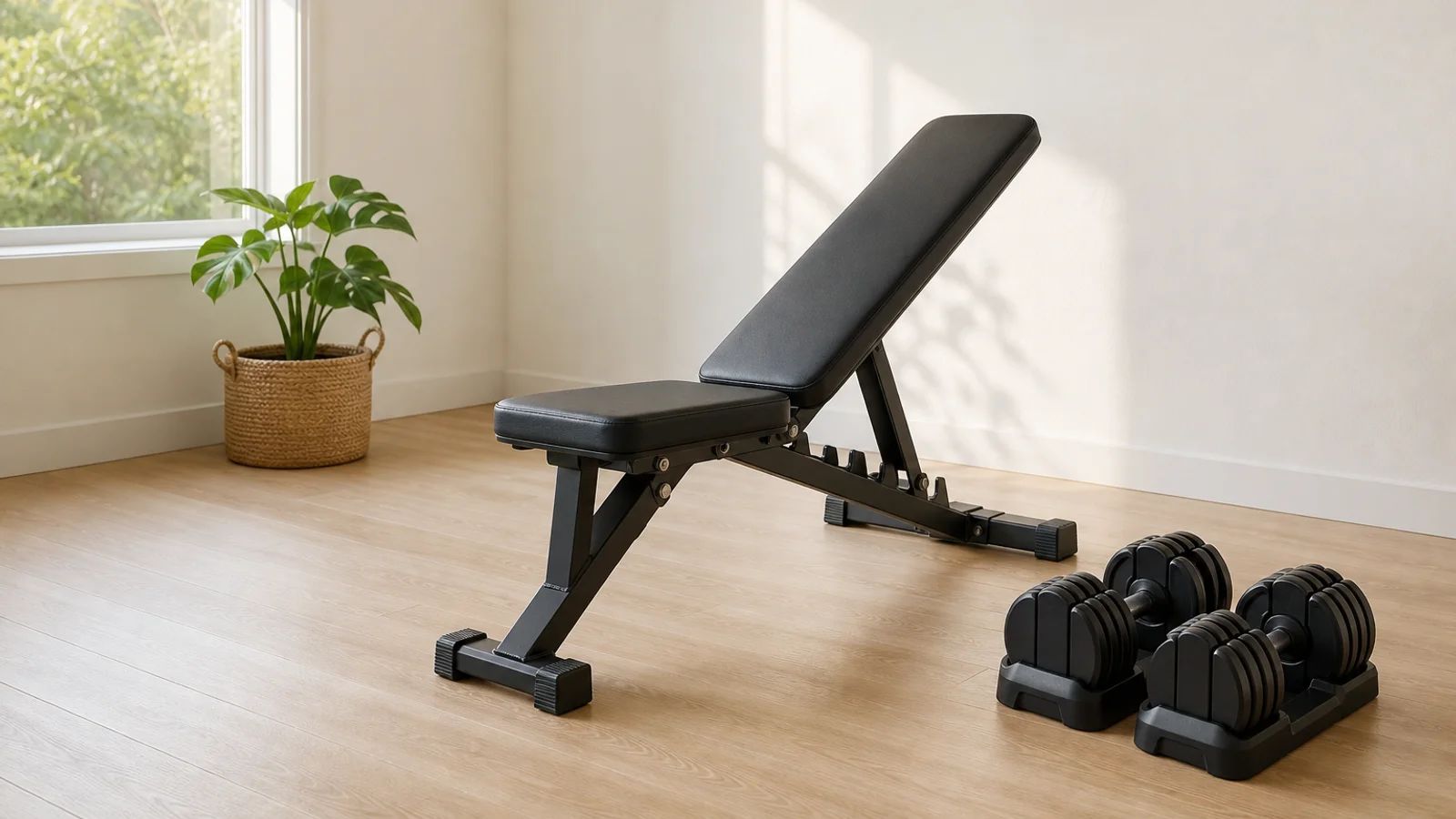
A woman in her 60s doing a one-arm dumbbell row with one knee and one hand on a wooden dining chair, a second dumbbell and a rolled mat on the floor beside her

Home gym essentials: what to buy first for $300 or less

A home gym needs dumbbells, a band kit, a chair or bench and a mat. Four carts for $300 or less, priced from real listings, and what can wait.
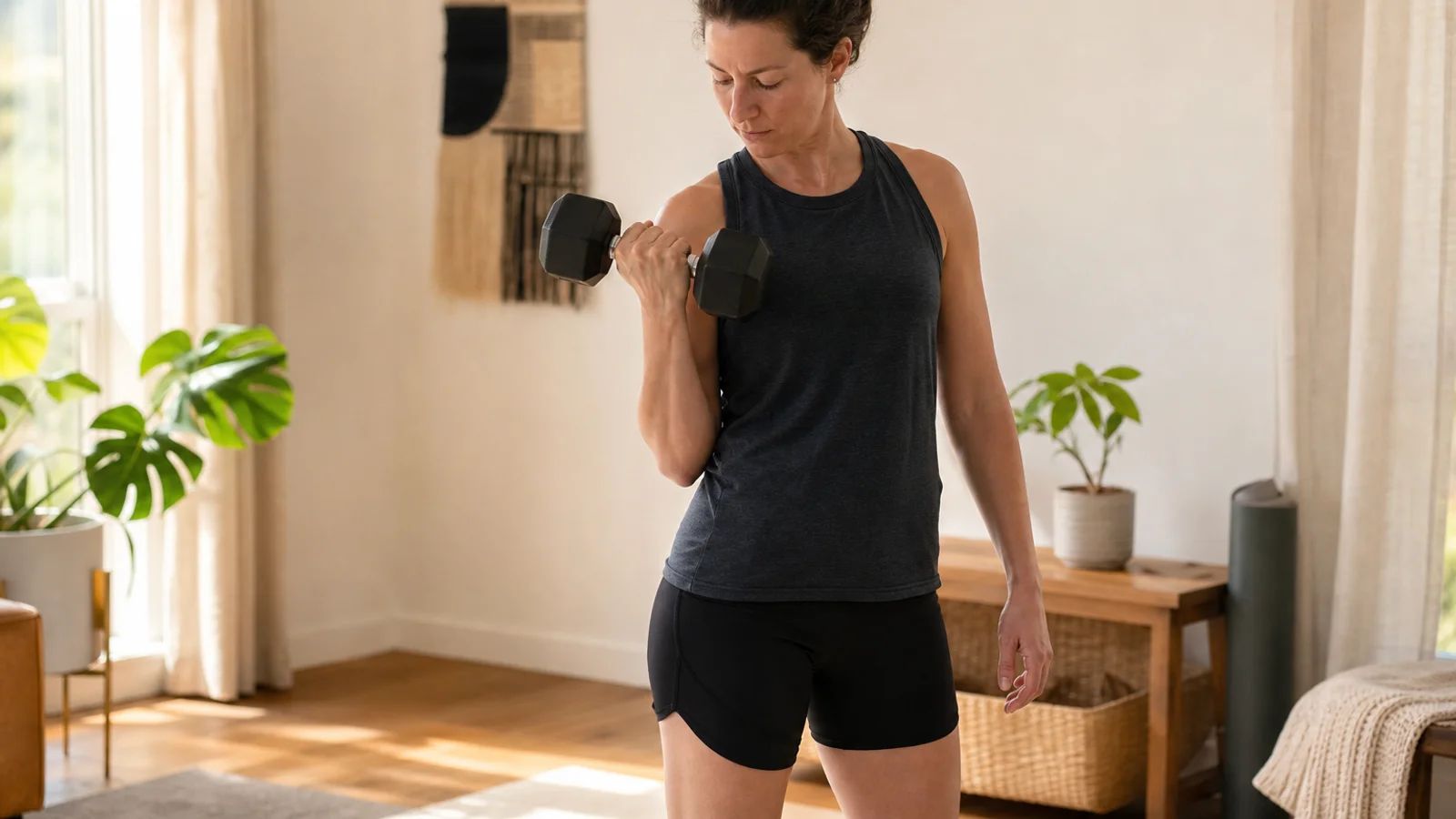
A woman in a tank top and shorts curling a dumbbell in a sunny living room with plants and a rolled-up mat

Skinny fat: what it is, and should you bulk or cut?

Skinny fat means a normal weight with too little muscle. How to tell with a tape measure, why it matters, and why bulk or cut is usually the wrong question.
A woman in her late forties does a goblet squat with one dumbbell in a small home office, a closed laptop and a notebook on the desk behind her

How to stay fit as a founder when your week blows up

Two short sessions a week, any two days, moved but never skipped. A workout plan for busy founders and entrepreneurs that holds in your worst week.

A smiling man in his 40s on a bench by his front door in the evening, tying his trainers, a rolled exercise mat leaning against the wall

When do most people quit the gym? Half by six months

Half of new gym members stop coming within six months, and the biggest drop is in weeks 5 to 8. Why it happens then, and what people who stay do differently.
A man in his 60s in an old t-shirt doing a slow squat towards the edge of a bed in a spare room, an ironing board and laundry basket behind him

Identity-based habits: how to become someone who exercises

Seeing yourself as someone who exercises does keep you training, but that identity grows out of doing it, slowly. How to build it, starting this week.

A grey-bearded man in a plum T-shirt reaching for a light dumbbell on a living-room shelf, with a plant and a sunny window behind him

How to get back in shape and start working out again

How to get back in shape after a break: a third of your old weights or half your old cardio, on fixed days, scaled to your time off. Plus how long it takes.
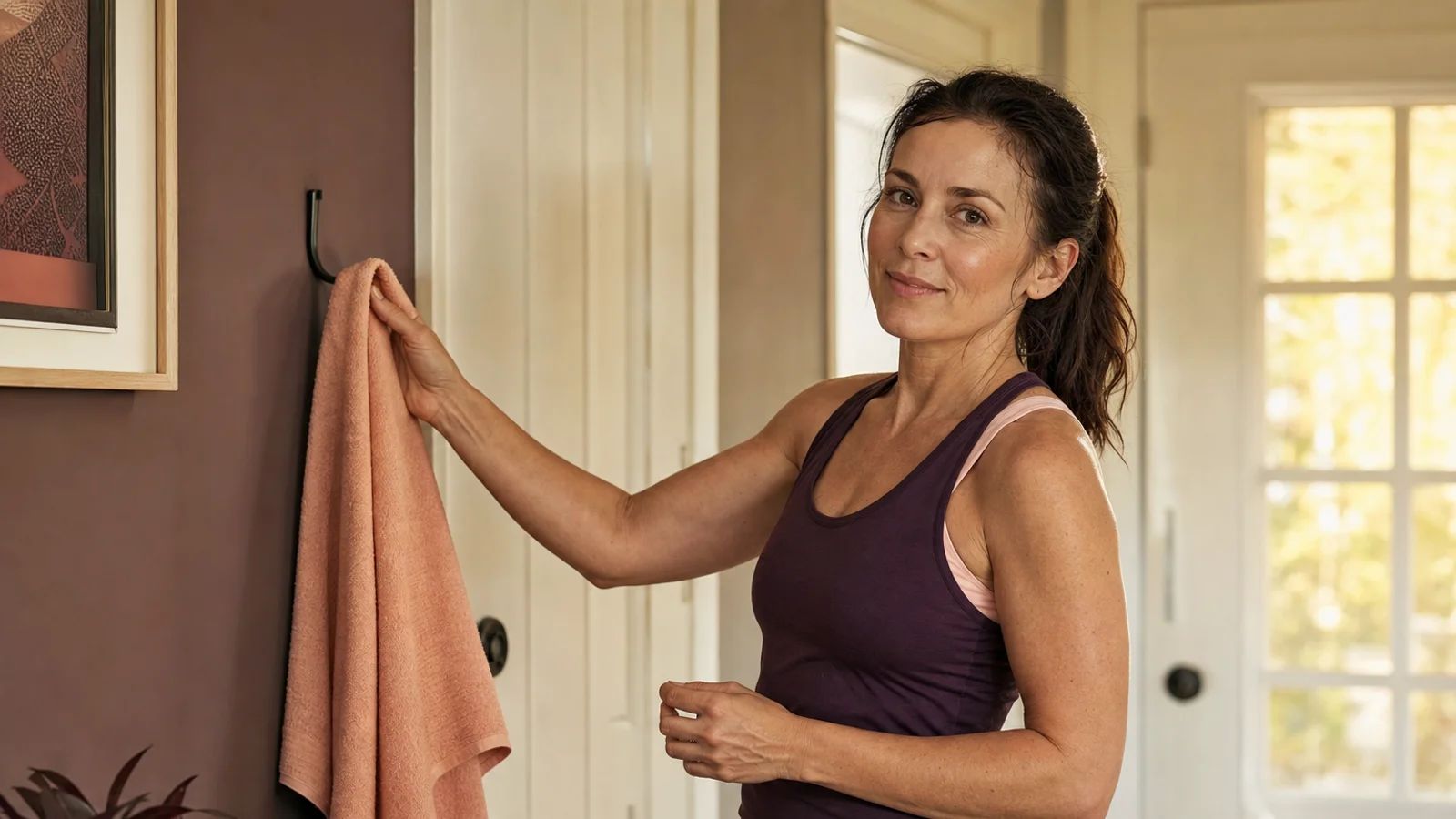
A woman in her 40s in a purple tank top hanging a peach towel on a hook at home, sunlight coming through the window behind her

How long until working out is a habit? 6 weeks to 7 months

Working out takes 6 weeks to 7 months to feel automatic, not 21 days. What the studies found, why the numbers disagree and what one missed day does.
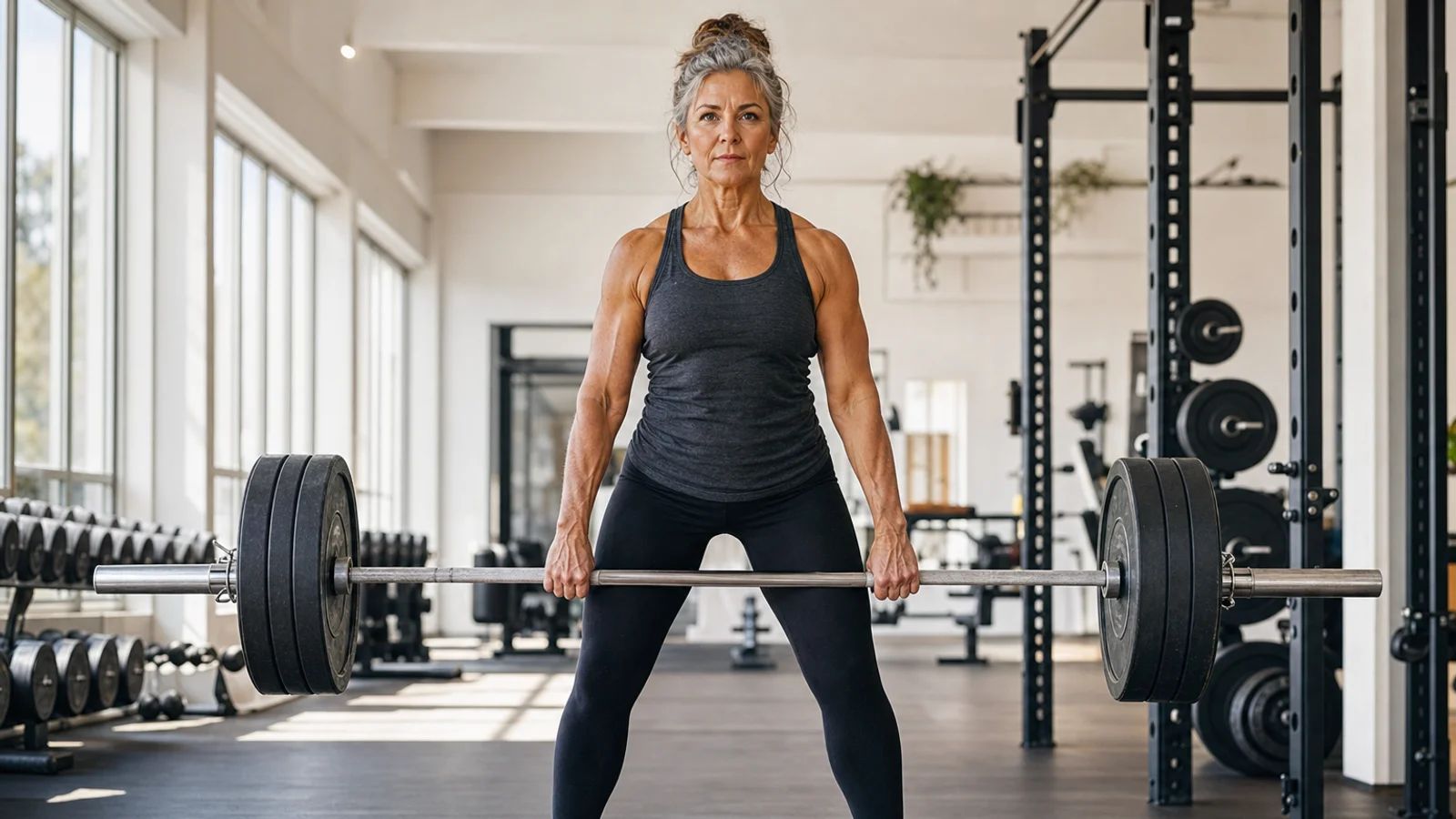
A woman in her fifties doing a goblet squat with a kettlebell on her garden patio

Strength training for women over 50: heavier than you think

Two or three days a week, five moves, and weights heavier than most women pick. A home or gym plan, how to tell what's heavy, and when to see a doctor first.
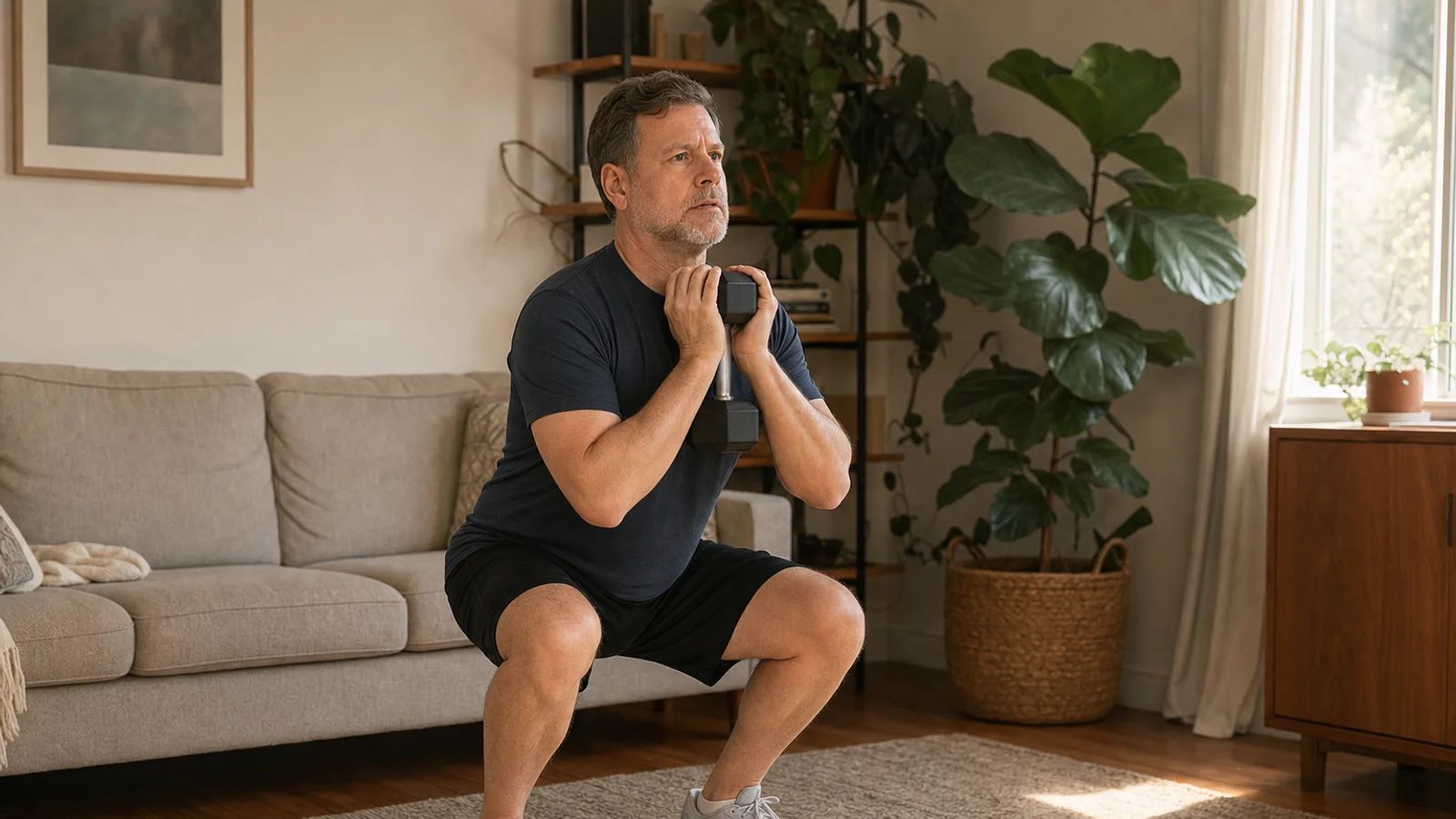
A man in his fifties doing a goblet squat with one dumbbell in a sunny living room with a sofa and plants

Starting to lift weights at 50: your first 12 weeks

Not too late: a study of new lifters found no significant difference in strength gains by age. Your first session, five moves and a 12-week home plan.
A smiling man in a T-shirt and joggers holds a light dumbbell in a sunny living room, with a phone propped against a stack of books in the foreground

Workout app vs personal trainer: which one do you need?

A workout app costs $0 to $30 a month and writes a fine plan. A trainer picks the weight and expects you. Which you need, and what an hour of coaching costs.

A woman in her late fifties swims a relaxed freestyle in a sunlit indoor pool, wearing a dark swim cap and clear goggles

Zone 2 swimming: why your heart rate reads lower in the pool

Yes, easy swimming counts as zone 2. Heart rate often reads lower in a lap pool and wrist watches misread in water, so here's how to find your zone by feel.
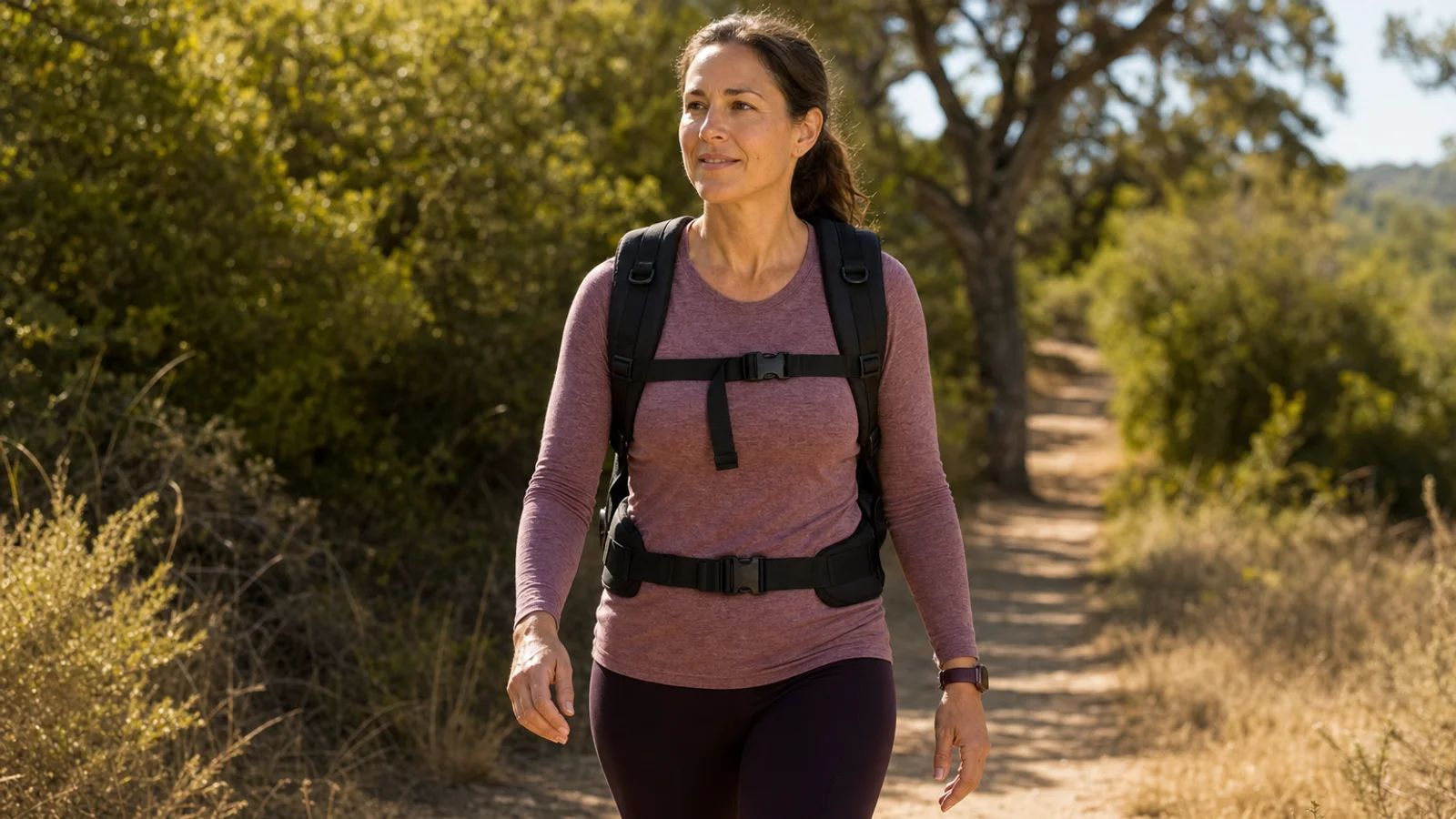
A woman in her forties walks a sunny dirt trail wearing a black backpack with the chest strap and hip belt fastened

Rucking: real benefits, how much weight and how fast to go

Rucking is walking with weight on your back. What it really does for you, how heavy to start, how fast to walk at your age, and when to add more.
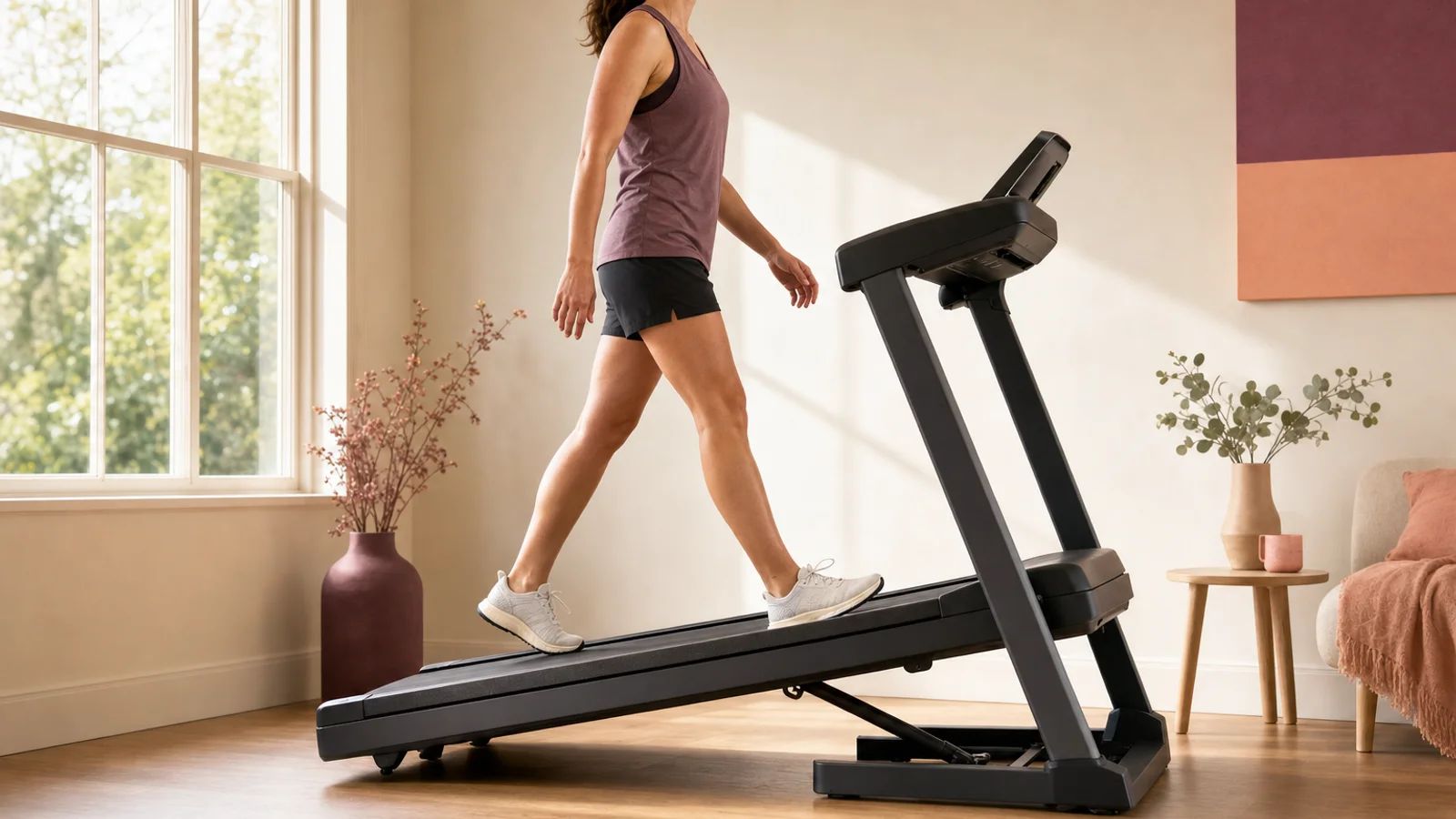
A grey-haired man walks toward the console of a gently inclined treadmill in his garage, the door open to a leafy driveway, hands off the rails

12-3-30 workout: is it zone 2? Incline settings by age

12-3-30 is a 12% incline at 3 mph for 30 minutes. What it burns, who it's zone 2 for, how to build up to it, and the right incline for your age.
A man in his 50s carrying two full shopping bags up the front steps of his house in one trip, his car parked behind him with the boot open

Why beginners get stronger so fast: it's mostly neural

In your first weeks of lifting, most new strength comes from your nervous system, not new muscle. What changes, when muscle takes over, and how to use it.
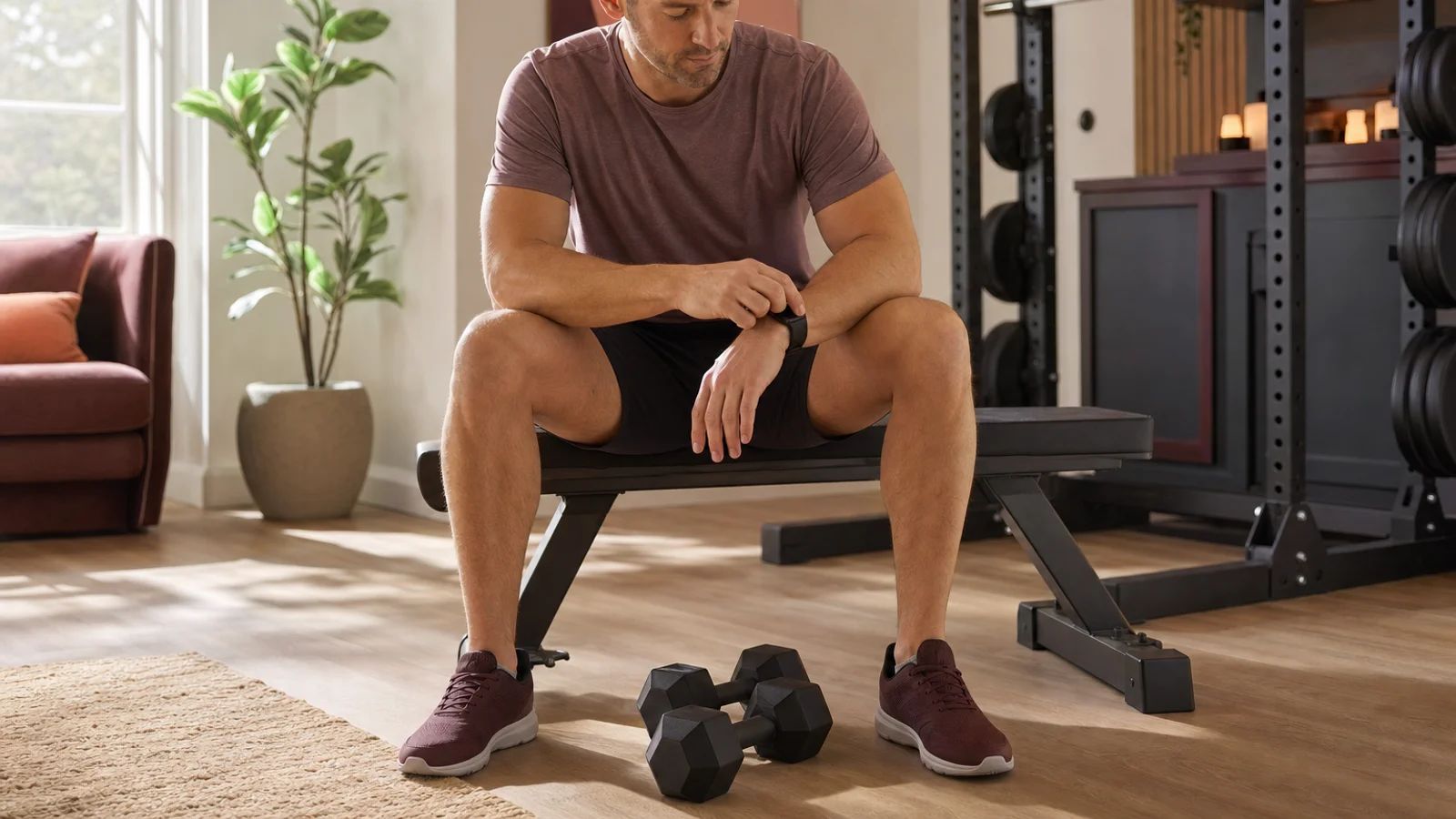
A man sitting on a weight bench at home between sets, checking his watch, with two dumbbells at his feet

How long should you rest between sets? 1 to 3 minutes

Rest 2 to 3 minutes on squats, presses and rows and 60 to 90 seconds on curls. What a 1-minute rest costs you, and how to make 3 minutes feel shorter.

A young woman in a T-shirt and leggings squatting in her small flat, hugging a backpack full of books to her chest as a weight

How do muscles actually grow? Tension, not tiny tears

Muscles grow when fibers pull hard against a load, not from tiny tears or soreness. The chain from one rep to more muscle, and how much to expect.
A man in his sixties doing a slow squat to a dining chair in his living room, a pair of dumbbells on the rug beside him

What's a good warm-up before lifting? A 10-minute routine

A good warm-up before lifting takes about 10 minutes: easy movement, moving stretches, then lighter sets of your first exercise. Short stretches are fine.
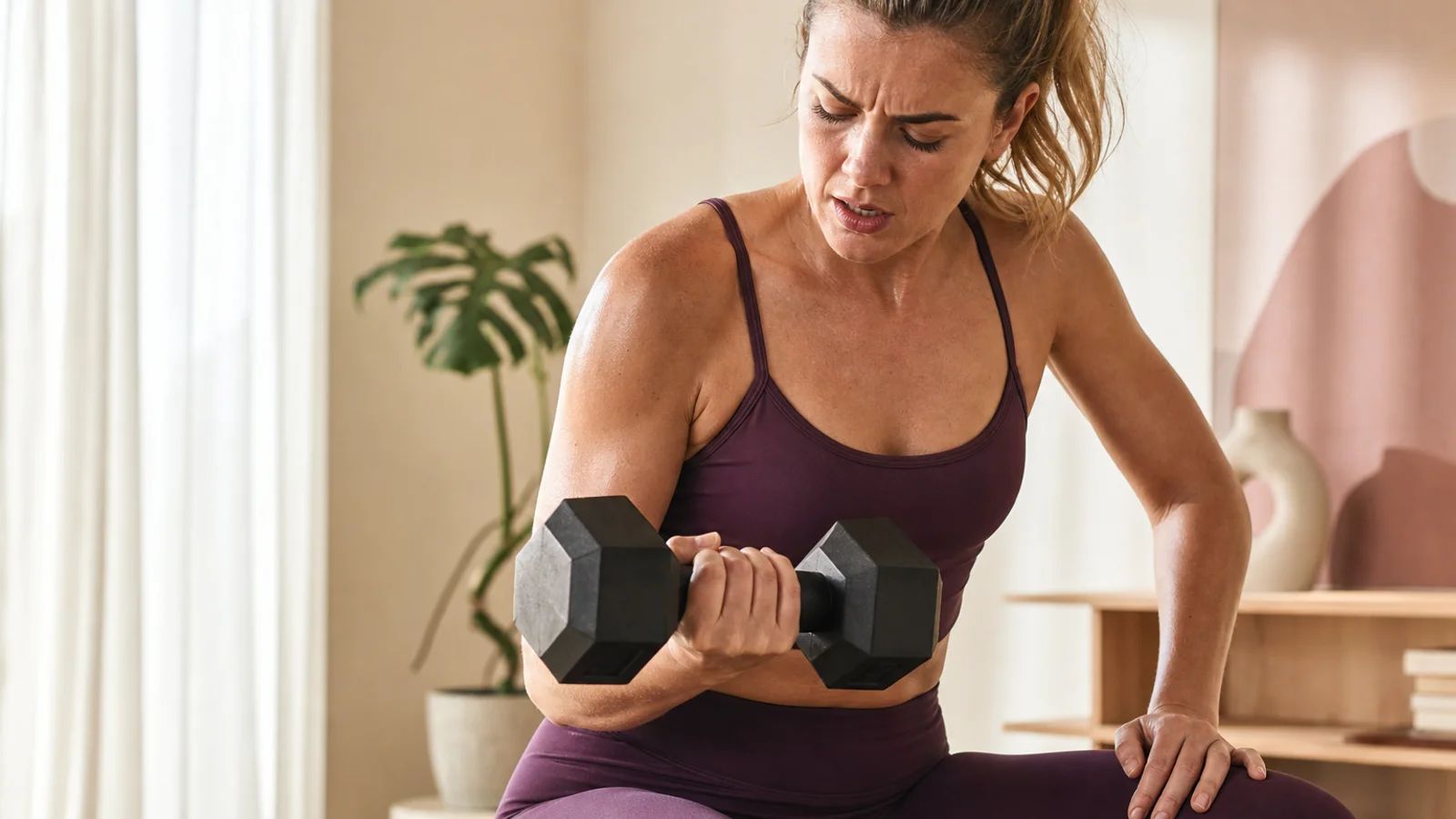
A woman in her sixties doing a one-arm dumbbell row with one knee on a wooden bench in her living room

RPE and reps in reserve: what RPE 8 means and how to rate it

What RPE 8 and 2 reps in reserve mean, a quick chart, and a simple test to find out how far off your guesses are, plus what to do with the next set.
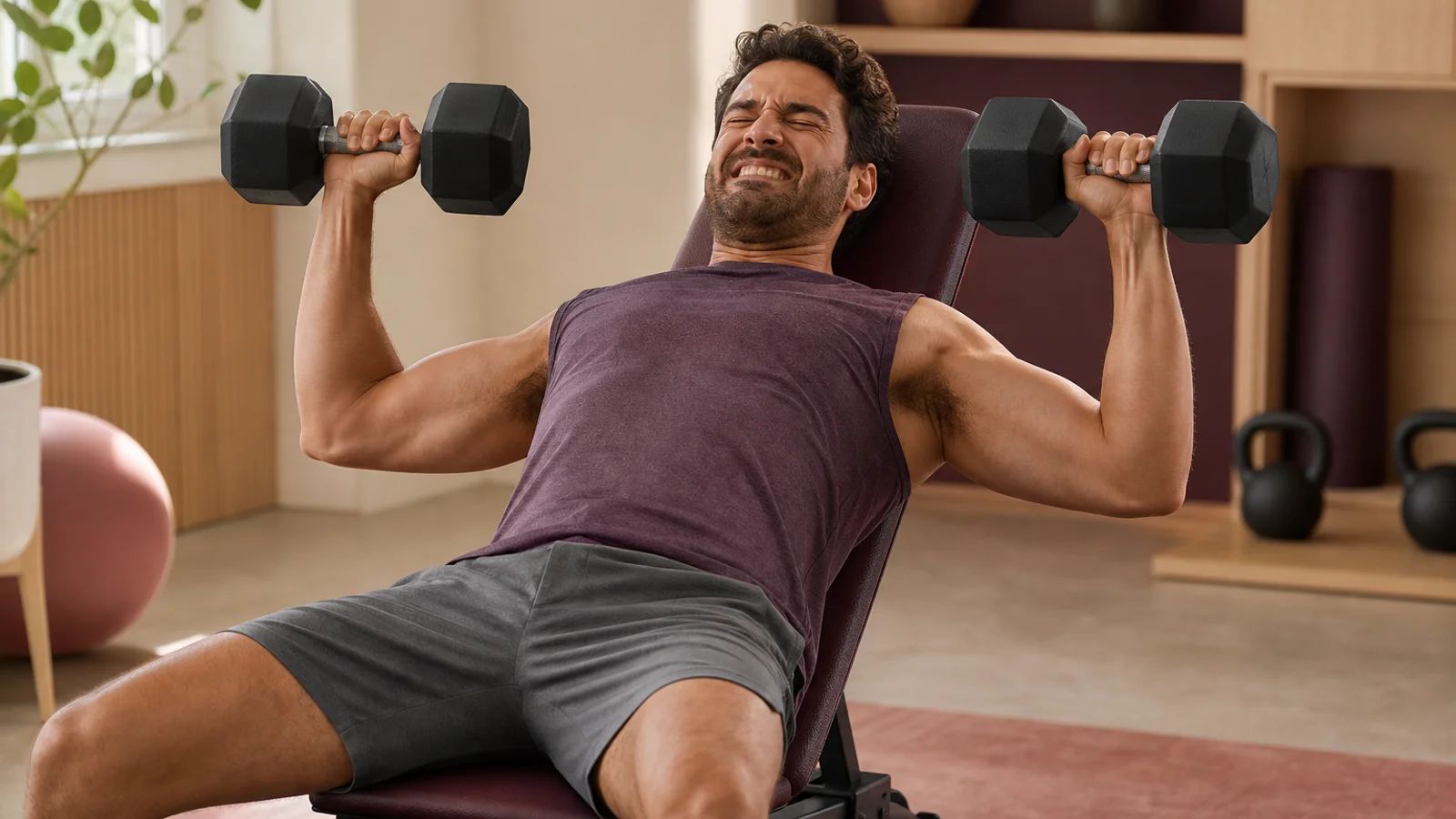
How close to failure should you train? 1 to 3 reps short

How close to failure should you train? 1 to 3 reps short

Close to failure means stopping with 1 to 3 good reps left. You keep the strength and nearly all the muscle for less fatigue. How to tell where you are.
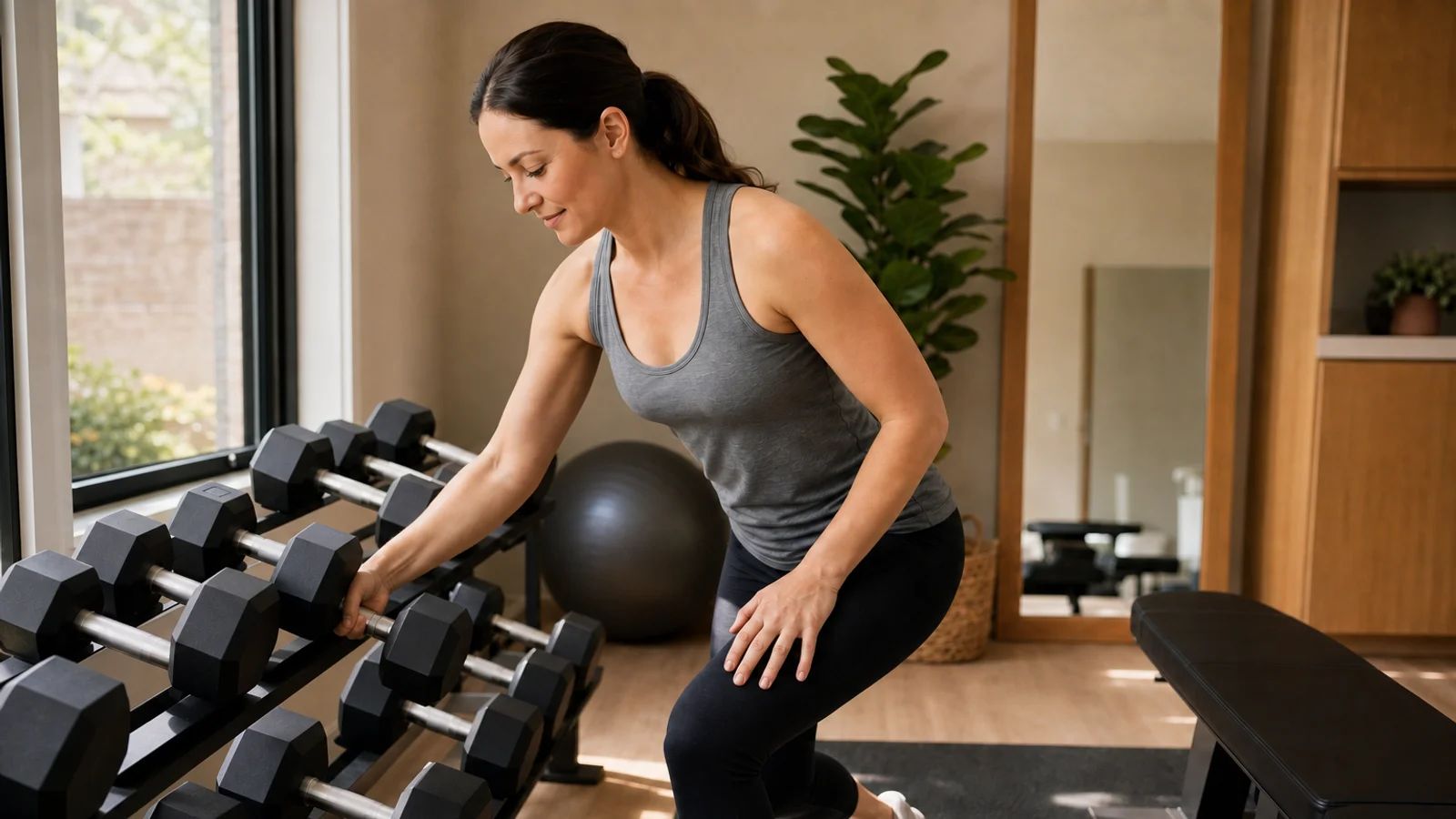
A woman choosing a dumbbell from a rack in a sunny home gym

How much weight should a beginner lift? Numbers by exercise

Most beginners start with 5 to 10 lb (2 to 5 kg) for arm moves and about double for legs. A three-set test to check yours, and what to do about big jumps.
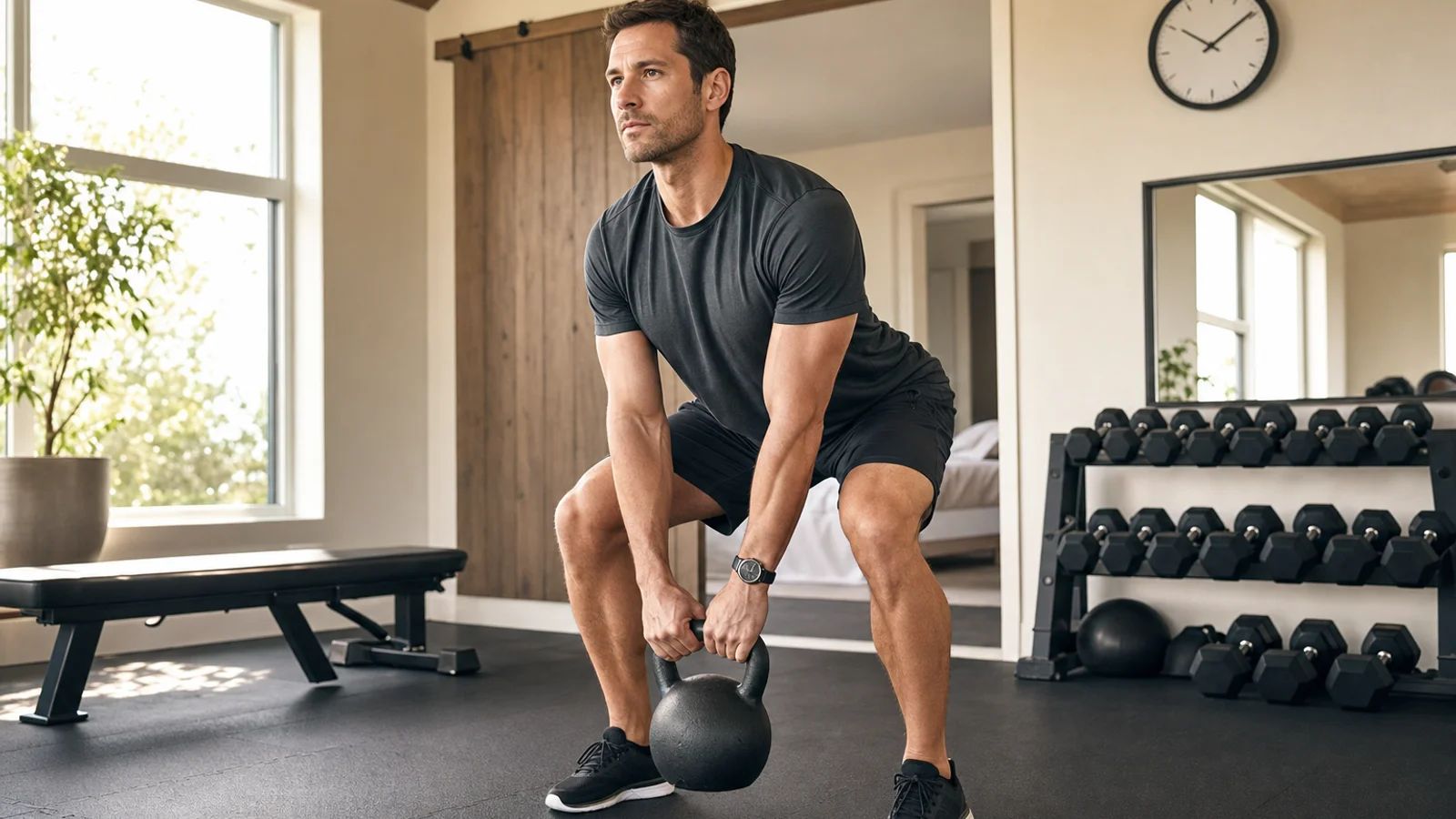
A man in his fifties in a t-shirt and joggers does a goblet squat with one dumbbell in his living room, a wall clock on the wall behind him

How long should a workout be? 45 minutes is usually enough

Most workouts need 30 to 60 minutes, and 45 is enough for strength and muscle 2 or 3 times a week. Times by goal, per day, and a 45-minute plan.
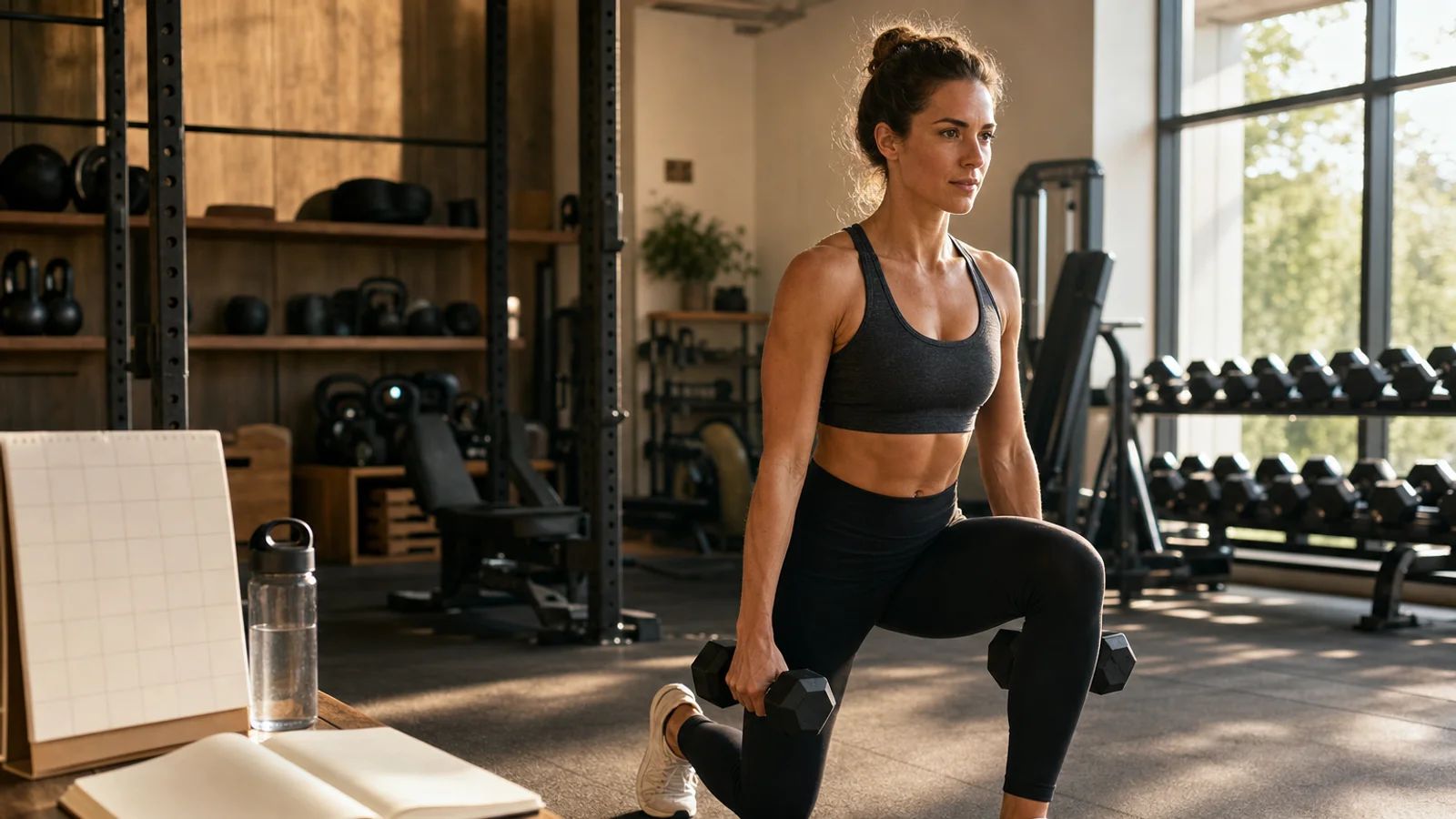
An older man in a sweatshirt holding a light dumbbell in his home garage, smiling at an open notebook on the workbench

How long does it take to build muscle? 2 to 6 months

Muscle starts growing in your first month and shows by month 2 to 6. Strength comes first. A week-by-week timeline, plus how many pounds a month to expect.
A hand resting on a rack of black hex dumbbells in a warm, plum-walled room at home

How to track workouts for progressive overload

Log the weight and reps of your three to five main moves on a card, a phone note or an app. What to write, what to skip, and how to turn it into progress.
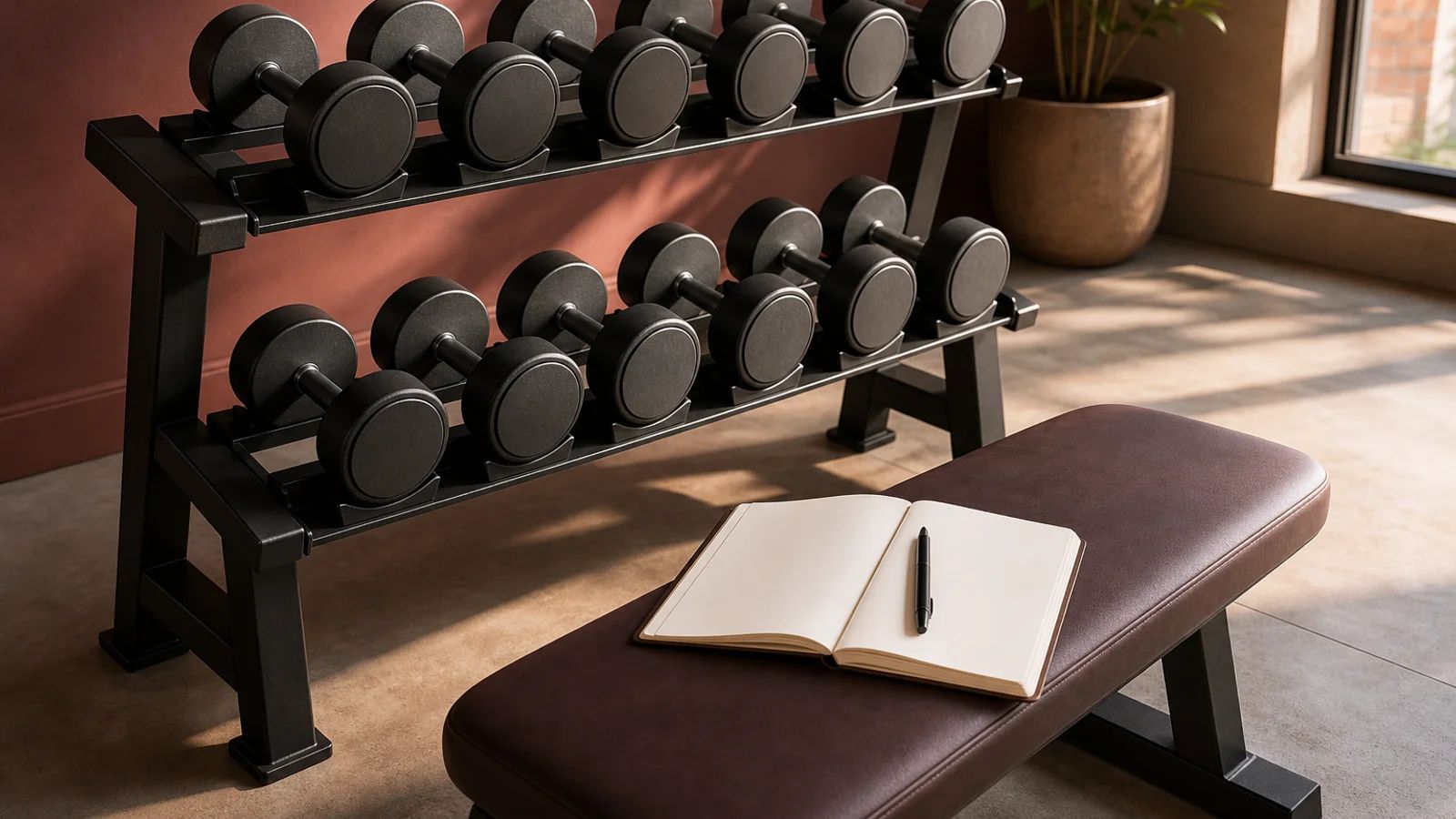
A woman doing a goblet squat with one dumbbell on a small garden patio, a notebook open on the chair beside her

How many sets per muscle group per week? 10 is enough

About 10 hard sets per muscle a week builds muscle well, 4 already works, and past 20 each set adds less. How to count yours, and why strength needs fewer.

A woman in her forties jogs easily along a tree-lined riverside path in warm morning light, smiling, a watch on her wrist

What is zone 2 training? The pace where you can still talk

Zone 2 is the steady pace where you can still talk in full sentences. How to find yours without a lab, why your watch may set it too low, and a first month.
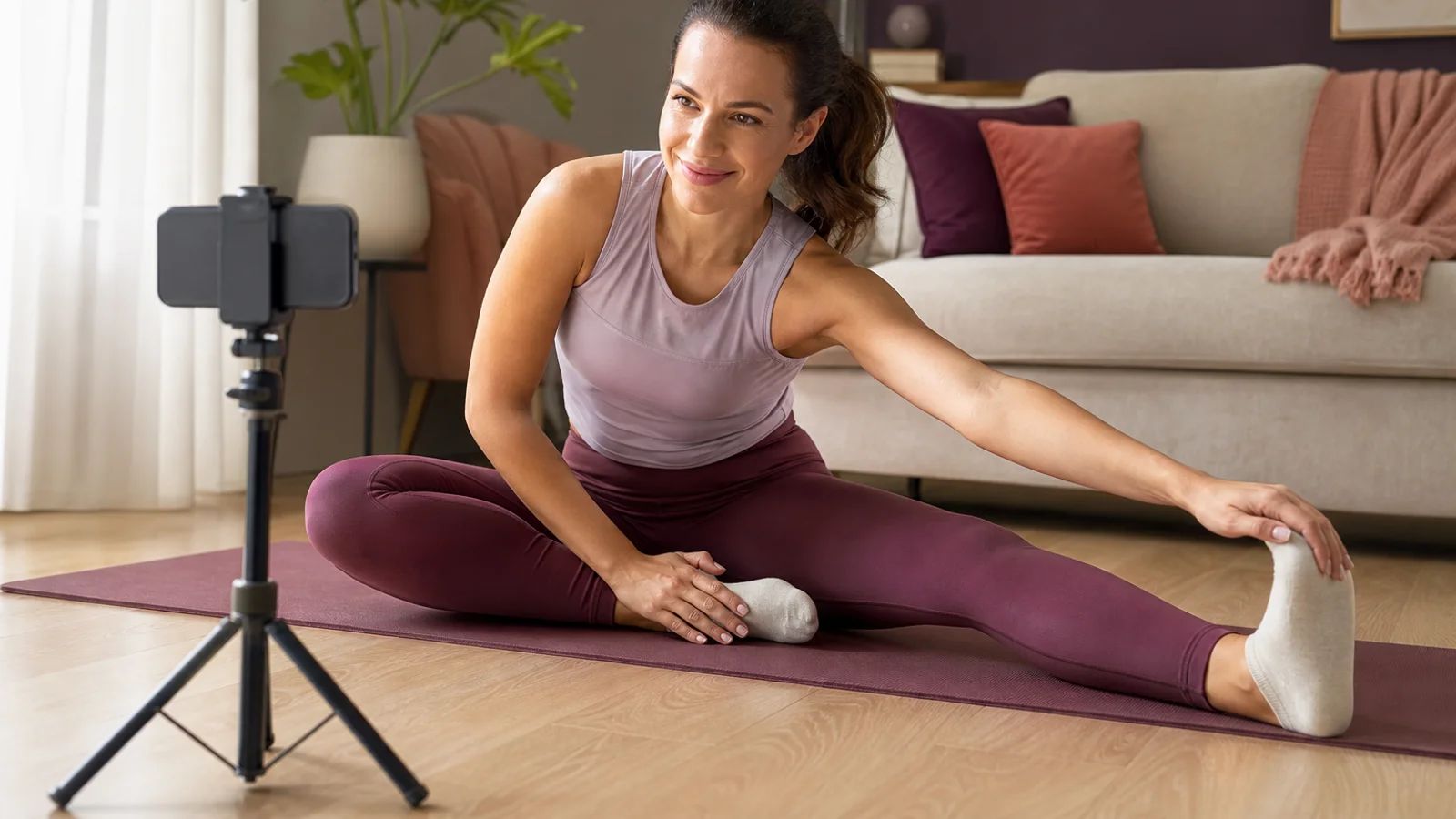
A woman laughing mid-squat in front of a wooden chair in a small spare room, a phone set sideways on a tripod in the foreground

Is it awkward to work out on camera? Mostly the first time

Why being on camera feels strange (mostly it's your own face), what a coach actually watches, how fast it fades, and what being watched is worth.

A sunlit living room with an armchair, a plum exercise mat and two small dumbbells on a wood floor

Personal training for people who hate gyms: start at home

You don't need a gym, or to get fit first. Your trainer options at home, what each costs per coached hour, and how to start free if you'd rather.

A man at a desk at home frowning at his phone, with a mug, a notebook and an open laptop in front of him

12 red flags when hiring an online personal trainer

Five warning signs that mean walk away, seven that mean ask first, the questions to send before you pay, and how to check a certification.
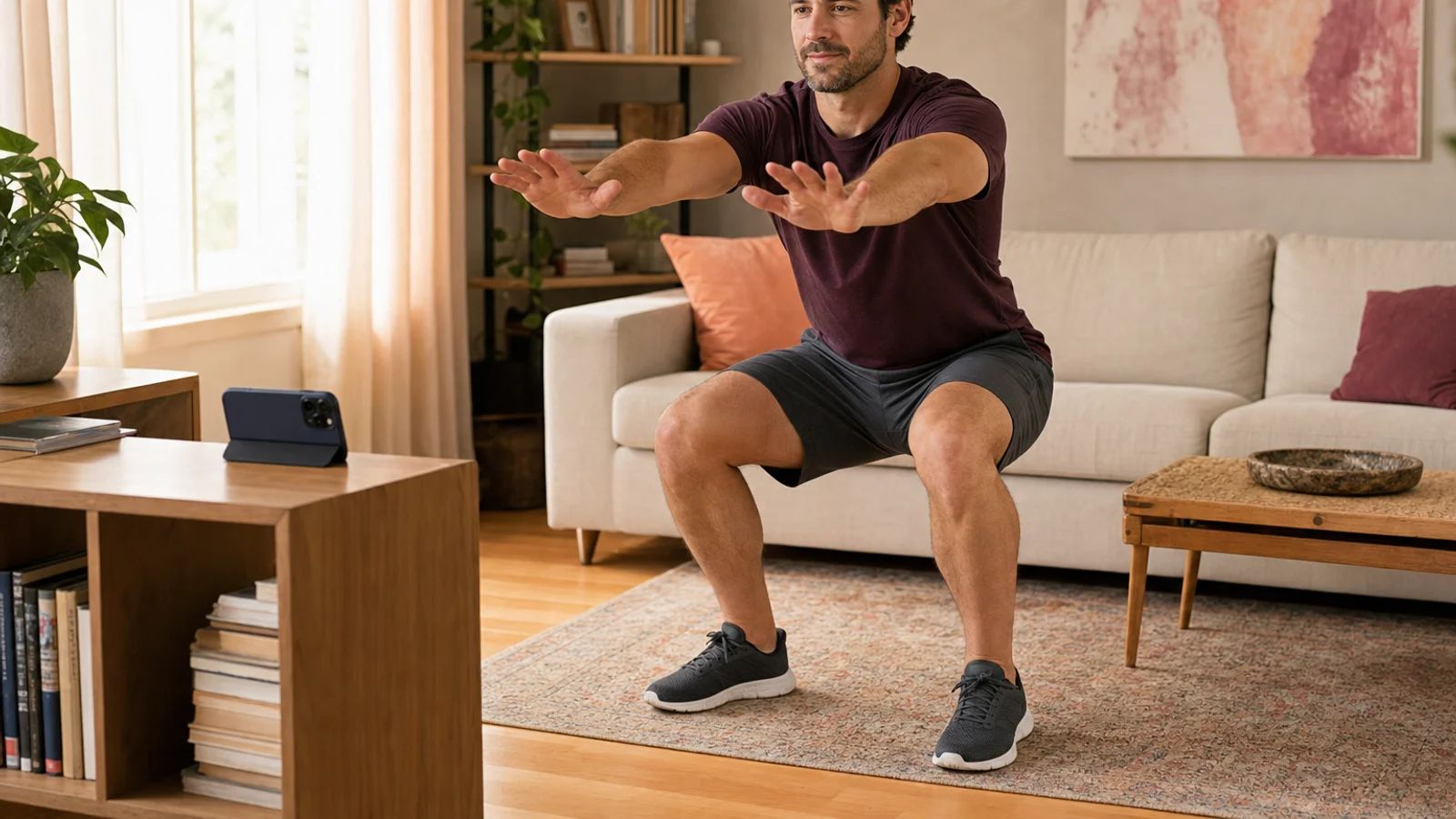
A man doing a bodyweight squat on the rug in his living room, a phone propped on a low cabinet facing him

First online personal training session: what to expect

A short chat, then a coach watching you move. The hour in order, what your coach looks for, what to have ready, and how services differ.
A blank desk calendar beside a glass water bottle and a folded towel on a wooden table in warm afternoon light

How often should you train with an online personal trainer?

Train 2 to 4 days a week. Here's how many of those to book with a live online coach, what an app coach should do each week, and what each option costs.
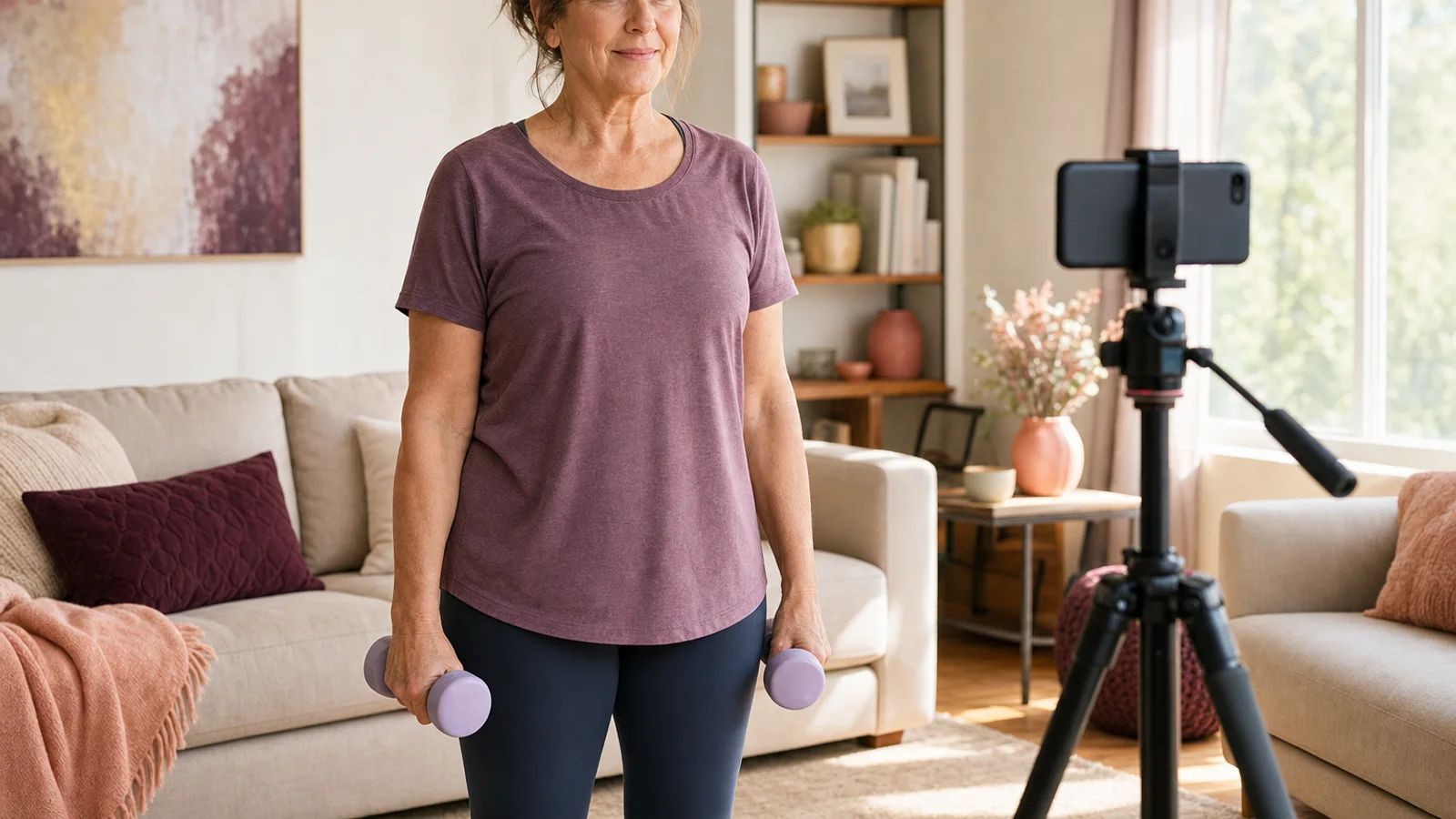
A woman in her sixties holding a pair of light dumbbells in her living room, a phone on a tripod facing her

Online personal trainer for beginners: is it a good idea?

Most beginners do well with an online personal trainer, best with one watching live. How it compares with apps, classes and in person, plus cost and what to ask

Live, every rep.

A coach on live video for every session, correcting your form while the bar is still in your hands. 14 days free.

Your coach, liveMatched to you
Try 14 days free

Then $299/mo. Cancel anytime.