Home gym on a budget: the first 300 dollars, spent well
The first money in a budget home gym should buy adjustable load, not a rack. Here is a priority-ordered shopping list, with the reasoning for the order.
In this article8
Most people shopping for a home gym start with a squat rack. That's backwards. A rack just holds weight you don't own yet.
Buy the weight first. Skip the machine, the fancy bench, the mirror. The one thing that makes you stronger month after month is being able to make the work a little harder each time, and the fastest way to do that is adding load. So the first $300 goes toward load you can adjust, in this order: load, then a surface to use it on, then cheap accessories last. Follow that order and you won't hit a ceiling for a long while.
Key takeaways
- Buy adjustable load first. A rack or a bench with nothing on it doesn't make you stronger.
- A pair of adjustable dumbbells covers most of what a beginner needs for a year or more, in about a square foot of floor.
- A bench is worth buying second, not first. A chair, a table, or a stair step covers the same exercises for free while you save.
- Bands and a mat are genuinely useful and genuinely cheap, which is exactly why they belong last, with whatever's left of the $300.
- A barbell, rack, and plates can wait. Most beginners are a year or more away from actually needing one.
Buy load first
Strength doesn't come from equipment sitting in a room. It comes from asking a muscle to do a little more than it did last time, week after week. Trainers call this progressive overload, and it's really the whole idea behind every program that works.
The hard part is the word "more." You need a way to make each session a bit harder than the last one. Reps, tempo, and rest all help. But the lever you'll reach for most, the one that actually moves things forward, is adding weight. A single pair of light dumbbells runs out of room to grow within a few weeks. A load you can dial up doesn't.
That's the whole case for buying load before a rack. A rack doesn't add a pound to what you lift. Weight does.
What kind of load fits under $300?
Two options fit comfortably inside that budget.
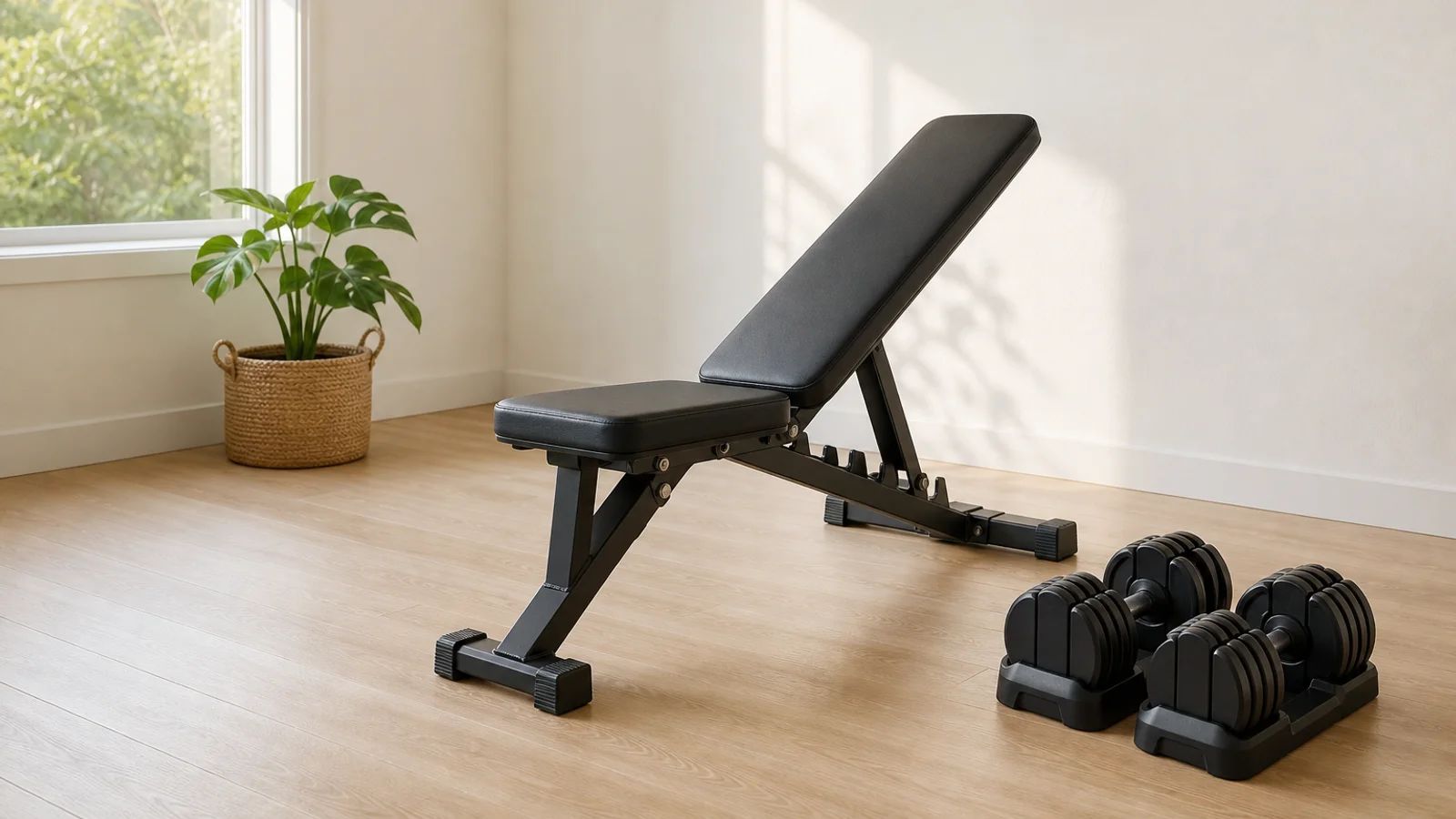
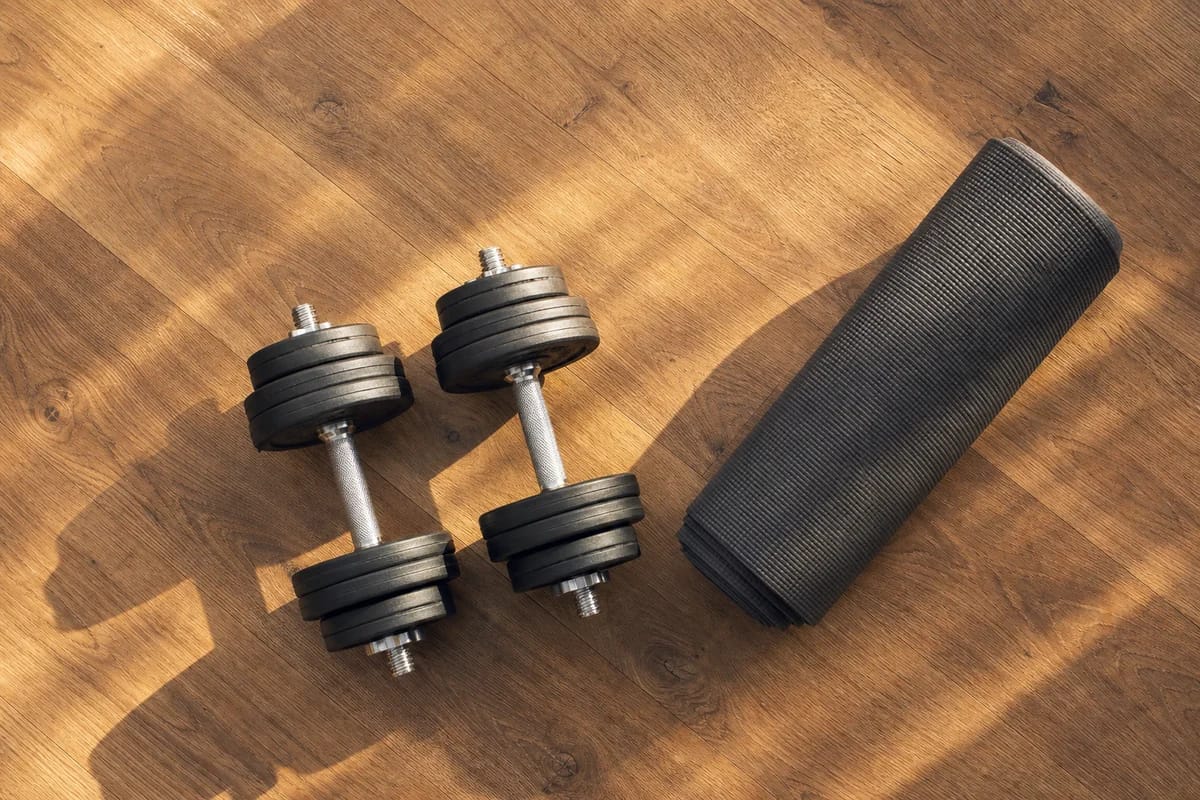
The obvious pick is a pair of adjustable dumbbells, the kind with a dial or a pin that changes the weight. One pair does the job of a whole rack of fixed dumbbells and lives in a corner. They're usually the biggest single expense here, often most of the $300 new and noticeably less used. A pair that climbs to around 50 pounds each covers most beginners for a long stretch. If you're not sure where to set the dial, how much weight a beginner should start lifting with walks through the logic.
If adjustable dumbbells don't fit the budget, buy fixed dumbbells used: a light pair, a medium, and a heavier one. You lose the fine steps between weights, but you keep the thing that actually matters, which is more than one load to choose from. Used cast iron doesn't wear out, so this is where the budget stretches furthest.
Either way, aim for a spread of loads, not a single fixed weight. A hard weight for squats, a lighter one for shoulder raises, and room to go up as you get stronger.
The surface comes second
Once you can load a movement, the next limit is what you can safely do with that load. That's what a bench buys you.
A flat bench opens up presses off your back, chest-supported rows, and step-ups, roughly doubling your exercise list. But notice why it works: only because you already have weight to put on it. Buy the bench first and it's just furniture.
You don't need to buy one to start, either. A sturdy dining chair, a solid coffee table, or the bottom stair does most of the same job for free. Split squats, single-leg hip thrusts, incline push-ups, seated presses, all of it works off things you already own. A real bench is more stable and more comfortable, which makes it a fair second purchase. It's a comfort upgrade, not a requirement.
Bands and small gear come last
Last on the list, and that's not a knock on them. Bands and small gear are useful exactly because they're cheap, which is exactly why they shouldn't eat your first dollars.
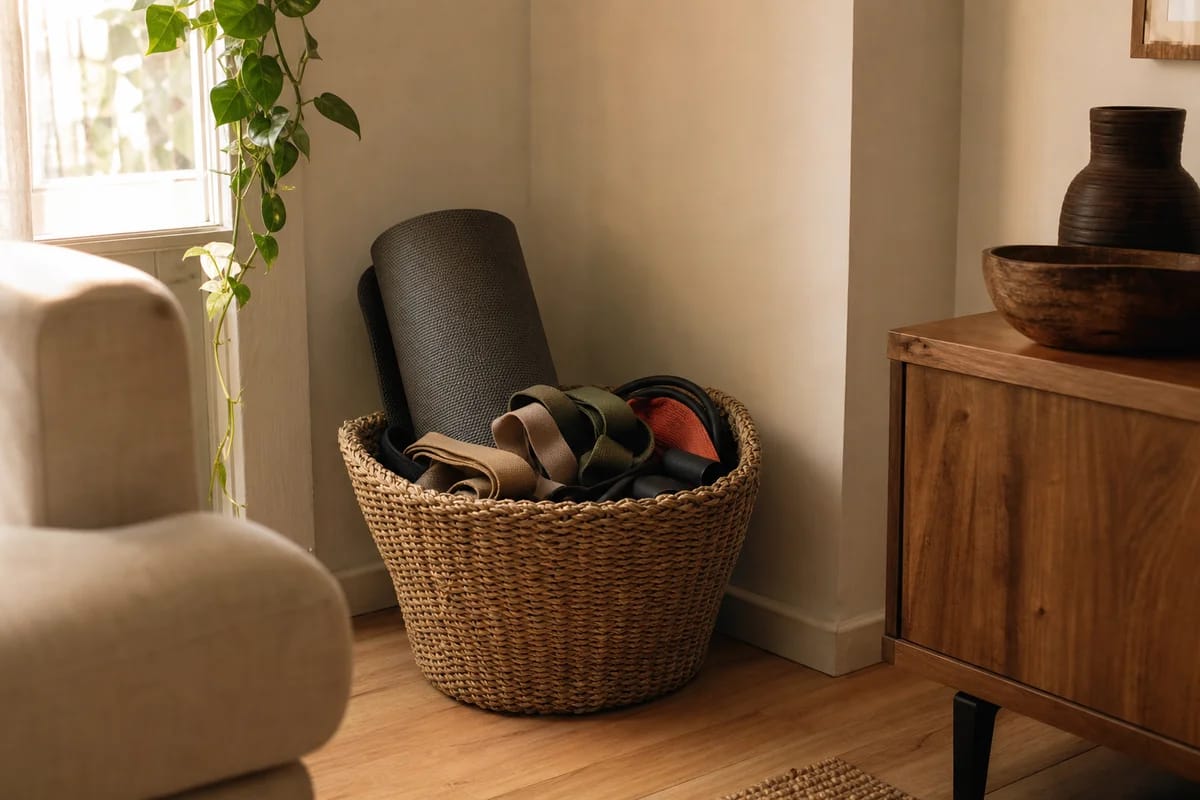
A set of resistance bands costs little and fills gaps dumbbells leave. They load movements that are awkward with weight, like face pulls and lateral raises, help with warming up, and assist pull-ups. Loop bands are good for hip and glute work. None of it replaces adjustable load. It rounds off the rough edges.
An exercise mat is the other genuinely useful small buy: floor work, and something between your knees and the hardwood. Past that, be skeptical. Gloves, a fancy water bottle, wrist wraps, a weighted vest: fine to add later if a real need shows up, not before you own a single adjustable weight.
The levers that cost nothing at all, tempo, rest, range of motion, and reps in reserve, get a full piece of their own in progressive overload at home without adding weight. Read the two together and you'll get more out of every dollar you spend.
What to skip for now
Knowing what to skip is half of spending well.
Skip the barbell, rack, and plates. It's the setup everyone pictures, and it's a genuinely great one. Just not a first one. A barbell only starts to matter once you can move real load, and a bare bar weighs around 45 pounds on its own, more than plenty of beginners will squat or press cleanly in week one. You'll get further, faster, learning the movements on dumbbells you can set to any weight. Most beginners are a year or more of steady training away from actually needing a bar.
Skip machines and cable towers too. They cost more, take more space, and lock you into paths dumbbells handle more flexibly. Skip a cardio machine as a first buy as well. Walking, stairs, or a cheap jump rope covers easy conditioning without touching the budget you set aside for load.
Each of these is either something you don't need yet, or something a free alternative already covers while you're starting out.
Treat these prices as a range
Every dollar figure here is a rough range, not a quote. Adjustable dumbbells vary a lot by brand and by how high they climb, and the used market shifts with the seasons. Check what's actually listed near you before you plan to the penny.
This order assumes your goal is general strength and muscle at home. If you're training for a specific barbell sport, or you already know you love heavy squats and deadlifts, move a bar and plates up your list. That's a fair call. $300 is a useful line to draw, not a magic number: spend less and start with used fixed dumbbells and a chair, or spend more over time as things wear in. The order matters more than the total.
Gear is the easy part, though. What actually stalls a home setup usually isn't a missing piece of equipment. It's not having a plan for what to do with the pieces you already have.
Common questions
Can I really build muscle with just dumbbells? Yes, for a long time. Muscle responds to tension and to progressive overload, not to the shape of the tool delivering it. A pair of adjustable dumbbells covers squats, presses, rows, hinges, and dozens of single-limb variations, which is plenty to get a beginner strong and keep them progressing for a year or more. A bar earns its keep later, once the weight you're moving outgrows what dumbbells hold.
Adjustable dumbbells or a barbell and plates for a beginner? Dumbbells, in almost every case. They're cheaper to start, take far less space, need no rack for safety, and let you set any weight instantly. A barbell shines once you're strong enough to load it meaningfully, but that's a problem to have later, not a starting point.
What if $300 is still too much right now? Start with one pair of used fixed dumbbells and a chair, and lean hard on the free levers: slower tempo, shorter rest, single-limb work, more reps. You can make real progress on a very small kit. Add a second, heavier pair once the first starts to feel light.
Do I need a bench to start training at home? No. A sturdy chair, a solid table, or the bottom step of a staircase covers pressing, rowing, and step-ups well enough to begin. A flat bench is a comfort and stability upgrade worth adding second, not a requirement for your first session.
Should I buy a power rack if I have the space? Not as a first purchase. A rack earns its footprint once you own a barbell and enough plates to need spotting, and that's a later stage. Buy load you can use now, and let the rack come when the barbell does.
Gear is the easy part. The hard part is turning two dumbbells and a chair into six months of real progress on a random Tuesday. On your own: pick five or six exercises that hit the whole body, add a little weight or a rep whenever you can, and write down what you did last time so you're not guessing. Stick with that and you'll keep getting stronger for a long while.
A coach changes what happens when that plan stalls: the week your shoulder complains, or the plateau you can't explain on your own. They watch the rep live over HD video, swap the exercise or the weight on the spot, and build next week's session around exactly what's in your room, a full gym or two dumbbells and a chair. 14 days free, then $299 a month. See how a session actually works.