Working out at home vs gym: which one you'll keep doing
Home or gym builds the same muscle if the work is the same. What a year of each costs in money and hours, what home can't do, and which one sticks.
In this article8
The short answer
For most people, home builds muscle as well as a gym, because muscle responds to effort, not the building. Home is usually the easier one to keep doing, since there's no trip. The gym wins on heavy barbells, machines and company. Either way, what decides your results is how often you turn up and whether anyone checks your form.
Many pages on this question sell something. So are we: Bespoke Fit is personal training live over video. We'll also be plain about when a gym is the better buy, and there are several times it is.
Will you get the same results at home?
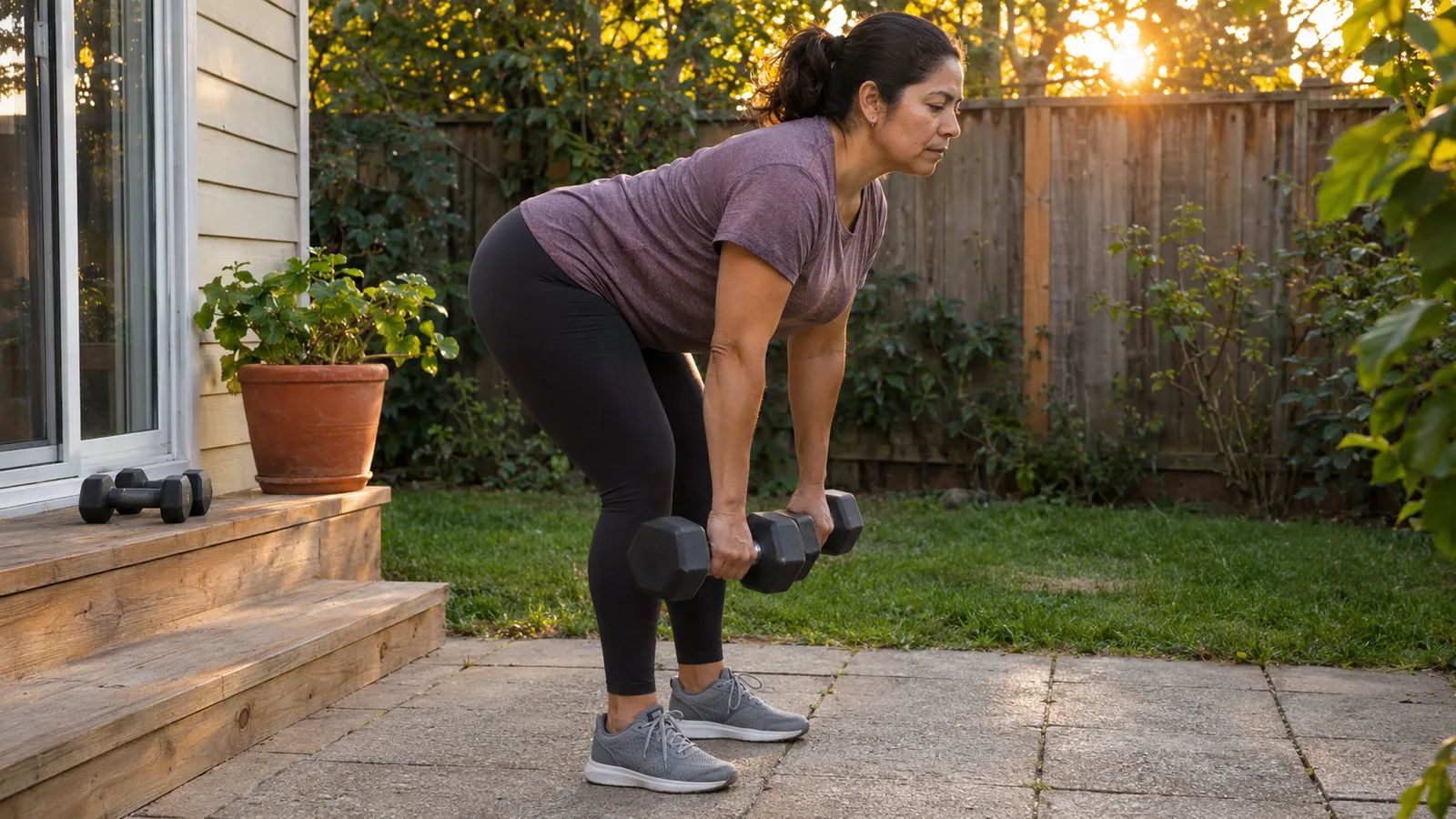
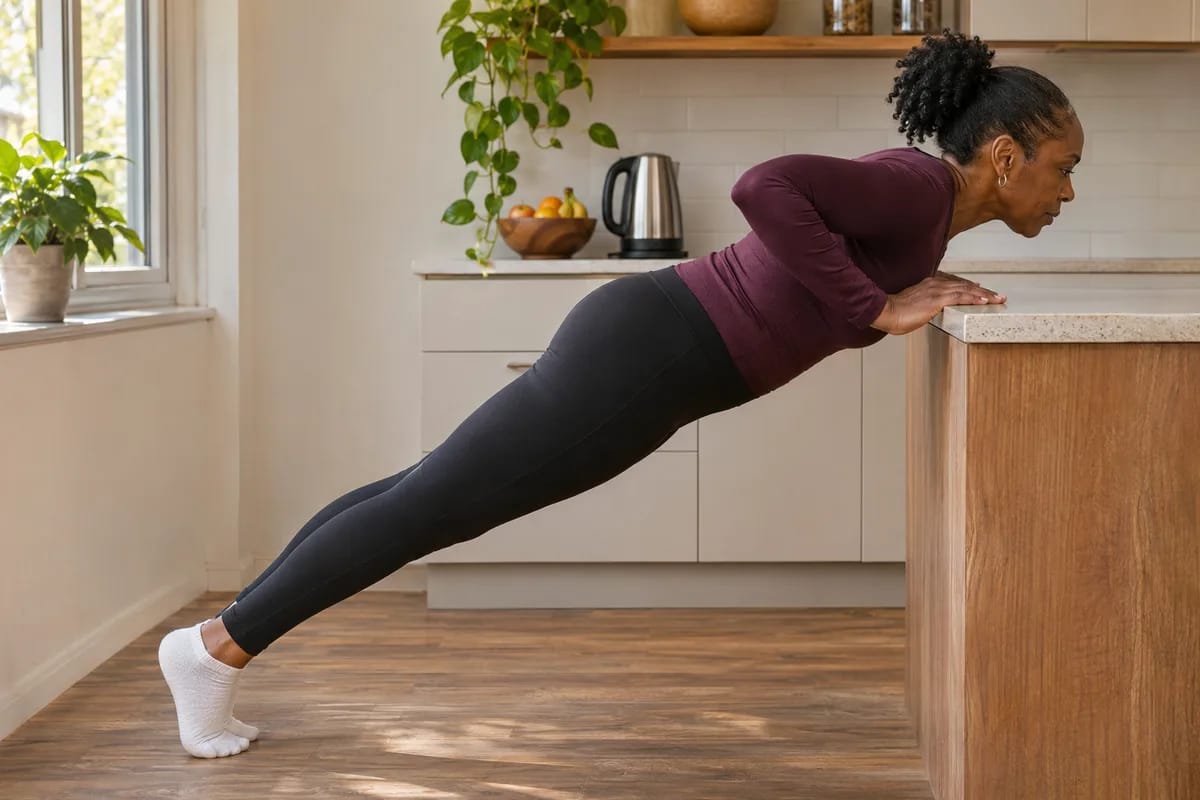
For muscle, yes. Muscle grows when a set is hard, close to the point where you couldn't do another clean rep. It doesn't care whether the weight came off a rack or out of a closet. In one small trial, push-ups built as much chest and triceps, and added as much to the bench press, as benching the same light load.1 Pooling 21 studies, light weights built as much muscle as heavy ones when every set was taken all the way.2
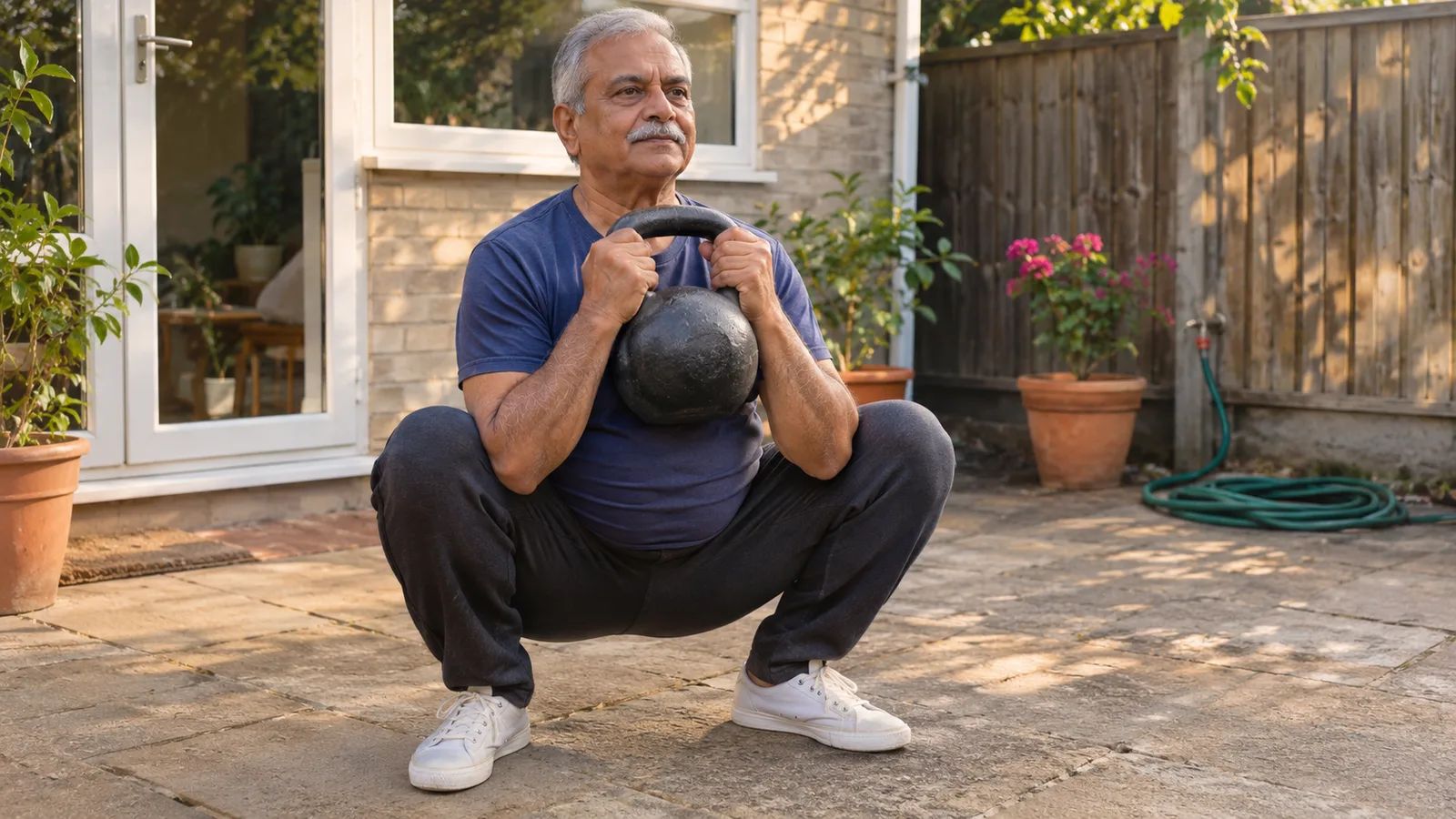
Strength is where home has a ceiling. The same analysis found heavy loads build more one-rep max strength, the most you can lift once. Bowflex's adjustable dumbbells top out at 52 lb (24 kg) a hand, or 90 lb (41 kg) for the larger set.3 If you want to squat or deadlift serious barbell weight, you need a barbell, and that usually means a gym or a garage.
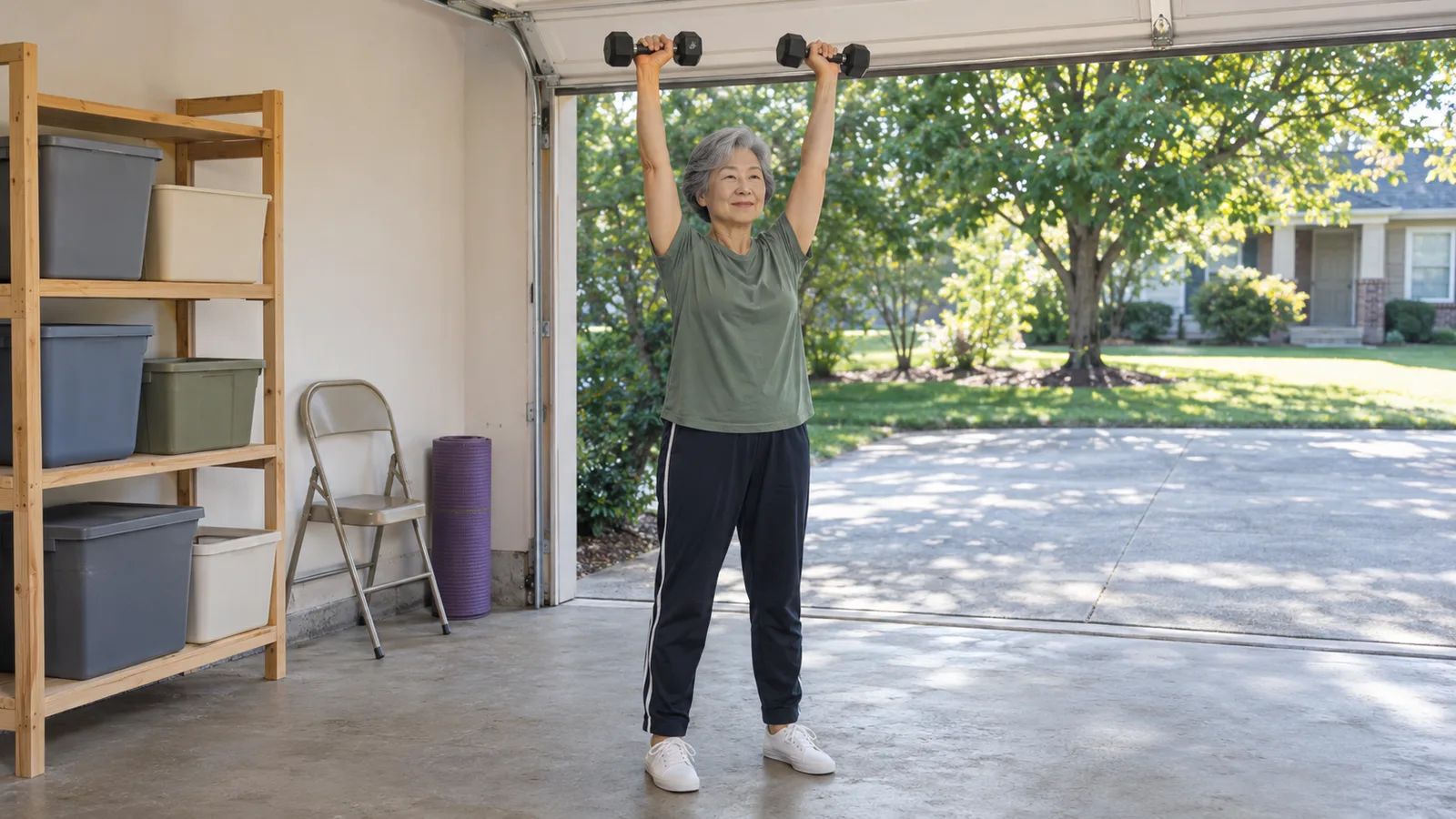
Most people starting out won't hit that ceiling for a good while. Before you do, there are plenty of ways to make light weights harder: slower reps, more reps, one leg instead of two. Progressive overload at home walks through them.
If weight loss is the goal, the setting matters even less. That comes down mostly to food and how much you move all day.
The real choice is who's watching
Home-versus-gym lists often put "a personal trainer" and "accountability" under gym perks, as if they came with the building. They don't. A membership on its own leaves you as alone as your living room, with more equipment. So there are really two choices: where you train, and whether anyone is watching you do it.
In a 10-week trial where experienced lifters all followed the same plan, the ones with a coach in the room made the most sessions and gained the most squat strength, and those working from a PDF made the fewest.4 That coach was in person, and no trial we know of has tested one on live video, so we won't claim those results for ourselves. Place matters too: in a year-long trial of inactive adults aged 50 to 65, people exercising at home got as fit as a group class, and more of them were still at it a year later.5 That was endurance exercise, not lifting.
So the setup worth aiming for has both: a place you'll actually get to, and someone checking your form.
What a year costs, in money and hours
The travel column assumes 20 minutes each way and three gym visits a week (two in the trainer row): 104 hours a year, about two and a half working weeks in the car. Your drive may be shorter.
| Option | First year | Travel | Anyone watching your sets? |
|---|---|---|---|
| Planet Fitness Classic, on your own | $229 to $288 | 104 hours | Free small-group instruction, not your own workouts |
| LA Fitness, on your own | $430 to $710 | 104 hours | No, unless you also pay a trainer |
| A premium club (Life Time Northshore) | from $3,228 | 104 hours | No, unless you also pay a trainer |
| A home kit from our budget guide | $94 to $300 | none | No |
| A cheap gym plus a trainer twice a week | $5,429 to $9,648 | 69 hours | Two sessions a week |
| Home with a live coach (Bespoke Fit) | $3,588, plus any kit you choose | none | Every session, as many as you book |
On money alone, a home kit and a cheap gym are the best buys here. Planet Fitness's base card starts at $15 a month, plus a $49 annual fee and up to $59 to join.6 A mid-priced chain sits in between: LA Fitness charges $30 to $50 a month, plus an annual fee of about $40 to $60, and takes the last month's dues up front.7 Our budget guide prices four home carts from $94 to $300, two of them at Target's November 11 sale prices. The kit is yours for good; the gym has far more to lift. If you'll train on your own and know what to do, either one beats everything else on this table.
The premium club costs about what we do, and nobody coaches your own workouts. Life Time's Northshore club in Massachusetts starts at $269 a month, and dues vary by club.8 That buys the building and its classes. For about $30 a month more, we put a coach on every session you book.
Per coached hour, the order flips. An in-person trainer costs $50 to $90 a session on average in the US.9 At three one-hour sessions a week, our $299 a month works out to about $23 a coached hour, or about $35 at two a week (our arithmetic, at 4.33 weeks a month).
What home can't do
- A heavy barbell. Squats and deadlifts with serious weight need a rack, a bar, plates and a floor that can take them.
- A spotter. If you want to push a heavy bench press to your limit, you want someone standing over the bar. Nobody on a screen can catch it.
- Machines and cables. Leg press, cable rows, a lat pulldown. Bands get you close on some of these, not all.
- The room. Some people simply train harder with others around, and some love the classes. That's a real reason to pay for a gym.
- A door that shuts. Kids, a partner on a work call, a neighbor below. Most of that can be solved (training in an apartment covers floors and noise), but not all of it.
- Distance from the sofa. Once you're at a gym, you train. At home, the sofa is right there.
If you're coming back from an injury, in rehab after surgery, or starting out with a heart condition, ask your physical therapist or doctor how and where to train first, and tell whoever coaches you.
Pick by your week
| If this sounds like you | Pick |
|---|---|
| Walking into a gym makes you want to turn around | Home, at least to start; gym anxiety has a plan for later |
| You love heavy barbells, compete, or want machines | A gym |
| A room full of people and the classes are what get you moving | A gym |
| You already train consistently on your own | A cheap gym, or home on your own |
| You know your way around a plan, and the drive is what stops you | Home, on your own |
| You're new, or restarting after years off, and unsure about your form | Home with a live coach |
| You've paid for memberships before and stopped going | Home with a live coach |
| You want the heavy lifts but only have time for one trip a week | Both: a cheap gym for one heavy day, home for the rest |
Not sure yet? Try each for a week
You can find out which one you'll keep doing before spending much.
Week one at home
Three sessions from the no-equipment plan, on days and times you set in advance.
Week two at a gym
Ask a nearby gym for a day pass or a trial week, and keep the same three slots.
Week three with a coach, if you like
Our 14 free days start at your first session. Book the same three slots with your coach.
Count what you did
Which week did you finish? Which session did you dread less? That answer beats any table.
If you missed sessions at home and at the gym, the setting probably isn't the problem. What's missing is someone counting on you to show up.
Home, with a coach on the call
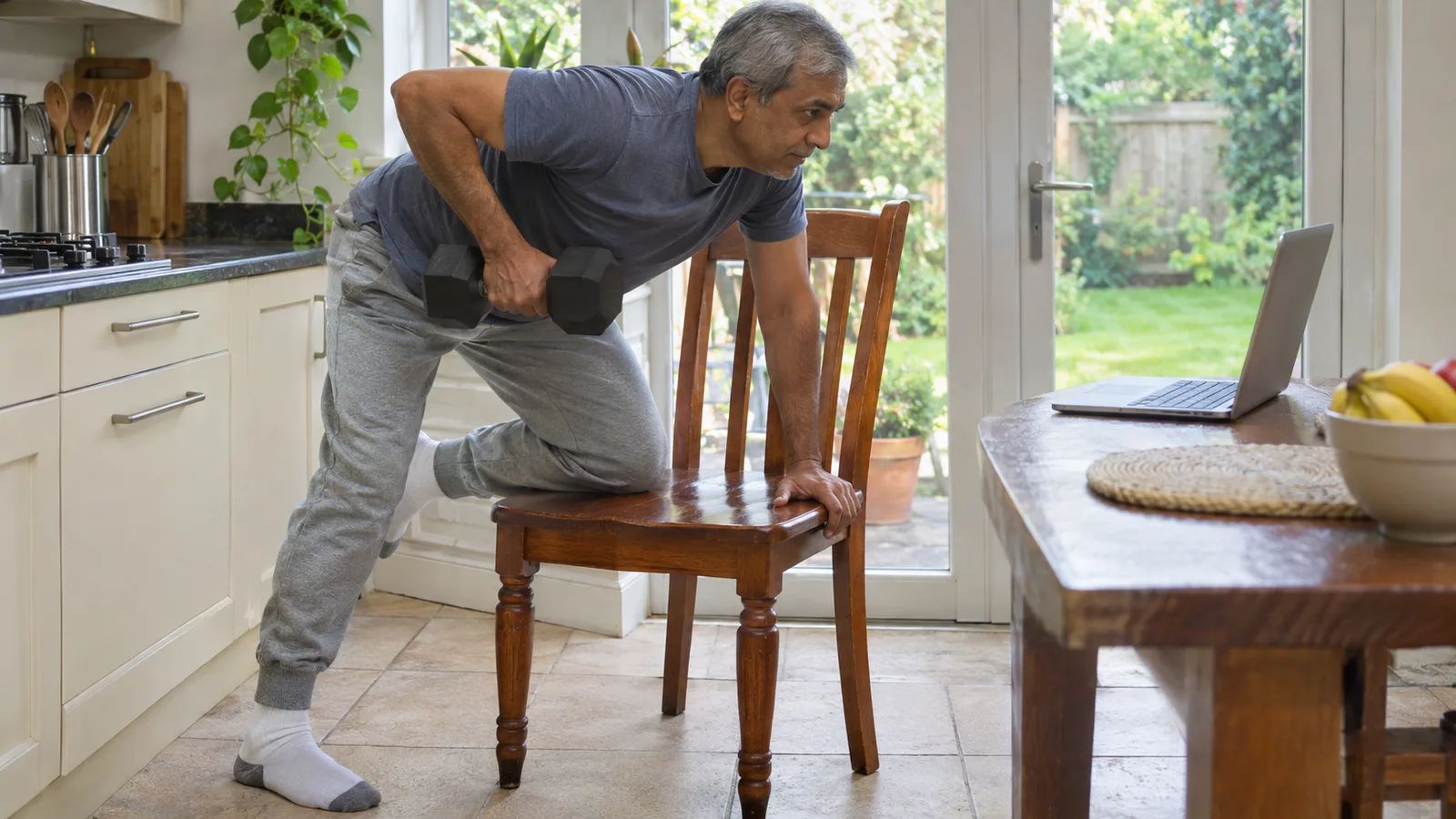
Every Bespoke Fit session is a live video call in our own app, on iPhone, Android or in a browser. Your phone or laptop sits a few steps back, angled so your coach can see you move, and they say "knees out" while you're still in the rep, the way a trainer beside you at a gym would. Wanda, 70, a member: "I was skeptical about doing training over video at my age, but it has been much easier than I expected."
Your coach writes your program around what you have, from a full gym to no equipment at all, so you don't have to pick one for good. Deejay, 24, a member: "He adjusts my workouts depending on where I am, whether that's a commercial gym, my home studio, or traveling with no equipment at all." You open today's workout, follow it with your coach on the call, and log it set by set, so your top lifts, records and weekly volume build up in the app. Each coach has 12 members at most, so yours plans next week from what they watched you do this week.
Every session is booked for a set time, so skipping means telling a person. Henrik, 36, who trains with Tris: "Knowing Tris is waiting for me at every session means I actually go."
You start with a 30-minute call with a head coach, who matches you to your coach. Sessions run 45 to 90 minutes, and most people settle at around an hour. It's 14 days free, then $299 a month, with as many sessions as you book. How live video training works shows what a session looks like.
What we're not: cheap, in person (no spotter, no hands-on help), or train-whenever, because your coach books sessions with you. We don't do nutrition coaching. If you already train consistently on your own, or $299 a month would be a stretch, the $15 gym or the no-equipment plan will serve you well.
Common questions
What happens if I skip the gym for two weeks? Very little. Strength and muscle barely change in the first four weeks off, though after 65 the slide may start nearer two weeks. Your first session back may feel flat, but that isn't lost strength, and anything you did lose usually comes back faster than it left.
Should a beginner start at home or at the gym? Start wherever you'll actually go two or three times next week. For most beginners that's home, because there's no commute and no audience while you learn. What a beginner needs most is someone checking their form early, and that can happen at home over video or at a gym with a trainer.
Is a home gym cheaper than a gym membership? Often. Against a $50-a-month gym, the top of LA Fitness's range, the $217 set of four dumbbell pairs in our budget guide pays for itself in a little over four months. Against a $15 gym it's close; the table above has both.
Sources
-
Kikuchi N, Nakazato K, 2017. Low-load bench press and push-up induce similar muscle hypertrophy and strength gain. Journal of Exercise Science and Fitness. 18 men aged 19 to 22, nine per group, twice a week for 8 weeks; push-ups were adjusted (for example, kneeling) to match 40% of each man's one-rep max on the bench. Both groups gained chest and triceps thickness and bench press strength, and the authors judged the two "comparably effective". ↩
-
Schoenfeld BJ, Grgic J, Ogborn D, Krieger JW, 2017. Strength and hypertrophy adaptations between low- vs. high-load resistance training: a systematic review and meta-analysis. Journal of Strength and Conditioning Research. 21 studies with every set taken to failure; light meant 60% of one-rep max or less. Muscle growth was similar, one-rep max gains were greater with heavy loads, and isometric strength didn't differ. ↩
-
Bowflex, 2026. SelectTech dumbbells: models adjusting "5-52 lbs." and "10-90 lbs.", sold as pairs. bowflex.com, read November 12, 2026. ↩
-
Gavanda S, Held S, Schrey S, Oberwetter K, Lazzaro P-GM, Pergelt M, Geisler S, 2025. Optimizing resistance training outcomes: comparing in-person supervision, online coaching, and self-guided approaches: a randomized controlled trial. Journal of Strength and Conditioning Research. 112 adults with lifting experience started (48% women, average age about 31). Making at least 26 of the 30 sessions was the bar for staying in the analysis: 15 of 17 in the supervised group reached it (88%), 39 of 48 in the app group (81%) and 25 of 47 in the PDF group (52%). Strength results are for the 79 who reached it, which the authors note may favour more motivated people; among them the supervised group gained the most squat strength, and it was also younger. The coach supervised in person, one to four people at a time; there was no video group. ↩
-
King AC, Haskell WL, Taylor CB, Kraemer HC, DeBusk RF, 1991. Group- vs home-based exercise training in healthy older men and women. JAMA. 357 sedentary adults aged 50 to 65, including a control group, over a year of endurance training; fitness improved as much at home as in the group class, and 12-month adherence was better in both home groups. ↩
-
Planet Fitness, 2026. Annual report on Form 10-K for 2025: Classic Card dues "starting at only $15" for new members, "current standard annual fees of $49", "enrollment fees of $0 to $59", and "unlimited free fitness instruction in small groups". The $229 to $288 first year ($15 a month for 12 months, plus $49, plus $0 to $59) is our arithmetic; prices vary by club. sec.gov, read November 12, 2026. ↩
-
Federal Trade Commission v. Fitness International, LLC and Fitness & Sports Clubs, LLC, case 8:25-cv-01841. Amended complaint, filed December 23, 2025: under the base membership the member "initially pays the first and last month's dues", then monthly dues "from $30 to $50 for an LA Fitness membership" and annual fees of "approximately $40 to $60". The $430 to $710 first year (13 months of dues, counting the prepaid last month, plus the annual fee) is our arithmetic, before any joining fee, which the complaint doesn't give for the base membership; dues vary by club. ftc.gov, read November 12, 2026. ↩
-
Life Time, 2026. Membership at Northshore: "Starting at $269/month"; dues "may vary by location and are subject to change". Twelve months is $3,228, our arithmetic. lifetime.life, read November 12, 2026. ↩
-
Bark, updated January 16, 2026. How much does a personal trainer cost?: the average cost of hiring a personal trainer in the USA "is between $50 and $90 per session". Twice a week for a year (104 sessions) is $5,200 to $9,360; adding the $15-gym first year above ($229 to $288) as the cost of somewhere to train gives the table row, our arithmetic. Planet Fitness doesn't advertise 1‑on‑1 training, and not every gym lets outside trainers work there; many trainers work from their own studio or gym instead. bark.com, read November 12, 2026. ↩
More on