Why women over 50 should lift heavier than they think
Light weights feel safer but rarely reach the loads bone and muscle need after 50. Here's how heavy is heavy enough, and how to get there safely.
The pink dumbbells feel like the responsible choice. Higher reps, lighter weight, nothing that could hurt you. If you're over 50 and worried about your joints, or you've seen a bone scan you didn't love, going light feels like playing it safe.
It backfires. The two things a woman's body needs most after 50, denser bone and more power, only respond to real load. A light weight for lots of reps rarely pushes hard enough to trigger either one. The safe-feeling choice quietly misses the outcomes it's supposed to protect. Heavier isn't the reckless option here. Built up the right way, it's the one that actually works.
Light feels safe. That's exactly why it doesn't work.
The instinct makes sense. A lighter weight is easier to control, and control feels like safety. For years the standard advice to older women reinforced it: keep the loads light, keep the reps high, protect the joints.
But "light and safe" and "enough to change your body" are two different questions. A weight you can lift 20 or 30 times is, almost by definition, a weight your body already handles. It doesn't register as a challenge, so it doesn't prompt much of an upgrade. You can finish a set tired and still have given your bones and your strongest muscle fibers very little reason to adapt.
That's separate from a real idea worth knowing, that how close to failure you push each set matters. Grinding a near-maximal single every day is its own mistake. But most women over 50 aren't anywhere near that edge. They're parked at the opposite end, lifting so light the stimulus barely registers.
A weight your body already finds easy won't push it to get stronger, no matter how many times you lift it.
What it actually takes to build new bone
Bone has one unforgiving rule. It adds density only once the strain from a load crosses a threshold. Below that line, bone holds roughly steady. Above it, your body starts laying down more. We walk through that mechanism, called the mechanostat, in how lifting builds bone. Walking and daily activity sit below the line, which is why they maintain bone but rarely build it.
The clearest evidence for what's above that line is LIFTMOR, a 2018 trial in the Journal of Bone and Mineral Research.1 Researchers took 101 postmenopausal women, average age 65, with low bone mass, and had one group train twice a week for eight months: deadlift, squat, and overhead press above 85 percent of their one-rep max, in sets of five. After eight months, that group's spine bone density rose about 2.9 percent, while a comparison group doing gentle home exercise lost about 1.2 percent. At the femoral neck, the hip site that drives fracture risk, the lifters held steady while the other group dropped nearly 2 percent. That took loads above 85 percent of a true max, in older women mostly new to lifting, not machines on a low setting.
Bone ignores loads it already handles. Building it takes something genuinely hard.
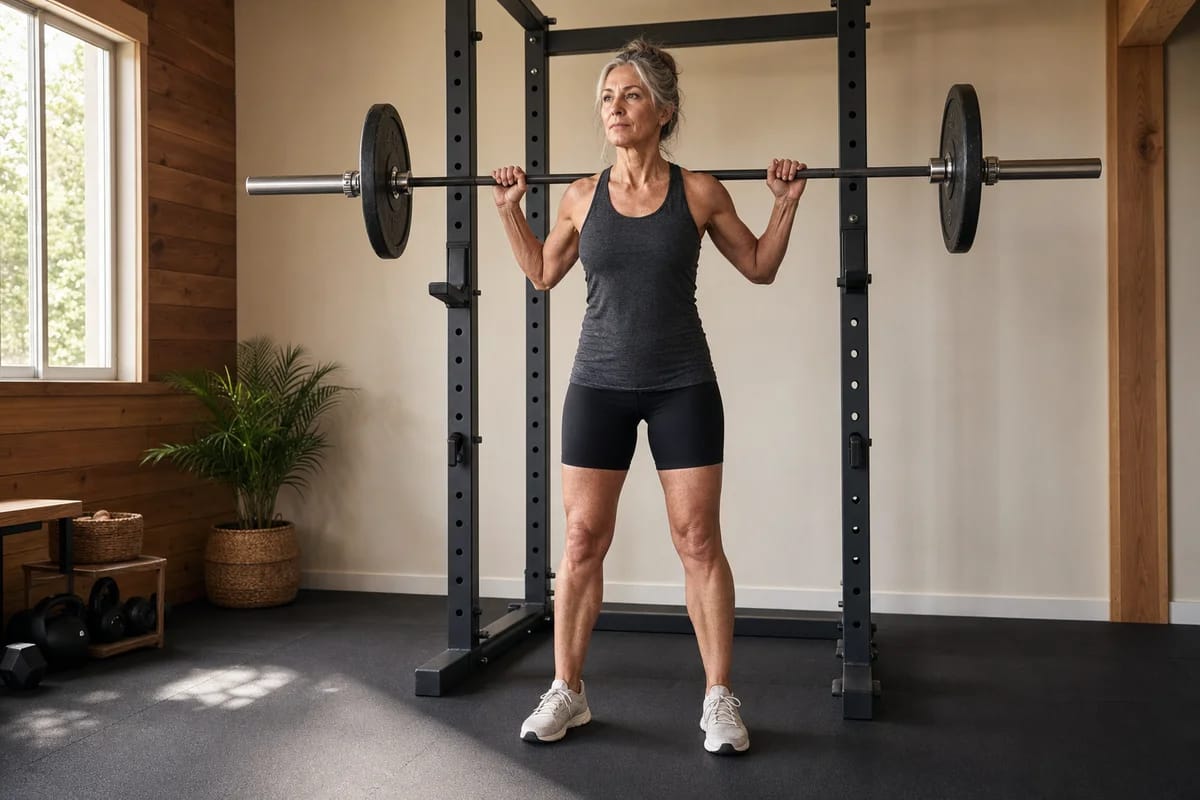
The muscle you're already losing only answers to heavy
Muscle has its own reason to want load, and it comes down to which fibers you have and which ones you're losing. Your muscles mix slow fibers, built for endurance, with fast fibers, built for force and speed. Ageing doesn't hit them evenly. It comes for the fast ones first.
Research comparing the leg muscles of young men, average age 23, with older men, average age 71, found the older group's fast, type II fibers were about 29 percent smaller, while their slow fibers held up far better.2 When those older men did resistance training, their fast fibers grew back by about 24 percent, which accounted for essentially all of the muscle they regained. The fibers that fade first are the ones that respond to lifting.
Your body recruits muscle fibers in order: small and slow first, large and fast last. Those big fast fibers only join in when the effort demands high force, meaning a heavy load, or a lighter one taken close to failure. Cruise through a set of 25 easy reps and you may never wake them up. That matters because those same fast fibers drive power, and power fades faster than strength as you age, which is what lets you catch yourself in a stumble or get up off the floor.
The muscle you lose first only answers to heavy or hard. Light training leaves it alone.
Won't lifting heavy make me bulky?
This is the fear that keeps the light dumbbells in hand, and it doesn't hold up. Building the kind of size that word implies takes a hormonal environment most women simply don't have. Women carry a small fraction of the testosterone men do, which is the main reason the same program produces very different amounts of bulk.
A pooled analysis of studies that put men and women through the same resistance programs found no meaningful difference between the sexes in relative muscle growth.3 Women actually matched or outpaced men in how fast they built upper-body strength. Same training, similar relative response, no sign that women balloon in a way men don't.
What heavy training does for most women over 50 is make them stronger, denser in the bone, and more capable, while looking leaner rather than larger. The bulky physique you're picturing takes years of specific eating and training aimed at exactly that, not a challenging weight twice a week.
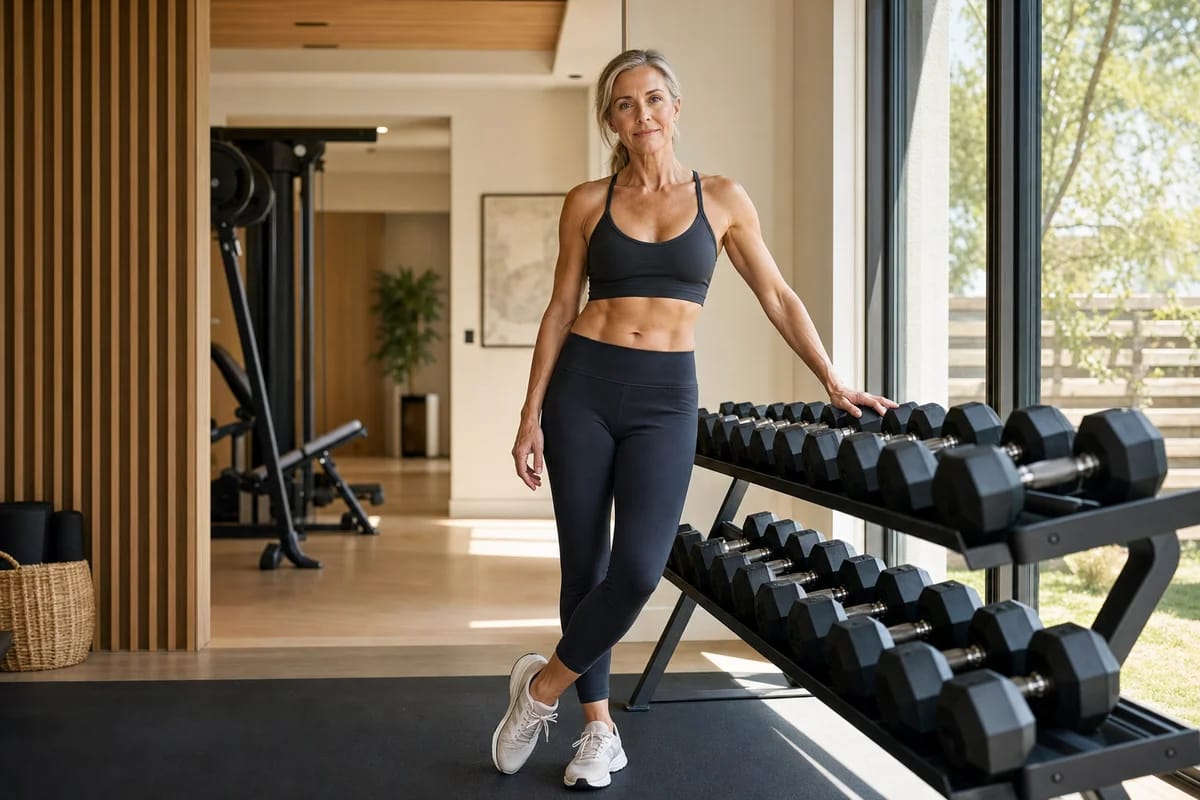
How heavy actually looks, and how to get there without wrecking yourself
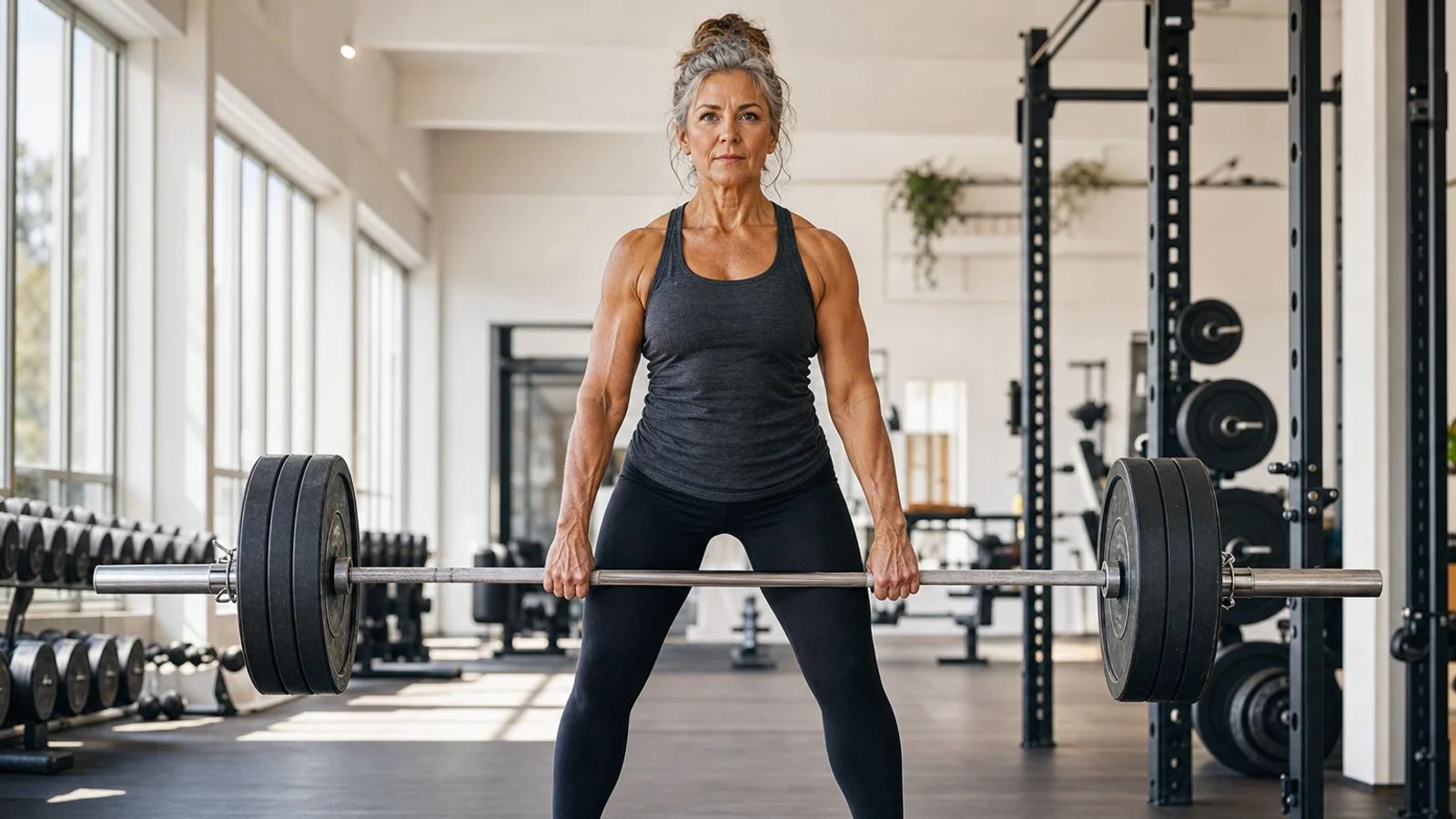
The word "heavy" is doing a lot of work, so let's define it plainly. It doesn't mean maximal, grinding, or anything close to a competition lift. A useful target is a weight you couldn't lift more than about 5 to 8 times before your form starts to break. For someone used to a 20-rep set, that feels different, but it's still well short of an all-out max.
You get there gradually, not on day one. Start with a load you can control cleanly, then add small amounts over weeks so your tendons and joints keep pace with your muscles. The reason this is safe isn't that the weight stays light. It's that the jumps stay small and your technique stays honest. A simple way to gauge effort is to stop a set with one or two good reps still left in you, rather than chasing failure.
LIFTMOR is proof it can be done. Older women mostly new to lifting, training above 85 percent of their max, recorded a single adverse event across eight months: a minor back spasm. The loading was heavy, and it was also supervised and built up slowly. Careful progression is what makes heavy safe, not caution about the weight itself.
If you're moving through menopause, there's a deeper hormonal reason this becomes worth prioritizing, which we cover in menopause and muscle.
Where the evidence gets fuzzy
The bone and strength trials run under supervision and careful screening, which is part of why they're safe. Anyone with diagnosed osteoporosis or a spine condition should get medical clearance before loading heavy. Loaded forward bending of the spine carries real risk once bone is fragile, so that's the wrong place to guess. The fiber-type research above was done in men, and while the pattern of losing fast fibers holds across sexes, the exact numbers in women will differ. Individual response varies too. Take this as a strong, well-supported direction for most women over 50, not a precise prescription for any one person.
Common questions
Is it safe for a woman over 50 to lift heavy weights? For most women, yes, when the loading is progressive and the technique is sound. LIFTMOR ran heavy lifting in postmenopausal women with low bone mass and recorded one minor injury across eight months. The safety came from supervision and gradual loading, not from keeping the weights light. If you have diagnosed osteoporosis or a spine issue, get medical clearance and start with coaching.
How heavy should a beginner actually go? Not to a max, and not on the first day. Aim, over time, for a weight you couldn't lift more than about 5 to 8 times with clean form, and reach it by adding small amounts week to week. Early on, the priority is learning the movement well while the load is still moderate, then letting the weight climb as your technique holds.
Won't high reps with light weights build muscle too? They can, but only if you take the set close to failure, which is uncomfortable and hard to judge alone. Heavy loads recruit your fast, high-force fibers directly, without needing you to grind out 25 reps. For bone, light and high-rep is weaker still, because bone responds to the size of the load, not the number of reps.
Will lifting heavy make my bones worse if they're already thin? Under supervision, the evidence points the other way. The women in the bone trial already had low bone mass and still gained density. The important words are supervised and progressive. With diagnosed osteoporosis, get a clinician and a coach involved before loading heavy.
Going it alone, and what changes with a coach
You can build this yourself. Pick the big lifts, squat, deadlift or hinge, and an overhead press. Start with a weight you can control with clean form, then add small amounts every couple of weeks. Track your reps so you know when a set is genuinely hard, that 5-to-8-rep range with one or two left in you. Get someone, a training partner, a mirror, a video of your own set, to check your form on anything that loads your spine. Get medical clearance first if you have diagnosed osteoporosis or a spine condition.
What a coach changes is the judgment calls in between: watching your bar path live and fixing it before a bad rep becomes a habit, deciding in the moment whether today's set goes up or comes down, and building the progression so it never outruns your joints. That's the live coaching model at Bespoke Fit. Every strength session is HD video with a real coach, never an app or an algorithm, who sets your load, watches your setup, and adjusts the plan from what they actually saw. Your first month is $49, then founding membership is $299 a month locked in for life, with 25 of those spots before it moves to $499. There's a 30-day money-back guarantee, no questions asked. You can see how the sessions run on the how it works page.
Sources
-
Watson and colleagues, 2018. High-intensity resistance and impact training improves bone mineral density and physical function in postmenopausal women with osteopenia and osteoporosis: the LIFTMOR randomized controlled trial. Journal of Bone and Mineral Research. ↩
-
Nilwik and colleagues, 2013. The decline in skeletal muscle mass with aging is mainly attributed to a reduction in type II muscle fiber size. Experimental Gerontology. ↩
-
Roberts and colleagues, 2020. Sex differences in resistance training: a systematic review and meta-analysis. Journal of Strength and Conditioning Research. ↩
More on