Training in your 50s: recovery is the new limiter
Why recovery, not intensity, becomes the constraint after 50, the muscle and tendon changes behind it, and a template that keeps the heavy loads.

Most people in their 50s make the same mistake. They feel beat up after a hard session, so next time they go lighter. That's backwards.
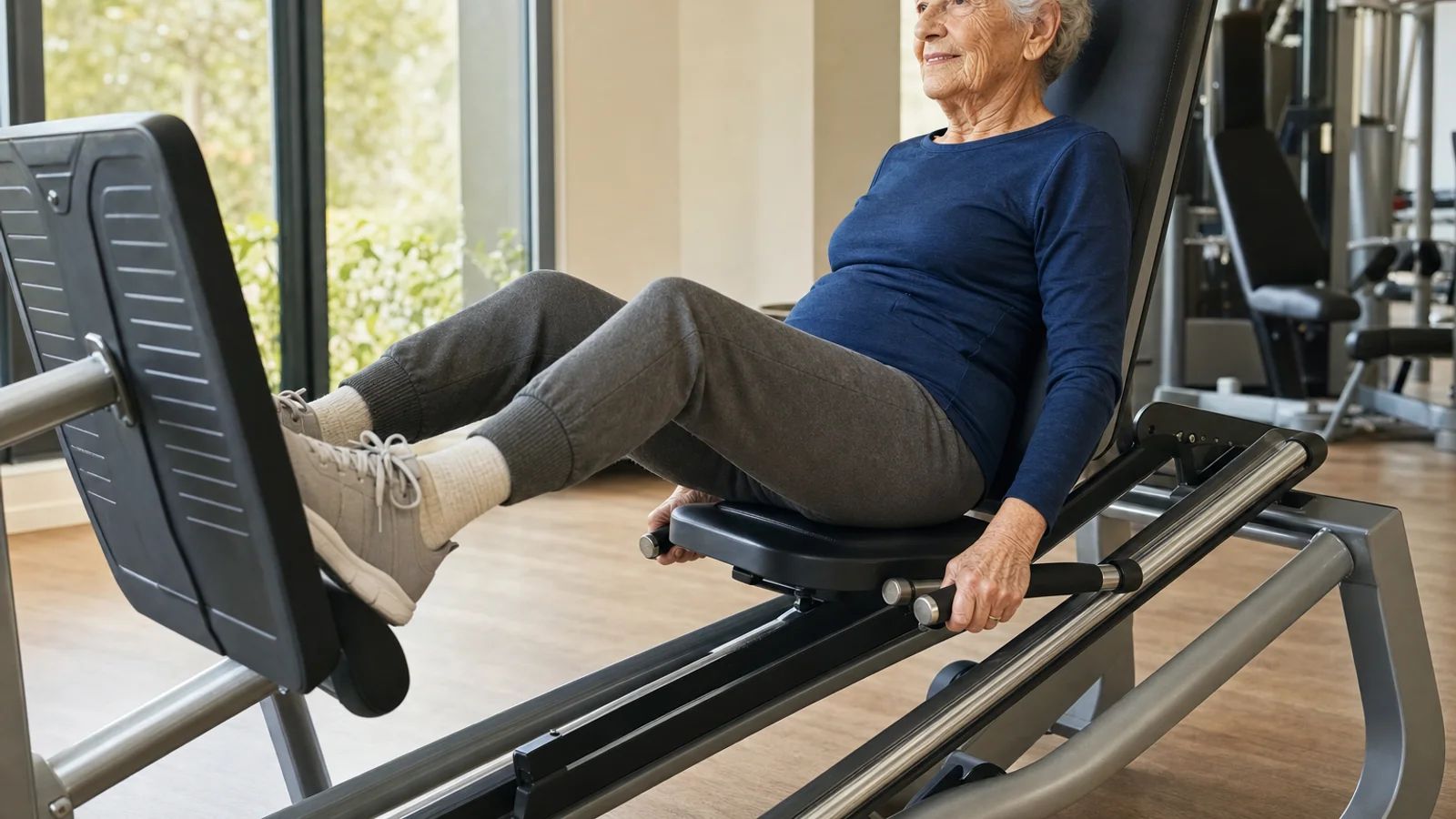
What changes in your 50s isn't how much weight you can lift. You can still move real weight, and heavy loads matter more than ever for your bones and your strength. What changes is how long it takes your body to be ready to do it again. Recovery runs short before strength does, and once you see that, the whole shape of your training week has to change. This picks up where what changes and what doesn't in your 40s leaves off. Your 40s are for noticing the first signs. Your 50s are for building a week around them.
Recovery, not weight, is the dial to turn
Think of training as two dials: how heavy (intensity) and how much, how often (volume). The move in your 50s isn't turning intensity down. It's turning down how much heavy volume lands in any short stretch.
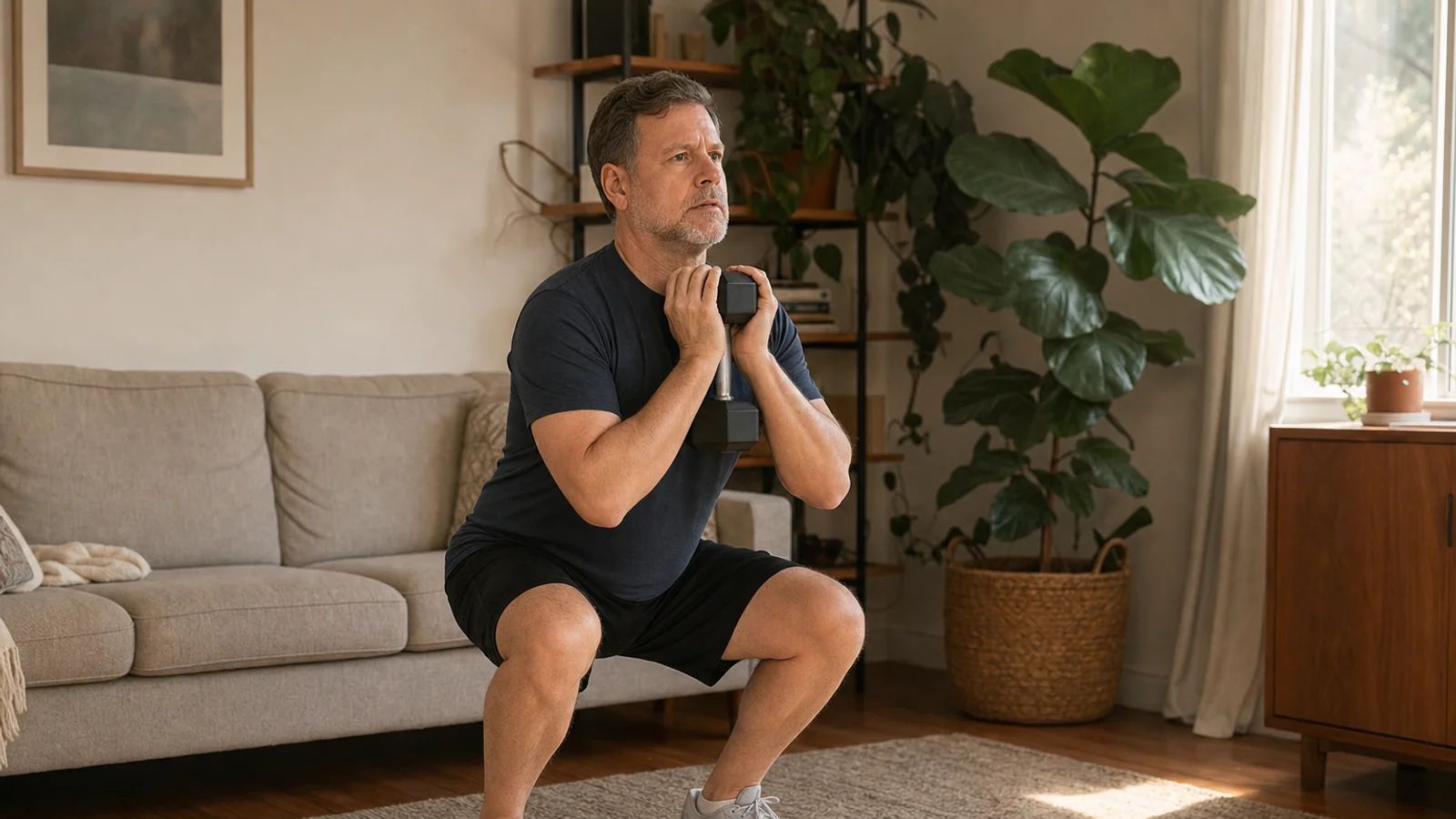
Squat heavy three days running and you'll pay for it. Do one quality heavy session, give it real room, and let a lighter session fill the gap instead, and you get the same weight on the bar with a lot more space between the sessions that actually tax you. Don't lift lighter. Lift heavy less often, and spread the work so no single stretch buries you.
Older muscle needs a louder signal, not a quieter one
Your ability to produce force on a given day holds up well into your 50s if you keep training. This isn't a decade where you turn fragile. But when something feels harder, the instinct is to do less of it, and with aging muscle, that instinct is usually wrong.
Older muscle is anabolically resistant. The same protein, the same set, produces a smaller building response than it did at 25. Tracer studies that measure this directly show why: younger men top out their muscle-building response around 0.24 grams of protein per kilogram of body weight in a single meal, while older men need closer to 0.40 grams, nearly double the dose for the same result.1
Training works the same way. A blunted response needs a real stimulus to override it, which is why heavy loads still earn their place in a 50s plan. Light weights send a signal too quiet for older muscle to pick up. After 50, your muscle is a little hard of hearing, and you have to talk louder, with both protein and load. (More on the protein side in how much protein you actually need after 40.)
Tendons update on a much slower clock
Your muscles adapt faster than the tissue that anchors them to your bones, and that gap is where a lot of over-50 injuries start.
Tendons remodel remarkably slowly in adults. A 2013 study in the FASEB Journal used carbon-14 left over from Cold War nuclear tests as a natural time-stamp and found that the core of the human Achilles tendon is essentially built during your growth years and barely renewed after that.2 The carbon inside an adult's tendon still reflects the atmosphere from roughly the first 17 years of their life. In a real sense, your tendon is decades old.
That doesn't mean tendons can't adapt. They can, but slowly, and they trail muscle by weeks or months. Your quads might be ready for more weight before the tendon carrying that load is. Push both at your muscle's pace and the tendon is what complains. Muscle upgrades in weeks. Connective tissue takes months. Add load at the slower tissue's pace.
Heavy weight still does two things light weight can't
Should you drop to lighter weights in your 50s? No, and this might be the most important point here.
The first is strength. Across a pool of 21 strength studies, gains in one-rep-max strength were clearly bigger with heavy loads than light ones, even when the two groups built about the same amount of muscle.3 If you want to stay strong, not just muscular, the weight on the bar has to be real.
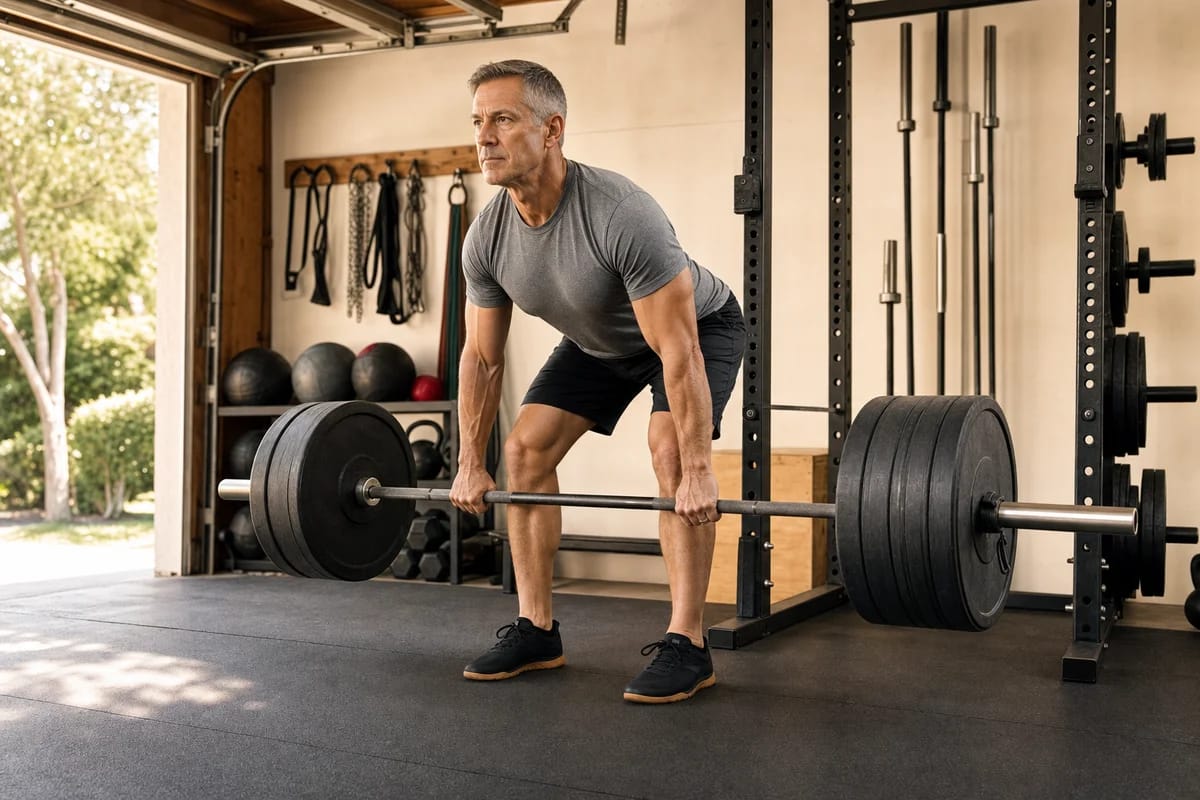
The second is bone, and it matters more every year past 50. In the LIFTMOR trial, 101 postmenopausal women with low bone mass trained twice a week for eight months. The group doing heavy sets of five reps above 85 percent of their max saw their lumbar spine bone density rise about 2.9 percent, while a lighter-training control group's fell about 1.2 percent.4 Their hip bone density (femoral neck) held steady too, while the control group kept losing ground. Heavy lifting is one of the few reliable ways to build both strength and bone after 50. That's an argument for keeping intensity, not cutting it.
How much does recovery really slow down?
Gym lore exaggerates this part. The idea that a 55-year-old needs days longer than a 25-year-old to bounce back from the same session is mostly overstated. The controlled comparisons are mixed and the effect is modest. One study that put younger men (around 26) and middle-aged men (around 44) through damaging downhill running found no meaningful difference in how their strength and muscle-damage markers recovered afterward.5 That comparison stops in the mid-40s rather than the 50s, so take it as a caution against overclaiming, not proof that nothing changes with age.
What matters more than any single session is what piles up. Stack hard sessions close together, week after week, and slower tissue turnover starts showing up as nagging joints and flat workouts. The real limiter isn't "one workout wrecks me for a week." It's "I can't stack hard days on top of each other the way I used to." A single hard session doesn't cost you dramatically more at 55. Ten of them jammed into two weeks does.
Menopause adds a faster bone-loss window
For women, the menopause transition adds another layer. Falling estrogen speeds up bone loss for a few years around the final period. The SWAN study tracked women through this transition and found hip bone loss was steepest in the couple of years before and after the final period, adding up to roughly a 10 percent loss in hip bone density over a decade.6 Estrogen also affects muscle and connective tissue, so strength and recovery can feel less predictable through these years.
That's not a reason to back off. It's another argument for keeping heavy, bone-loading lifting in the plan through your 50s, exactly when the instinct is to ease up. Menopause symptoms or hormone therapy are a conversation for your doctor, not your training log.
Sleep and protein close the gap between sessions
Between-session recovery is where a 50s training plan is actually won or lost, and sleep is the biggest lever you have. Most tissue repair happens during deep sleep. Skip the rest, and the muscle can't act on the work you already put in.
Two habits carry most of the weight. Spread protein across the day so anabolically resistant muscle gets a real signal at every meal, not just at dinner. And protect your sleep, consistent hours, a cool dark room, seven to nine hours most nights. The session breaks the muscle down. Protein and sleep build it back up.
Where the evidence runs thin
A few limits worth naming. Individual variation is bigger than the age effect itself: plenty of people in their 50s recover fine on a schedule that would have suited them at 35, and training history, sleep, and genetics predict recovery better than age alone does. The tendon finding above is about the tendon's core, not proof you can't slowly build tendon capacity, because you can, just slowly. And the bone and strength trials that make the case for heavy lifting ran under close supervision, coaches watching form and load the whole way. Treat this as a well-supported direction, not an exact prescription.
The 50s training week
- Keep at least one genuinely heavy lift per major movement each week, 3 to 6 hard reps. Don't trade that away just because you're sore.
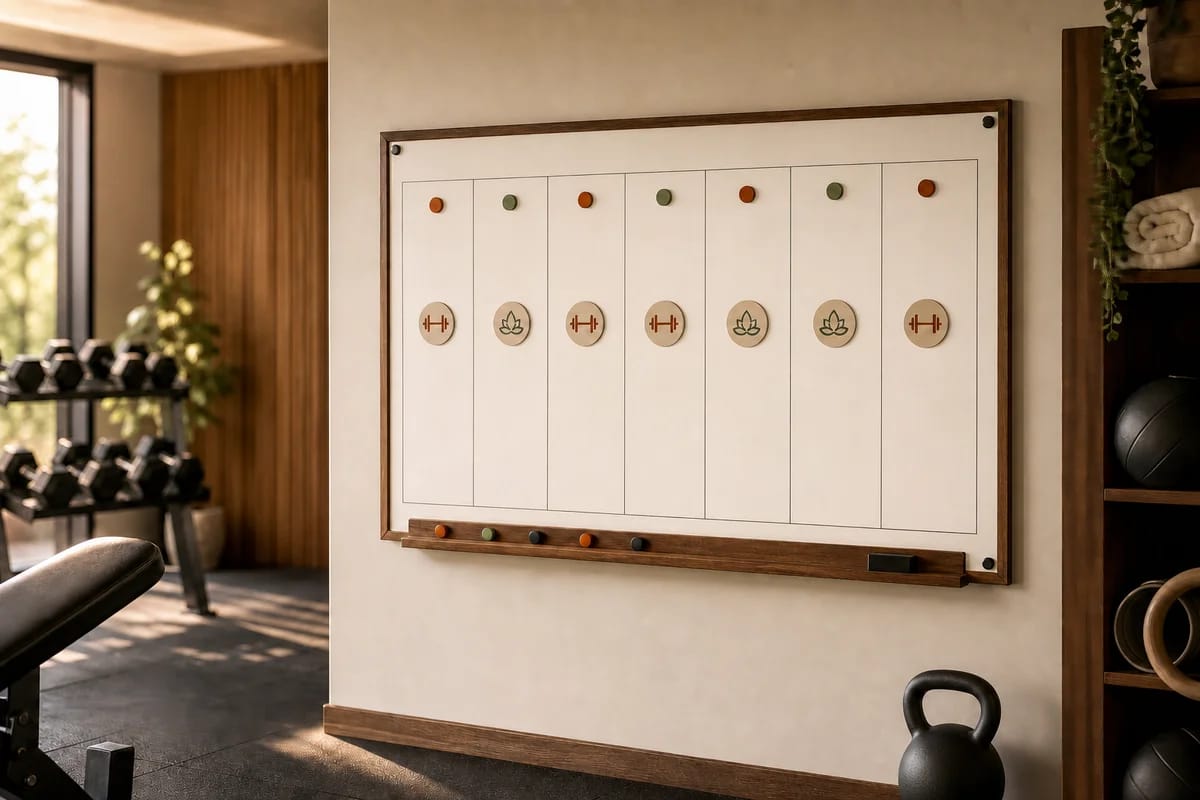
- Space your hard sessions. Leave at least 48 hours between heavy work for the same muscles, and fill the gaps with lighter or different training.
- Add load slowly, every couple of weeks rather than every session, so your tendons keep pace with your muscles.
- Get protein at every meal, roughly 30 to 40 grams, instead of saving it for dinner.
- Protect 7 to 9 hours of sleep. A hard week on 5 hours will feel like your recovery collapsed when the real problem is upstream.
- If you're a woman in the menopause transition, keep the heavy, bone-loading work in and take symptoms or hormone questions to your doctor.
Common questions
Is strength training safe in your 50s? Yes, and it's one of the best things you can do for your bones, muscle, and independence later on. The LIFTMOR trial ran heavy lifting safely with supervised women in their 60s who had low bone density. The real cautions are about ramping load gradually and coaching your technique, not avoiding heavy weight altogether.
How many rest days do I need in my 50s? It depends more on the person than the age. A pattern that works for a lot of people is three to four training days a week, with hard sessions for the same muscles spaced at least 48 hours apart. Judge it by whether you're still making progress and your joints feel good, not by a fixed number.
Does protein matter more for recovery after 50? Yes. Aging muscle responds less to protein, so getting a real dose at each meal, around 30 to 40 grams, helps make up for that. More on this in how much protein you actually need after 40.
The judgment calls a coach makes
This whole plan is simple to write down and harder to run on yourself in real time. Keeping intensity high while you space out the hard sessions. Adding load slowly enough that your tendons keep up, without being so slow you waste months. Knowing when a rough night of sleep means today's heavy set should turn into an easy one. Those are week-by-week judgment calls, not a fixed program.
It's the part our coaches do live with members in their 50s: watching the actual set, seeing when a load is ready to go up or a body needs a day off, and writing the next session off what they saw. You can see how that works on the how it works page. Founding membership is $49 your first month, then $299 a month locked in for life, with 25 of those spots.
Before you decide, ask yourself one question: after a hard week, can you actually tell the difference between "sore and fine to push" and "sore and about to get hurt," and will you back off when it's the second one? If yes, a patient log and that kind of self-check will take you a long way. If you're not always sure, that's the judgment call our coaches make for a living.
Sources
-
Moore and colleagues, 2015. Protein ingestion to stimulate myofibrillar protein synthesis requires greater relative protein intakes in healthy older versus younger men. Journals of Gerontology Series A. ↩
-
Heinemeier and colleagues, 2013. Lack of tissue renewal in human adult Achilles tendon is revealed by nuclear bomb 14C. FASEB Journal. ↩
-
Schoenfeld and colleagues, 2017. Strength and hypertrophy adaptations between low- vs. high-load resistance training: a systematic review and meta-analysis. Journal of Strength and Conditioning Research. ↩
-
Watson and colleagues, 2018. High-intensity resistance and impact training improves bone mineral density and physical function in postmenopausal women with osteopenia and osteoporosis: the LIFTMOR randomized controlled trial. Journal of Bone and Mineral Research. ↩
-
Markus and colleagues, 2022. Age differences in recovery rate following an aerobic-based exercise protocol inducing muscle damage among amateur, male athletes. Frontiers in Physiology. ↩
-
Greendale and colleagues, 2012. Bone mineral density loss in relation to the final menstrual period in a multiethnic cohort: results from the Study of Women's Health Across the Nation (SWAN). Journal of Bone and Mineral Research. ↩