Exercise is anti-inflammatory, so why does it spike IL-6?
Exercise lowers inflammation, yet a long workout sends IL-6, a so-called inflammatory signal, soaring. Why both are true, and what it means for your CRP test.

In this article6
The short answer
Because IL-6, a chemical messenger, leaves working muscle as a short burst with a job to do, not the constant low simmer linked to disease. The burst calls up the body's calming signals and fades over the following hours. Regular training turns the simmer down.
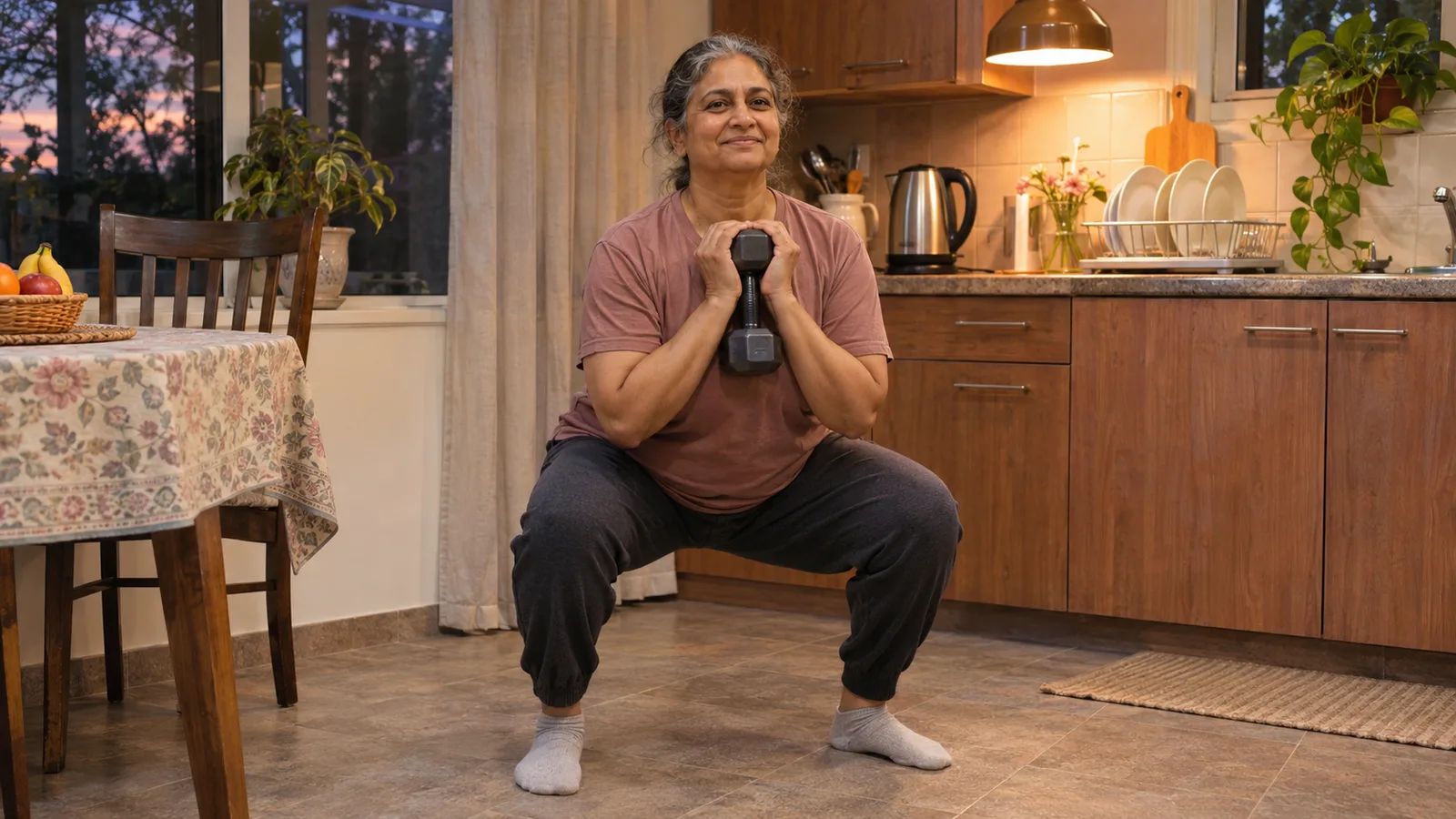
If you came for the practical part: yes, regular exercise lowers the low, background inflammation in your blood, by a small but real amount. Cardio and strength work both help. The standard guideline is a good target: about 150 minutes a week of moderate activity like brisk walking, plus two days of strength work for all your major muscles.1 Five 30-minute walks and two short strength sessions at home would cover it.
That's the whole-body kind of inflammation, the kind a blood test measures. A swollen ankle or a flaring knee is local inflammation, a different question. New swelling, or a joint that's hot or very painful, is worth showing to a doctor or physio before you train on it.
Now the puzzle. You may have heard, maybe in the same podcast that told you exercise is anti-inflammatory, that a workout floods your blood with IL-6, a molecule on every list of inflammation markers. Both are true. During a marathon, the IL-6 in your blood can climb more than 100-fold.2 That rise is how IL-6 was first recognised as a signal sent by muscle, and it's why researchers started calling this a paradox.3
What untangles it is time. The IL-6 linked to disease is a low, steady simmer that lasts for months or years. The IL-6 from exercise is a tall, narrow spike that fades over the following hours. It's the same molecule, but your body reads the two patterns in opposite ways.
An illustration, not data, and not to scale. The simmer is the two- to threefold rise in several inflammatory markers, IL-6 among them, seen in chronic low-grade inflammation (Petersen and Pedersen, 2005).
That background inflammation matters. When it builds with age, researchers call it inflammaging and count it as a major risk factor for the diseases of ageing.4 Turning it down is thought to be part of why regular exercise lowers the risk of heart and metabolic diseases.5
Is your workout inflaming you?
For a few hours, in a narrow sense, yes. That's by design, and the details are reassuring.
Where it comes from. In chronic inflammation, fat tissue is one of the places pumping out TNF-alpha, one of the body's main "inflame" signals. During exercise, the IL-6 comes from the muscle fibres themselves, and it rises without TNF going up first.6 (Our piece on muscle as an organ covers the other signals muscle sends.)
What comes with it. Muscle-made IL-6 calls up the body's calming signals. When researchers gave healthy volunteers an IL-6 drip at the level a hard workout produces, TNF didn't budge. Instead, two anti-inflammatory signals rose, IL-10 and IL-1ra, along with cortisol, the body's own anti-inflammatory hormone.7
Even a marathon tips toward calm. Ten men gave blood before and after the 1997 Copenhagen Marathon, and this is how far each signal rose at its peak.
Ostrowski and colleagues, 1999. Ten men, peak level compared with before the race.
TNF did go up, a little over twice its starting level, so three and a half hours of running isn't inflammation-free. Next to IL-1ra and IL-10, though, it barely shows. The researchers suggested that those signals keep the inflammatory response small and short.
Most workouts are nowhere near that. In sessions under an hour, a rise of more than 10-fold is rare.8 The spike grows mainly with how long you go, and also with effort, how much muscle you use9 and how low your muscles run on stored carbohydrate.8 Being sore afterwards doesn't mean a bigger spike: muscle-damaging and non-damaging exercise produce similar IL-6 rises.10
Can you overdo it? In principle, yes, but it takes an athlete's workload. One proposed explanation for overtraining, where performance keeps falling despite hard work, is that heavy training with too little rest causes enough small injuries to keep inflammatory signals raised.11 It's still a hypothesis, and it describes people stacking hard session on hard session, not someone walking most days and lifting twice a week. If you're training hard and have felt slower, flatter and moodier for weeks, that's the cue for an easier week. If you still feel that way after it, mention it to your doctor.
How regular exercise turns the simmer down
Nobody thinks there's a single switch. The best-supported picture has a few routes working together.
It trims belly fat. Visceral fat, the deep belly fat packed around your organs, is a steady source of inflammatory signals, and losing some of it is thought to be one of the main ways training lowers inflammation.5 Here the IL-6 spike turns out to be doing real work. IL-6 helps free stored fat to burn as fuel. In a 12-week trial, adults carrying extra belly fat cycled regularly while taking either a placebo or tocilizumab, a rheumatoid arthritis drug that stops IL-6 from working. On placebo, the exercise shrank their visceral fat. On the IL-6 blocker, that effect disappeared.12
That's the neatest answer to the paradox. The so-called inflammatory molecule is part of how exercise removes a major source of inflammation, and blocking it cost people a benefit. One group of researchers proposes that IL-6 works like a fuel alarm: muscle sounds it when fuel runs short, it frees up stored energy, and it briefly turns down immune activity while the work goes on.13 It's a proposal, but it fits another finding: trained people tend to have lower IL-6 at rest and a smaller spike for the same workout,9 as if fitter muscle needs to sound the alarm less.
IL-6 isn't the only route, either. In one study, twenty minutes of moderate exercise made immune cells produce less TNF, through an effect of adrenaline.14
Which exercise lowers inflammation most
You don't need the biggest spike. Lifting probably makes a smaller IL-6 spike than long, steady cardio,8 yet across 55 trials in healthy middle-aged and older adults, strength training gave the biggest drop in CRP, the inflammation marker blood tests use. Aerobic exercise (walking, cycling, rowing) did best for IL-6 and TNF.15 Rankings like this shift from one analysis to the next, so take the lesson as "do both", not "pick the winner".
A single easy 30-minute walk didn't raise IL-6 at all in inactive middle-aged men, yet walking programs at that pace bring plenty of health benefits.8 How big your spike is on the day isn't the score. Doing it week after week is. In a British study that followed over 4,000 adults for 10 years, people who kept to about two and a half hours of activity a week had lower CRP and IL-6 throughout.16
Gentler practices count too. In trials with healthy adults, mind-body practices such as yoga, tai chi and qigong lowered CRP and TNF a little, though that research is thinner.17
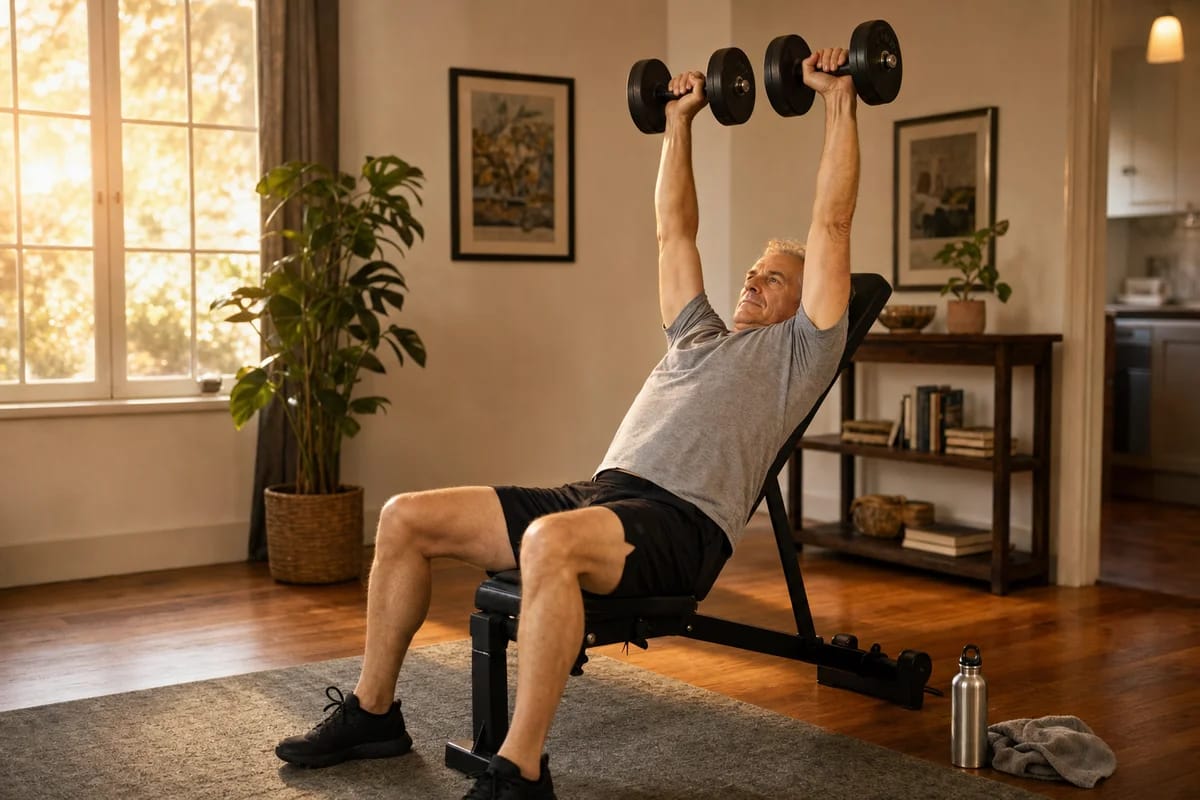
If you're starting from very little, the minimum effective dose shows how small a first step can be, and a longevity week shows one way to fit cardio and strength around a normal life. And if the two strength days are what keeps slipping, that's what our coaches are for: in live 1‑on‑1 video sessions at home, your coach is on the call at a set time with the session already written, watching your form and adjusting it as you go.
What it means for your CRP test
If your blood test checked for inflammation, it almost certainly measured CRP, or the more sensitive hs-CRP, not IL-6. CRP is a protein your liver makes when IL-6 and similar signals tell it to, so it's a slower, steadier read of the same system. Here's how the American Heart Association and CDC grade an hs-CRP result for heart risk.18
| hs-CRP result | What it usually means |
|---|---|
| Below 1 mg/L | Lower risk |
| 1 to 3 mg/L | Average risk |
| Above 3 mg/L | Higher risk |
How much will training move it? Across 83 trials, regular exercise lowered CRP by a small amount on average, for people of any age and either sex. The drop was about twice as big when people also lost weight, and still there when they didn't.21 The paper reports the size as a statistical effect, not in mg/L, so there's no honest way to turn it into points off your result. Nobody can promise you a number or a date, so judge it over months, not by next week's result.
A raised CRP has plenty of possible causes, from infections and autoimmune conditions to smoking22 and poor sleep,20 so talk to your doctor about a high result, including whether to repeat it, rather than trying to work it off alone.
Should you block the inflammation after a workout?
Probably not, and the IL-6 blocker trial above is the clearest reason why. The signals a session sends out are part of how it changes you.
High-dose antioxidant pills. Big daily doses of vitamin C and E (around 1,000 mg of C) taken through weeks of training cancelled the gain in blood sugar control in one trial23 and blunted some of the muscle's adaptations in another, though fitness improved just as much.24 Those were pills, not food.
Painkillers. Taken daily for weeks, they cut both ways. Young adults on the maximum over-the-counter dose of ibuprofen grew about half as much thigh muscle as those on low-dose aspirin.25 People in their mid-60s on ibuprofen or acetaminophen (paracetamol) gained a little more muscle than those on a dummy pill.26 We found no trial of the occasional tablet for a headache or a sore back. If you're young and lifting to build muscle, though, the first trial is a reason not to reach for them every day "for recovery". If you take one for pain, check with your doctor or pharmacist before changing how you use it.
Ice baths. Sitting in cold water straight after lifting, session after session, seems to trim muscle growth a little, in small studies of young adults.27 Our piece on what soreness does and doesn't mean covers painkillers and ice baths in more detail, and what eases the ache instead.
None of this applies to medicine you take for a condition. If your doctor has you on an anti-inflammatory, or an IL-6 blocker for arthritis, keep taking it as prescribed and ask them about your training.
Where the evidence runs out
- How much is the spike itself? Exercise lowers inflammation through fat loss, adrenaline, fitter muscle and the IL-6 spike, all at once. Nobody has worked out each one's share.
- Not everyone responds. In frail older adults, or those with marked muscle loss, exercise didn't move CRP or IL-6 on average, though it did lower TNF.28 Strength and balance still matter for their own sake.
What is settled is the shape of it. A workout's IL-6 is a spike that comes and goes and leaves calming signals behind, and months of regular training lower the background level. So when someone tells you a workout is inflammatory, they're right, for a few hours.
Sources
-
Centers for Disease Control and Prevention. Adult activity: an overview. ↩
-
Ostrowski and colleagues, 1999. Pro- and anti-inflammatory cytokine balance in strenuous exercise in humans. Journal of Physiology. ↩
-
Pedersen and Febbraio, 2008. Muscle as an endocrine organ: focus on muscle-derived interleukin-6. Physiological Reviews. ↩
-
Franceschi and colleagues, 2025. Toward precision interventions and metrics of inflammaging. Nature Aging. ↩
-
Gleeson and colleagues, 2011. The anti-inflammatory effects of exercise: mechanisms and implications for the prevention and treatment of disease. Nature Reviews Immunology. ↩ ↩2
-
Petersen and Pedersen, 2005. The anti-inflammatory effect of exercise. Journal of Applied Physiology. ↩
-
Steensberg and colleagues, 2003. IL-6 enhances plasma IL-1ra, IL-10, and cortisol in humans. American Journal of Physiology: Endocrinology and Metabolism. ↩ ↩2
-
Nash and colleagues, 2023. IL-6 signaling in acute exercise and chronic training: potential consequences for health and athletic performance. Scandinavian Journal of Medicine and Science in Sports. ↩ ↩2 ↩3 ↩4
-
Fischer, 2006. Interleukin-6 in acute exercise and training: what is the biological relevance?. Exercise Immunology Review. ↩ ↩2
-
Docherty and colleagues, 2022. The effect of exercise on cytokines: implications for musculoskeletal health: a narrative review. BMC Sports Science, Medicine and Rehabilitation. ↩
-
Smith, 2000. Cytokine hypothesis of overtraining: a physiological adaptation to excessive stress?. Medicine and Science in Sports and Exercise. ↩
-
Wedell-Neergaard and colleagues, 2019. Exercise-induced changes in visceral adipose tissue mass are regulated by IL-6 signaling: a randomized controlled trial. Cell Metabolism. ↩
-
Kistner, Pedersen and Lieberman, 2022. Interleukin 6 as an energy allocator in muscle tissue. Nature Metabolism. ↩
-
Dimitrov, Hulteng and Hong, 2017. Inflammation and exercise: inhibition of monocytic intracellular TNF production by acute exercise via β2-adrenergic activation. Brain, Behavior, and Immunity. ↩
-
Xu and colleagues, 2026. Exercise effects on inflammatory markers in middle-aged and older adults: a network meta-analysis. Journal of the American Medical Directors Association. A second 2026 analysis, of adults over 60 only, ranked aerobic exercise first for CRP: Hong and colleagues, Exercise-induced anti-inflammatory adaptation in older adults: a Bayesian network meta-analysis and dose-response analysis of C-reactive protein. Frontiers in Medicine. ↩
-
Hamer and colleagues, 2012. Physical activity and inflammatory markers over 10 years: follow-up in men and women from the Whitehall II cohort study. Circulation. ↩
-
Muñoz-Vergara and colleagues, 2023. Understanding the dynamics of inflammatory mediators in response to mind-body movement therapies: a systematic review and meta-analysis of studies in healthy subjects. Brain, Behavior, and Immunity: Integrative. ↩
-
Pearson and colleagues, 2003. Markers of inflammation and cardiovascular disease: application to clinical and public health practice. Circulation. ↩
-
Kasapis and Thompson, 2005. The effects of physical activity on serum C-reactive protein and inflammatory markers: a systematic review. Journal of the American College of Cardiology. ↩
-
Cleveland Clinic. C-reactive protein (CRP) test. ↩ ↩2
-
Fedewa, Hathaway and Ward-Ritacco, 2017. Effect of exercise training on C reactive protein: a systematic review and meta-analysis of randomised and non-randomised controlled trials. British Journal of Sports Medicine. ↩
-
MedlinePlus. C-reactive protein (CRP) test. ↩
-
Ristow and colleagues, 2009. Antioxidants prevent health-promoting effects of physical exercise in humans. Proceedings of the National Academy of Sciences. ↩
-
Paulsen and colleagues, 2014. Vitamin C and E supplementation hampers cellular adaptation to endurance training in humans: a double-blind, randomised, controlled trial. Journal of Physiology. ↩
-
Lilja and colleagues, 2018. High doses of anti-inflammatory drugs compromise muscle strength and hypertrophic adaptations to resistance training in young adults. Acta Physiologica. ↩
-
Trappe and colleagues, 2011. Influence of acetaminophen and ibuprofen on skeletal muscle adaptations to resistance exercise in older adults. American Journal of Physiology: Regulatory, Integrative and Comparative Physiology. ↩
-
Piñero and colleagues, 2024. Throwing cold water on muscle growth: a systematic review with meta-analysis of the effects of postexercise cold water immersion on resistance training-induced hypertrophy. European Journal of Sport Science. ↩
-
Chu and colleagues, 2026. Effects of exercise interventions on inflammatory biomarker levels in older adults with frailty and/or sarcopenia: a systematic review and meta-analysis. Frontiers in Immunology. ↩