Training on vacation with two dumbbells
You won't lose fitness on a two-week trip. The real risk is the restart. Here's how to train well with almost no equipment and keep the habit alive.
Updated
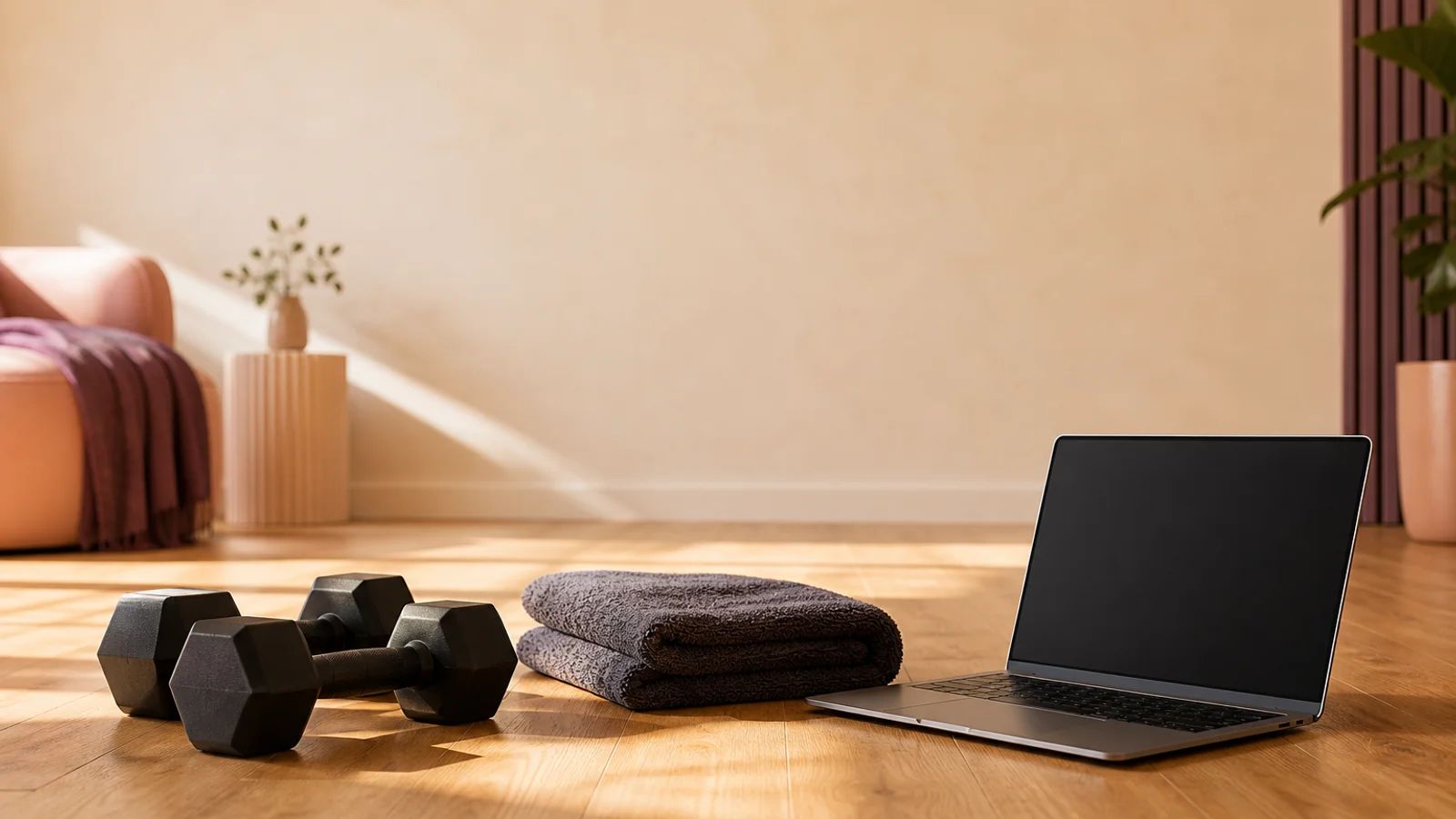
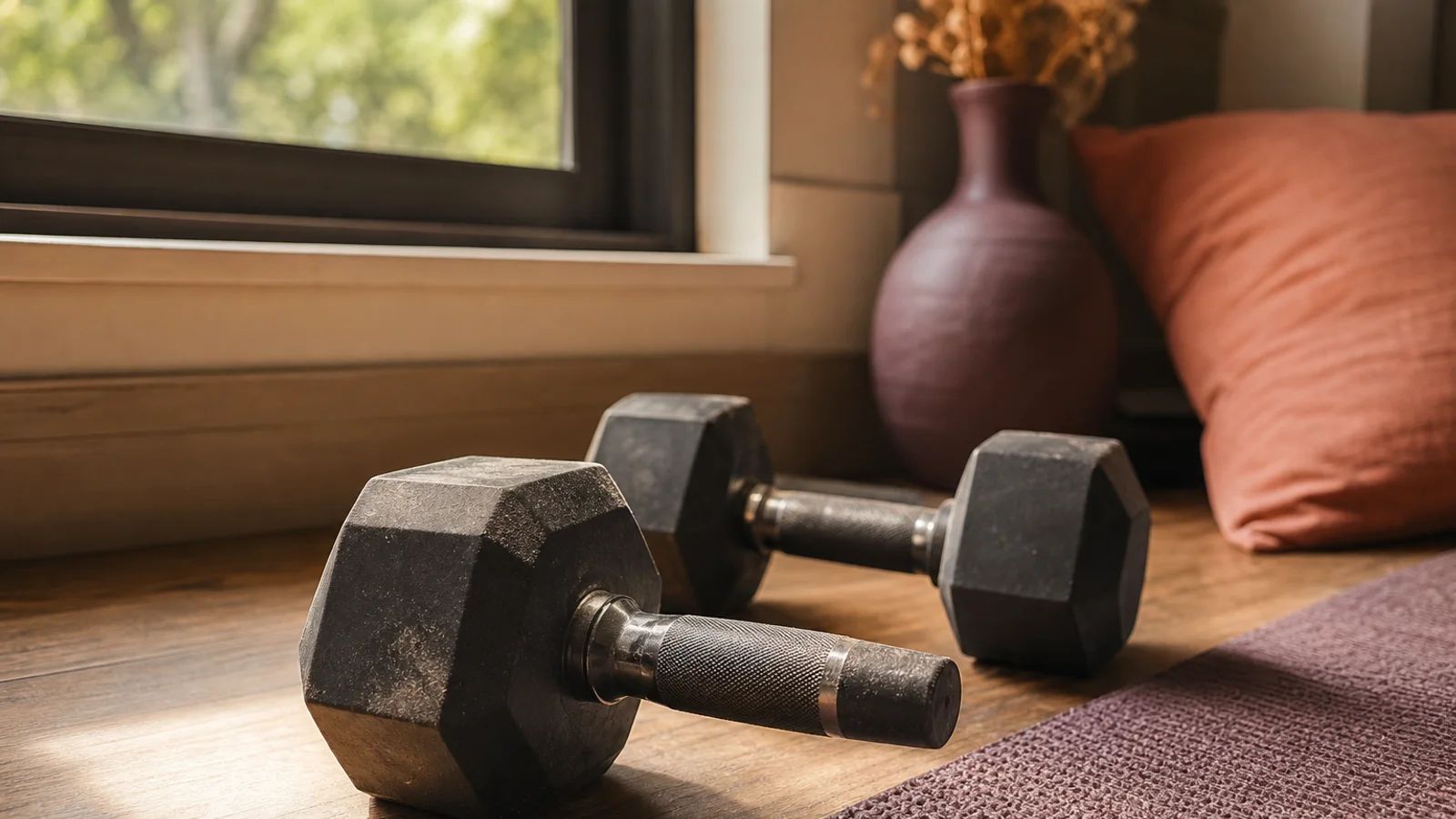
Two dumbbells, a chair, and about ten square feet of floor. That's the gym for the next two weeks.
It's enough. Two weeks off costs a trained body very little, and strength in particular holds for weeks rather than days. The full timeline is in how fast you lose strength when you stop lifting, but the short version is that your wind fades before your lifts do. The first session home feels worse than it really is.
What costs you is the restart. You land, the week is chaos, the streak is broken, and "I'll start Monday" turns into three Mondays. Months of progress leak away there, in the weeks after the trip. So keep the goal modest while you're away: stay warm enough that there's nothing to restart.
Nobody told you what to do instead
When people skip training on a trip, they blame the room. No gym, no rack, no cable machine. True on the facts, and rarely what actually stopped them.
Your program says barbell squats. There's no barbell. The session feels invalid, so you skip it, because nothing replaced it. That's a gap in the plan rather than a gap in the room. A session built around what's in front of you is a real session, and your muscles have no idea what brand is stamped on the handle.
So sort the plan before you fly, or on day one at the latest. Ours is equipment-agnostic on purpose: we build the session around what's in the room, not around an imaginary gym. That's how it works.
Three ways to make a light dumbbell feel heavy
The dumbbells in the closet are lighter than what you'd normally lift, probably by a lot. You can still get a real training effect out of them. Three levers do most of the work.
Slow the lowering down. Four seconds on the way down, counted, every rep. A four-second lower turns a light goblet squat into something that has your legs shaking by rep eight. It's the cheapest way to make a light weight hard, and your joints get an easy ride out of it.
Train one side at a time. Split squats, one-arm rows, single-leg hinges. You've doubled the relative load in one move, and you get balance work and an honest look at your weaker side thrown in. A split squat with one modest dumbbell humbles almost everyone, me included.
Cut the rest. Same exercises, same reps, less time between sets. Total work stays high and the session gets hard because you never quite recover. Set a timer and keep moving.
What if there aren't even dumbbells?
Then you've still got a floor, and usually a hill.
Push-ups and pull-ups hide years of progress if you keep making them harder. Put your feet up on the chair. Slow the tempo the same way. Bring your hands closer together. If you find a bar somewhere, do slow negatives until full pull-ups show up.
Cardio travels better than anything else you do. Zone 2 is easy, conversational effort for 30 to 45 minutes: jog, swim, walk up something steep. You can do that anywhere on earth, and it needs no equipment at all. How much of it is worth doing is covered in how many hours of zone 2 a week actually move the needle.
A 30-minute version that still counts
One template, run three times across the week, holds almost everything:
- Goblet squat, four seconds down, 3 sets of 8
- Split squat, one dumbbell, 3 sets of 8 each leg
- One-arm row, 3 sets of 10 each side
- Push-ups with feet on the chair, 3 sets, stopping when the reps get ugly
- Rest 45 seconds between sets, no more
Thirty focused minutes of slow eccentrics and single-leg work, three times in a week away, is genuinely enough to hold your strength and come home feeling like yourself.
Shrink the session, keep the slot
One habit matters more than any exercise above: leave the training slot in your calendar.
Move it. Cut it to 30 minutes. Don't delete it. A short session you actually do beats the perfect session you skipped, and the slot is what keeps you feeling like someone who trains. Nothing stopped, so nothing needs restarting.
Where a live call beats a message thread
People who travel well are usually the ones who already own a plan they can shrink. If you can walk into a rental, look at two dumbbells and a chair and already know what the session is, that's the whole article, and the beach is waiting.
For everyone else the gap shows up as lag. On a typical online program you send your coach a photo of the hotel gym, wait a day, get a revised plan, then find the one machine it relies on is broken. Another message, another day. Half the trip is gone before it's sorted.
On a live call your coach just looks at the room. Two dumbbells, a sturdy chair, ten square feet of floor. They adjust on the spot: split squats instead, here's the tempo, show me your first set. No lag, and no guessing whether you're doing the substitute right.
The week you get back gets handled too, and that one matters more than people think. You don't jump straight to your old numbers after two weeks of lighter work. We program a ramp, usually a week of slightly reduced loads, so you slide back in instead of getting wrecked on day one and losing another week to soreness.
The logistics are dull and worth saying out loud. Coaching doesn't pause for travel, and there's no membership to freeze for a trip. Sessions are unlimited and they happen wherever you are, so a vacation is training in a different room. You can message your coach mid-trip if something changes. More in the FAQ.
If you want a coach who plans around your actual life, trips included, your first month is $49, and founding members lock in $299 a month for life. There are 25 founding spots. Details on pricing.
Pack the shoes. The plan comes with you.
More on