How long does exercise lower blood sugar? 1 to 2 days
One workout helps your muscles soak up sugar for about a day, sometimes two, then it fades. Who sees it most, how to plan your week, and the after-meal walk.

In this article6
The short answer
Your muscles soak up sugar more easily for about a day after a solid workout, sometimes two. It shows most when your sugar runs high, and much less in an active person whose numbers are already normal. So don't go more than two days without moving.
One workout changes your blood sugar on three different clocks: minutes, hours and days. Most of the confusing readings people see, especially on a glucose sensor, come from mixing those clocks up. Here's how they play out.
What one workout does, hour by hour
While you move
Working muscle takes sugar in by itself
A muscle that's contracting pulls glucose out of your blood without needing insulin. It has its own way in, and that route works even in people with insulin resistance or type 2 diabetes.1 It's why your number often drops during a walk.
The first hour or two
Easy sessions drift down, hard ones can bump up
After a stroll or an easy bike ride, glucose usually keeps easing down. After a hard effort, like sprints or all-out intervals, it can rise for an hour or two instead. That's normal, and the next section explains it.
That night and the next day
The main window
The muscles you worked answer insulin more readily, most likely because they're busy restocking their fuel. The same amount of insulin now moves more sugar out of your blood. This is the effect people mean when they say exercise lowers blood sugar for a day or two.
Day two
Often still open after a longer session
In the study the famous 48-hour figure comes from, untrained men cycled at a steady, moderate effort for an hour. Two days later their muscles were still handling sugar better than before the ride.2 Everyday life is less tidy. In a small study of sedentary adults with type 2 diabetes wearing sensors at home, an hour of exercise clearly lowered the first day's average glucose, but the only meal that came out clearly lower on its own was that day's lunch, the second meal after the session.3 So count on a day per session, and treat a second day as a bonus after a longer one.
Day three onward
Faded
The joint guidelines on exercise and type 2 diabetes from the American College of Sports Medicine and the American Diabetes Association put one session's effect at more than a day but less than three.1 Even endurance athletes lost most of their extra insulin response within about 60 hours of their last session.4 Their fitness didn't hold on to this edge. Their recent sessions did.
When the numbers look wrong
Higher right after a hard session
This is the most common surprise for people wearing a sensor. During hard work your body releases adrenaline and related hormones, and they tell your liver to pour sugar into your blood faster than your muscles can use it. Those hormones don't switch off the second you stop, so a rise after brief, intense exercise can last up to an hour or two.1
It doesn't mean the workout backfired. The liver released that sugar for your muscles, and the overnight window still opens. If you'd rather see a falling line, longer and easier sessions usually give you one.1
Early-morning workouts read higher more often. Your blood sugar rises naturally between about 4 and 8 a.m. as part of waking up (the "dawn phenomenon"), so a session at that hour starts on top of it. The same workout later in the day is less likely to cause a rise.5 It's the same liver story, not a sign the session failed.
Lower than you expected, hours later
If you don't take insulin or an insulin-releasing pill such as a sulfonylurea, a lower reading that night or the next morning is usually just the window doing its job. The guidelines say your risk of an exercise low is minimal.1 Feeling shaky, sweaty or confused is not part of that, so mention it to your doctor or care team.
The effect lives in the muscles you used
One old experiment explains a lot. Researchers in Copenhagen had healthy young men do an hour of knee kicks with one leg while the other leg rested. Four hours later, insulin worked better in the thigh that had worked than in the one that hadn't.8 Same blood, same insulin, same person. The only difference was the muscle.
The likely reason is fuel. Muscle keeps sugar in storage, as glycogen, for its own use. A workout spends some of that store, and for the next day or so the worked muscle is busy restocking, which means taking sugar in.
That gives you two practical rules:
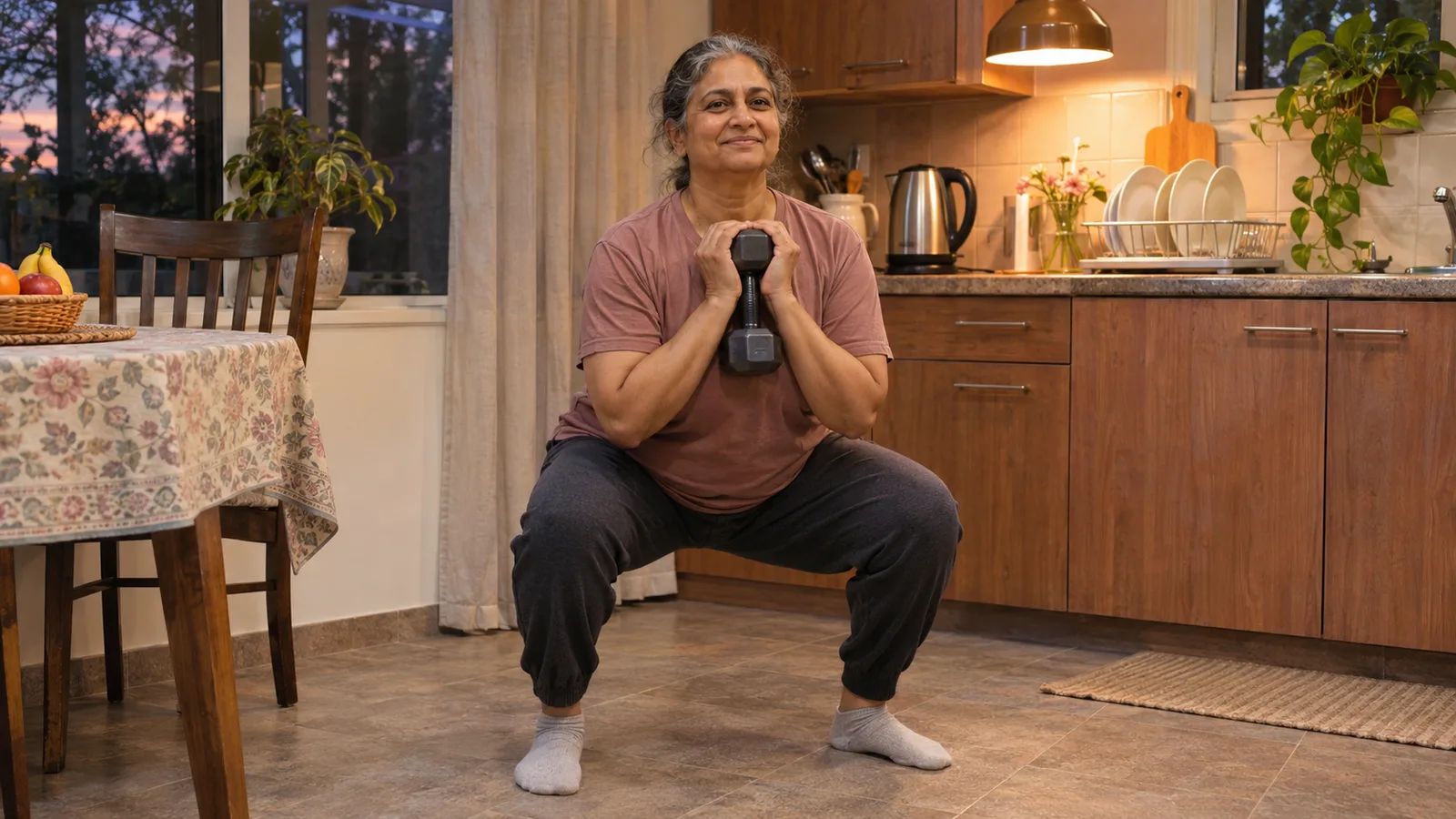
- Big muscles do more. Your legs and hips are the largest muscles you have. Walking, stairs, cycling, squats and getting up and down from a chair all put them to work. An arms-only routine moves much less.
- Lifting counts. In people with prediabetes or type 2 diabetes, a 45-minute weights session and a 45-minute steady cardio session each cut time spent above 180 mg/dL over the next 24 hours by about a third (35% and 33%).9 Lifting has mostly been measured over that first day, so whether its window runs into day two as reliably as cardio's isn't known yet.
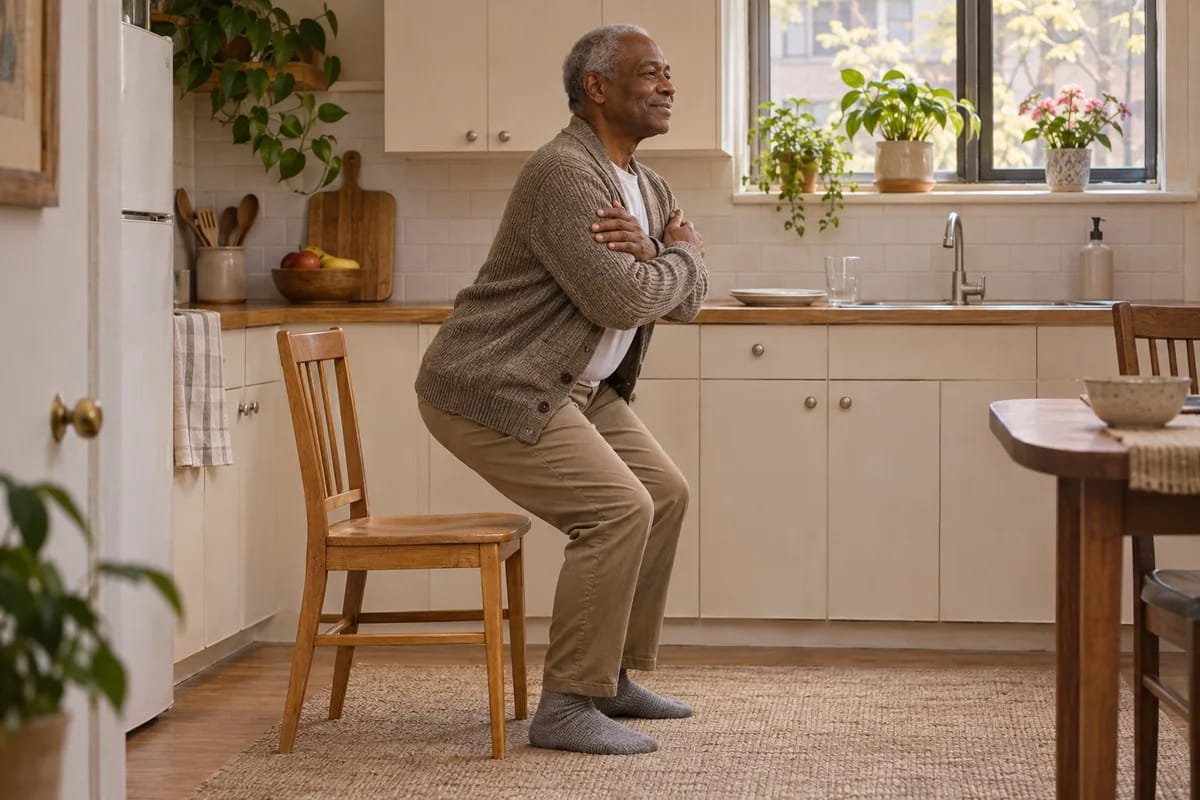
If you've never lifted, the sit-to-stand test is a friendly place to start, and your muscle is a glucose sink goes deeper on what strength training does for blood sugar over months.
Who sees it most, and how much it takes
What changes the result most isn't the workout. It's where you're starting.
| Where you're starting | What one session did |
|---|---|
| Active, with normal numbers | Very little that shows. It took a long, draining session before a next-morning blood test changed.10 |
| Inactive, in a larger body | An easy session of about 70 minutes made insulin work 35% better the next morning.11 |
| Type 2 diabetes | A long, draining bike ride 12 hours earlier lowered next-morning fasting glucose from about 197 to 164 mg/dL.12 |
The more room your blood sugar has to improve, the more one session does for you.10 That's why even a modest session can show a clear change when your numbers run high. If you've been told yours are borderline, your clinician can tell you what to aim for.
As for size, the sessions with a clear next-day effect in these studies were mostly 45 to 70 minutes of steady, moderate work. Treat that as something to grow into, not a bar to clear on day one. A 20-minute walk still counts toward your week, and shorter bouts add up (more on that below).
Try it on your own sensor. Eat the same breakfast on two mornings: one after a rest day, one after a day you exercised. Keep dinner and bedtime the same the night before, and compare the peaks. Do it twice, because sensors and sleep are noisy. If your numbers already sit in a tight, healthy range, a flat result is normal, not a failure.
Plan your week around the gaps
So the question that matters isn't how hard you went on Saturday. It's how long the window stays shut before the next session.
Our diagram. One day per session is the safe count from the ACSM/ADA statement; after an hour of cycling, Mikines and colleagues still found the window open at 48 hours.
In the three-day week, Saturday and Sunday are two days off in a row, and Friday's session covers Saturday. Two days off is the most the guidelines allow: move on at least three days a week, never more than two days in a row off, "because of the transient nature" of the improvement.1
The evidence from the other direction is just as clear. Healthy, active people around 30 cut their daily steps from about 13,000 to about 4,300. After only three days, the rise in their blood sugar an hour after meals nearly doubled.13
Some arithmetic, if you're aiming for the usual 150 minutes a week: three sessions is 50 minutes each, five is 30. A brisk walk, a bike ride and a short strength session all count.
The hard part isn't knowing this. It's not letting a busy Tuesday and Wednesday quietly turn into four days off. Putting sessions in the calendar like appointments helps more than willpower, which is the idea behind the appointment effect. It's also how Bespoke Fit works: your coach books each session with you as a calendar invite, then is live on the call, watching your form and your heart rate. Sessions run 45 to 90 minutes, and most people settle at around an hour, about the size of the sessions in the studies above.
The after-meal walk is a separate trick
Everything above is about the day-or-two window. A walk after eating uses the first clock instead: muscle pulling sugar in while it moves, timed for when the sugar from your meal arrives. It blunts that meal's spike, today, on top of whatever your last workout is still doing.
- Go soon. Across the pooled trials, exercise after a meal lowered the spike, and exercise before the meal didn't. The trials were small, but they lean toward starting soon after eating rather than later.14
- Three short walks can match one long one. In a study of inactive adults over 60, three 15-minute walks at a comfortable pace, each starting half an hour after a meal, lowered 24‑hour glucose about as much as one 45-minute morning walk, and did better after dinner. A 45-minute walk in the afternoon barely helped.15
- Dinner first. When adults with type 2 diabetes walked 10 minutes after each main meal instead of 30 minutes at any time, their after-meal glucose was 12% lower overall and 22% lower after the evening meal.16 Dinner tends to be the biggest meal and the one followed by the couch.
- No walk possible? Use your legs anyway. Some of the trials used bodyweight circuits of squats and lunges instead of walking.14 Ten minutes of stairs, a few squats or marching on the spot while the dishwasher fills works on the same principle.
So the whole plan fits in one line: don't let more than two days pass without working your legs, and walk for 10 minutes after dinner when you can.
On a treadmill, incline walking turns a longer walk into real work for your legs without the pounding of running. And if you're wondering how little exercise still pays off overall, the minimum effective dose is a good next read.
Sources
-
Colberg et al., 2010. Exercise and type 2 diabetes: the American College of Sports Medicine and the American Diabetes Association joint position statement. Diabetes Care. ↩ ↩2 ↩3 ↩4 ↩5 ↩6
-
Mikines et al., 1988. Effect of physical exercise on sensitivity and responsiveness to insulin in humans. American Journal of Physiology. ↩
-
Oberlin et al., 2014. One bout of exercise alters free-living postprandial glycemia in type 2 diabetes. Medicine and Science in Sports and Exercise. ↩
-
Burstein et al., 1985. Acute reversal of the enhanced insulin action in trained athletes. Association with insulin receptor changes. Diabetes. ↩
-
American Diabetes Association. Exercise and blood glucose levels in diabetes. ↩
-
American Diabetes Association. Blood glucose and exercise. ↩ ↩2
-
Centers for Disease Control and Prevention. Low blood sugar (hypoglycemia). ↩ ↩2
-
Richter et al., 1989. Effect of exercise on insulin action in human skeletal muscle. Journal of Applied Physiology. ↩
-
van Dijk et al., 2012. Both resistance- and endurance-type exercise reduce the prevalence of hyperglycaemia in individuals with impaired glucose tolerance and in insulin-treated and non-insulin-treated type 2 diabetic patients. Diabetologia. ↩
-
Magkos et al., 2008. Improved insulin sensitivity after a single bout of exercise is curvilinearly related to exercise energy expenditure. Clinical Science. ↩ ↩2
-
Newsom et al., 2013. A single session of low-intensity exercise is sufficient to enhance insulin sensitivity into the next day in obese adults. Diabetes Care. ↩
-
Devlin et al., 1987. Enhanced peripheral and splanchnic insulin sensitivity in NIDDM men after single bout of exercise. Diabetes. ↩
-
Mikus et al., 2012. Lowering physical activity impairs glycemic control in healthy volunteers. Medicine and Science in Sports and Exercise. ↩
-
Engeroff et al., 2023. After dinner rest a while, after supper walk a mile? A systematic review with meta-analysis on the acute postprandial glycemic response to exercise before and after meal ingestion in healthy subjects and patients with impaired glucose tolerance. Sports Medicine. ↩ ↩2
-
DiPietro et al., 2013. Three 15-min bouts of moderate postmeal walking significantly improves 24-h glycemic control in older people at risk for impaired glucose tolerance. Diabetes Care. ↩
-
Reynolds et al., 2016. Advice to walk after meals is more effective for lowering postprandial glycaemia in type 2 diabetes mellitus than advice that does not specify timing: a randomised crossover study. Diabetologia. ↩