Filming your lifts vs being watched live: what each catches
A phone on a tripod catches your form after the set. A live coach catches the rep before it breaks. Here is what each one is actually good for.
In this article7
Set a phone on a tripod and you'll see things you can't feel: a back rounding on a deadlift, knees caving on a squat, a hip that shoots up half a second early. That's real, useful information. It just arrives after the rep is over, sometimes hours later when you finally sit down to watch it. A coach watching live sees the same thing while the bar is still moving and says something before the next rep repeats it.
That gap, seconds versus hours, is the whole difference between the two tools. It has nothing to do with picture quality or how sharp your eye is. A camera shows you what already happened. Only a coach can change what happens next. Most people training alone should be filming anyway, it's one of the cheapest upgrades in the sport. But knowing what a camera can't do matters just as much as using one.
What a camera catches
From inside a rep, you can't feel your own back round on a deadlift or your knees cave on a squat. A slightly ugly rep and a clean one often feel identical while you're doing them. A camera doesn't care what it felt like. It shows you the shape of the movement, and that shape is where the useful information lives.
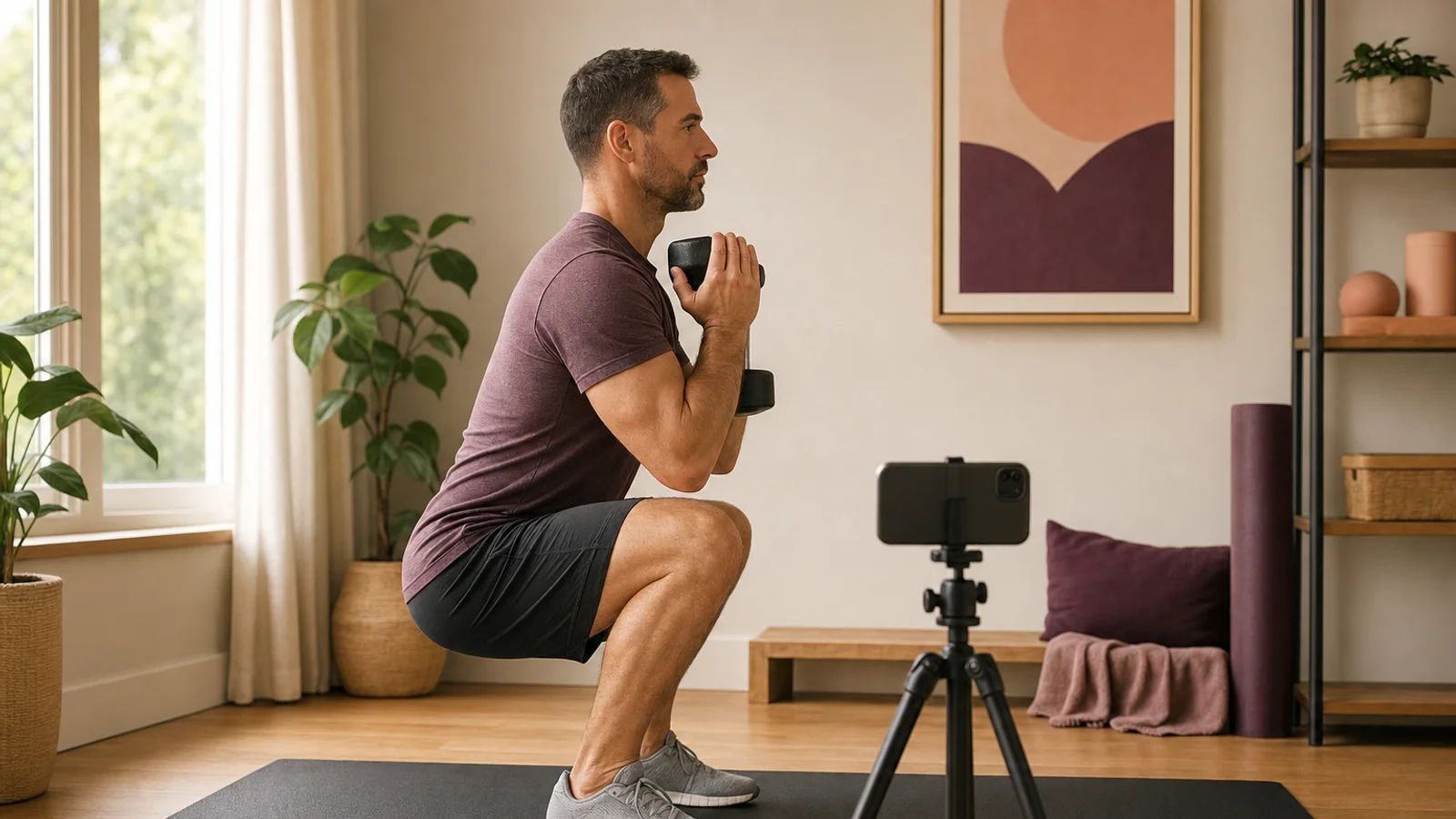
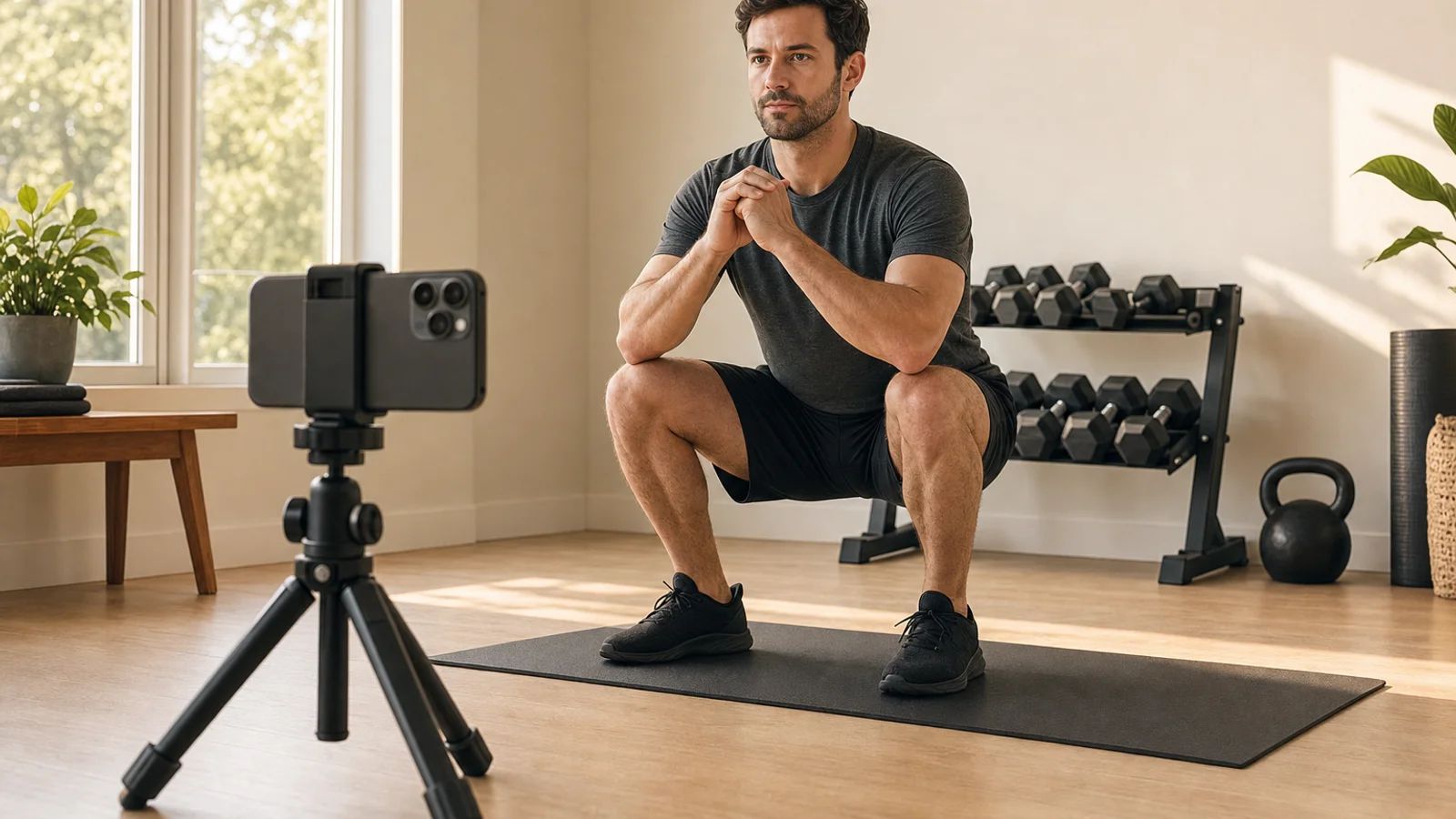
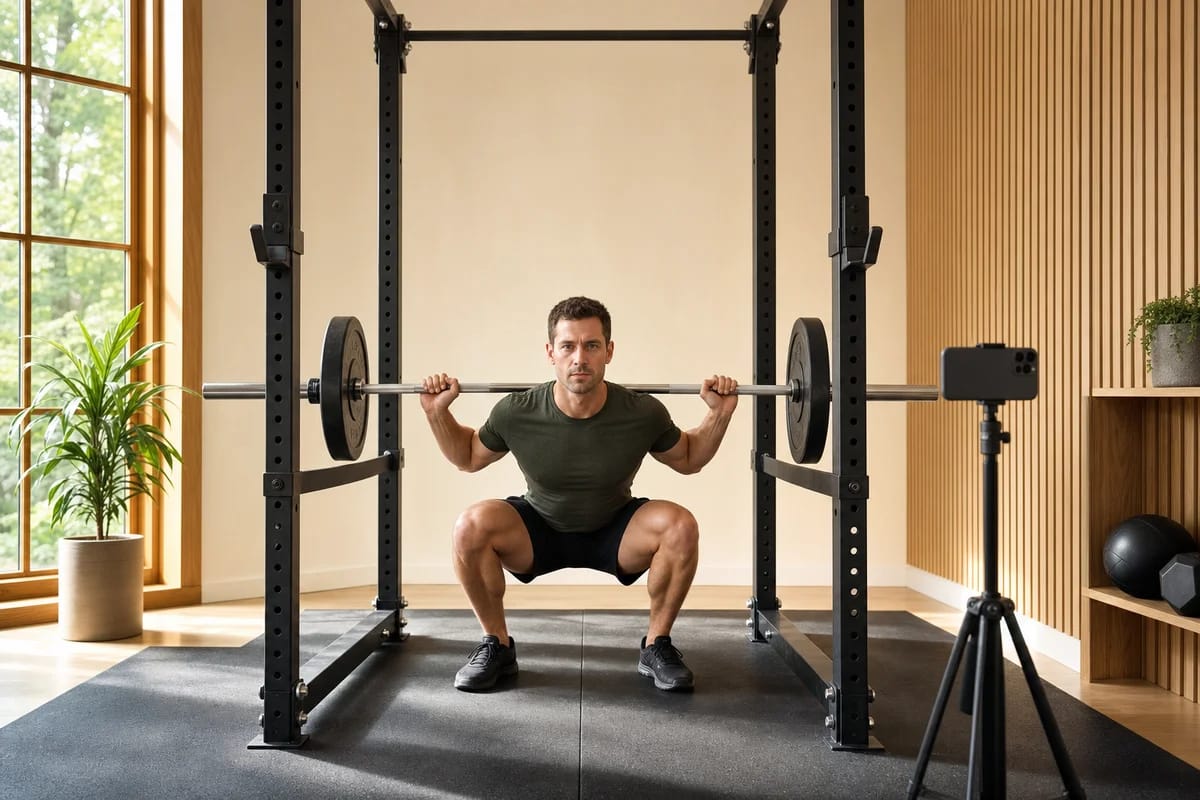
Filmed from the side at roughly hip height, video catches depth, bar path, tempo, and the obvious compensations: a heel that peels up, a hip that shoots back first, one arm locking out a beat late. Watch your three hardest working sets back and you'll usually spot the same one or two habits repeating. Now you know what to fix next time.
You still can't feel it while it's happening. But now you can see it, and that alone beats training blind.
What a live coach catches that film can't
A camera records. A coach reacts.
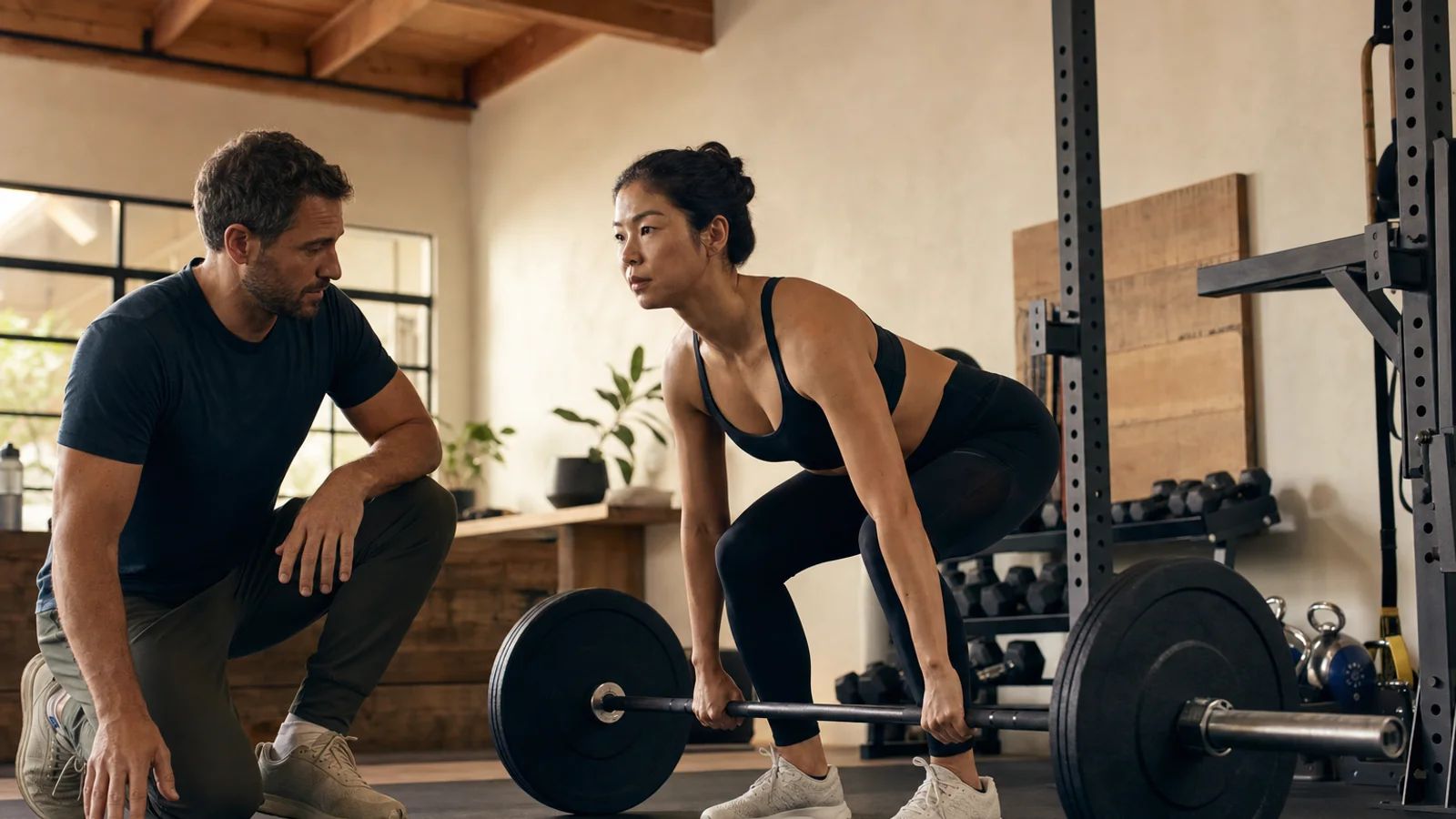
Film catches the rep where your back started to round. A coach watching live sees it coming and says "chest up, brace" before that rep goes wrong. The coach's cue can change the rest of the set you're in. The camera's footage just gives you something to think about tomorrow.
That gap shows up most on the reps that matter. Form rarely breaks on rep one. It breaks on rep eight, when you're tired and your attention has narrowed to just finishing. That's exactly the moment you're least able to notice your own back rounding, because you're feeling effort, not watching shape. A coach is watching shape the whole time and can call the set a rep before the wheels come off, before you bank three more reps of a pattern you don't want.
A coach can also make a call on the weight while you're still under it. If the bar slows to a crawl and the movement starts to change, they can drop the load or end the set on the spot. A tripod can't do that. It films the grind and lets you find out later that you probably went a rep too far.
Why timing matters this much
Sooner beats later for a specific reason, not just as a rule of thumb.
Every correction has a window. A cue lands hardest while the feeling of the movement is still in your body, because that's when your brain can connect the word, "brace," to the sensation of doing it. Wait a day and you're trying to fix a rep you can only half remember, working from footage instead of feel. The lesson still helps. It's just weaker, and in the meantime you've done every rep since the mistake without the correction.
There's a second cost people miss. A movement pattern gets easier to repeat every time you run it. Do a whole session with your knees caving and you haven't just banked some bad reps, you've given that exact pattern real practice. Delayed feedback lets the wrong version rehearse itself before you ever get the note. A cue in the moment interrupts it before it grooves in.
That doesn't mean more feedback is always better on every rep, forever. A 1994 study in Research Quarterly for Exercise and Sport found something that cuts against "sooner is always better": give learners a correction on every single attempt and they perform worse once that correction is taken away, because they lean on the feedback instead of building their own feel for the movement. Researchers call it the guidance hypothesis. It comes mostly from lab tasks and simple motor skills, not barbell training, so treat it as direction rather than proof about your deadlift. It does point at what good coaching should look like over months: cues that fade as you improve, not ones that run forever.
None of that changes the short-term picture. It matters more, not less, once the weight gets heavy or you're tired, because fatigue doesn't just make you weaker, it quietly changes how you move, and it does that fastest right when you're least able to see it happening. I wrote a whole post on that mechanism: why your form breaks under fatigue and what to do about it. Short version: the person mid-set is the worst-placed person to catch their own breakdown, which is exactly the job a live set of eyes does well.
That's the real value of catching it live. The correction happens before the mistake does any damage, not after.
When a tripod is genuinely enough
Plenty of the time, honestly.
If you're a disciplined self-reviewer, filming carries you a long way. Watching the footage, spotting the issue, writing down one cue, and applying it next session is real coaching, just spread across two workouts instead of one. Not everyone can do that part consistently. Some people watch their own tape and see exactly what's wrong; others watch the same clip five times and never quite spot it.
It works best on lifts you already know well. If you've squatted for years and you're checking one familiar thing, say depth or bar path, film is close to perfect. You already know the cue and what right looks like, so you just need outside confirmation. The delay barely costs you anything, because you're auditing the movement, not learning it. It also holds up fine on simple, lower-stakes lifts: a dumbbell row or a lateral raise that drifts a little isn't going to hurt you, so catching it next session is fine.
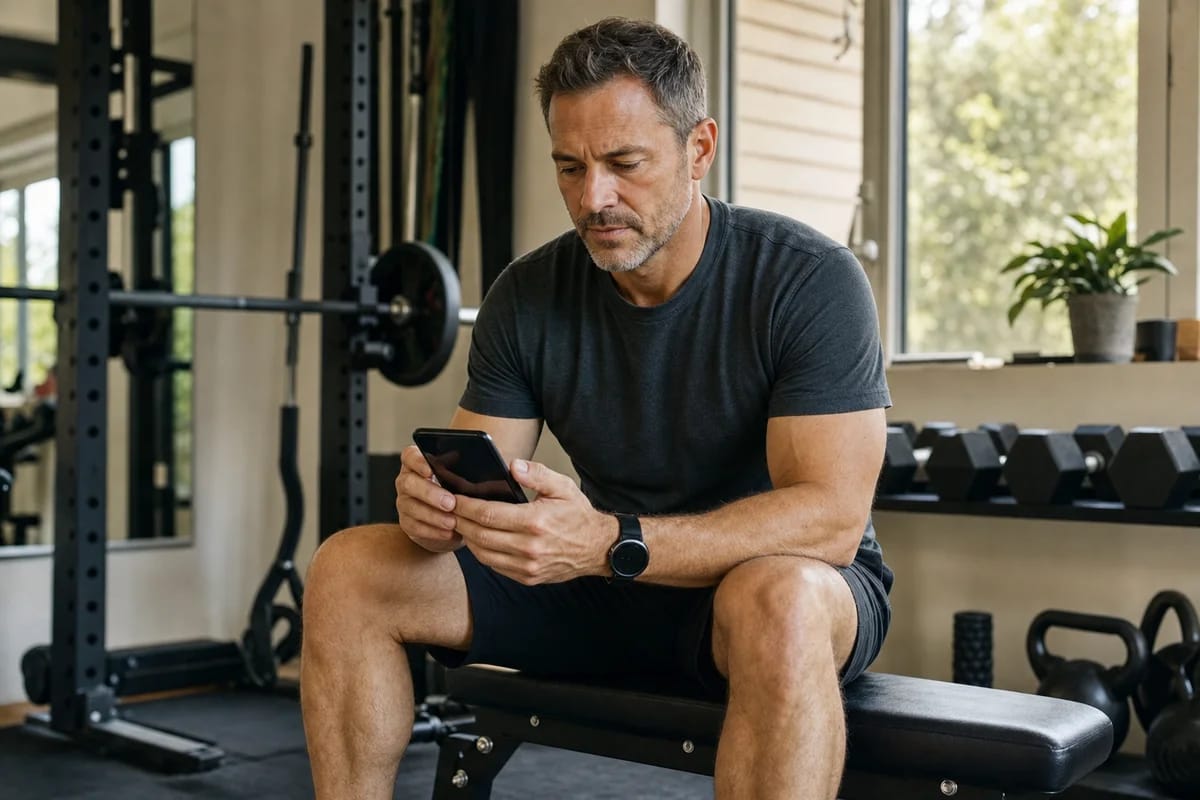
Getting the footage usable is its own small skill. Camera placement, lighting, and framing decide whether a clip is worth anything, and a lift filmed from the wrong angle is wasted time. That practical side is worth setting up properly: a simple camera setup guide for online training.
Two habits make the biggest difference to how much you get out of it. Film your last working set, not your first, since the tired reps carry the information worth having. And after you watch it, write down exactly one cue to apply next time. Pick one and you'll fix it. Try to fix three and you won't fix any of them.
Where live coaching clearly wins
A delayed correction costs the most in a few specific spots, and they're worth knowing by name.
The first is learning a new lift, or one you've been doing for under about three months. When the movement is unfamiliar, you don't yet know what right feels like, so you can't self-correct from footage. You'll watch the clip and not even see the problem. This is where cueing on the rep, over and over, earns its keep, until the right version becomes the one your body defaults to.
The second is fatigue-driven breakdown. The reps where form goes are the late, tired ones, and they're invisible from the inside. A camera catches them for tomorrow. A coach catches them now and stops the set before the risky reps pile up.
The third is a load decision made on the spot. Whether today's weight is right often isn't obvious until you're two reps in. A coach reads the bar speed and adjusts right there, up on a good day, down on a rough one. A tripod has no opinion. It just records whatever you decided alone before the set started.
Be stricter about all three on squats, deadlifts, and presses than on curls or lateral raises. A rep that breaks down under a loaded spine costs a lot more than a sloppy arm exercise. None of this makes the two tools enemies. The strongest setups use both: live eyes on the hard and unfamiliar work, film for auditing the lifts you already own.
Common questions
How do I check my own lifting form without a coach? Film your working sets from the side at roughly hip height, whole body in frame. Review the footage the same day and check three things: depth or range, bar path staying over midfoot, and whether your last rep looks like your first. Pick one issue to fix next session. It's delayed feedback, but for lifts you already know, it works well.
Is filming myself as good as having someone watch me? For auditing lifts you already know, it's close. For learning a new lift or training near failure, it isn't, because the correction arrives after the rep instead of during it, and the reps most worth watching are the tired ones you can't self-correct in the moment.
Why does the timing of a form cue matter so much? A cue lands hardest while the feeling of the movement is still in your body, so you can connect the word to the sensation. Wait a day and you're fixing a half-remembered rep from footage, and every rep you did in between rehearsed the wrong pattern. A cue in the moment interrupts the mistake before it gets practice.
Do experienced lifters still need live eyes? Less often, and that's the point of good coaching, to make you more self-sufficient over time. Even strong lifters tend to want live eyes when they're learning something new, chasing a heavy top set, or coming back from a layoff.
Which one should you use?
Use both, weighted toward whichever tool matches what you're doing that day. Film your hard sets on lifts you already know. Put live eyes on the ones you don't, and on any set where you're pushing close to failure.
Filming yourself is the right call if you're auditing a lift you've already spent years on and you'll actually sit down to watch it that same day.
What a camera structurally can't do is reach into the set and change the rep before it breaks. That's the job we built Bespoke Fit around. Every session runs on unlimited live 1‑on‑1 HD video with a real coach, never AI, someone who sees the rep going wrong and cues you mid-set to save it, then adjusts the load or the plan based on what they just watched. Your first 14 days are free, then it's $299 a month.
More on