Lunch-break workouts: training in an hour door to door
The workout was never what ate your lunch hour. The commute and the shower were. Here's a door-to-door template that fits training into a real 60 minutes.
In this article8
A 60-minute lunch break can hold a real strength session and still get you back to your desk on time. Most people get the math backwards. They picture the workout as the part that won't fit. It isn't. Three or four hard sets across two or three lifts, with real rest in between, takes 30 to 40 minutes. That's genuine training, not a token effort. What eats the other 20 to 30 minutes is everything wrapped around it: the drive to a gym, circling for parking, waiting for a rack, a full shower, changing twice, the drive back. Cut that, not the training, and the hour holds with room to spare.
Here's the door-to-door version, minute by minute, plus what to skip and what to keep.
Where the hour actually goes
A gym commute is rarely just the drive. It's the drive, then the walk from the lot, then the locker room, then waiting for whoever's using the rack you need, then the same trip in reverse on the way back. Stack it up and the overhead can run longer than the workout itself. We ranked 50 US cities on commutes, working hours, and sleep to see where that overhead bites hardest.
If 30 to 40 minutes still sounds too short to matter, our piece on whether 45 minutes builds real strength walks through what the evidence actually shows.
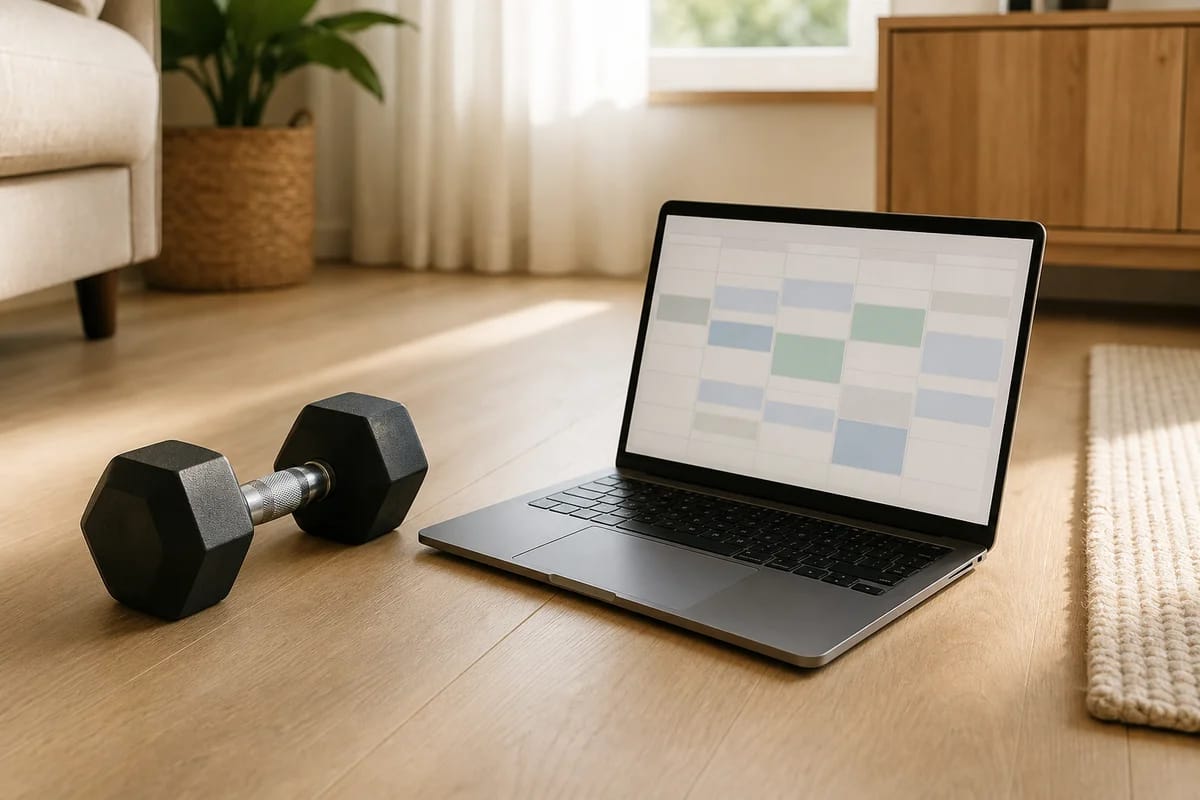
A 60-minute door-to-door template
This assumes you're training at home or in a gym inside your building, so the commute is close to zero. Count the whole hour, not just the lifting.
- 0 to 5 minutes: change and set up. Clothes out the night before, weights already within reach.
- 5 to 8 minutes: a short warm-up. A few minutes of easy movement for the joints you're about to load.
- 8 to 43 minutes: the session itself. Two or three main lifts, full rest, controlled reps.
- 43 to 50 minutes: wash up and change back.
- 50 to 60 minutes: settle, drink some water, and get back to your desk with time to spare.
If you have to walk somewhere to train, pull five minutes off the session and keep the rest of the plan as is. The exact split matters less than planning the whole hour up front, so you finish with time to clean up instead of sprinting back damp and late.
What to actually train
Pick a small set of big movements and skip the ones built to soak you. A red face and a wet shirt come from a high, sustained heart rate, and that's exactly what circuits and finishers are designed to produce. Straight strength work does the opposite.
A meeting-safe session looks something like this: one lower-body movement (a squat or a hinge), one upper-body push (a press or a push-up variation), one upper-body pull (a row), and maybe a core exercise or a loaded carry. Do three or four sets of each, stop a rep or two short of failure, and rest a full 2 to 3 minutes between sets. That rest keeps you strong and keeps your body temperature down. You'll finish worked, not drenched.
Save the intervals, the conditioning, and the burnout finishers for a day you can shower properly. Lunch is for the kind of training that leaves you presentable.
Do you need a full shower?
Often, no, as long as you kept the intensity in check. Strength work with real rest between sets doesn't produce the same soak as a spin class. A quick towel-down, cold water on your face and neck, a fresh shirt, and deodorant cover most low-sweat sessions fine.
One thing trips people up: your core temperature stays elevated for a while after you stop, so you keep sweating even though the work is done. Towel off too soon and you'll be damp again in five minutes. Give the heat a few minutes to clear before you put on a clean shirt.
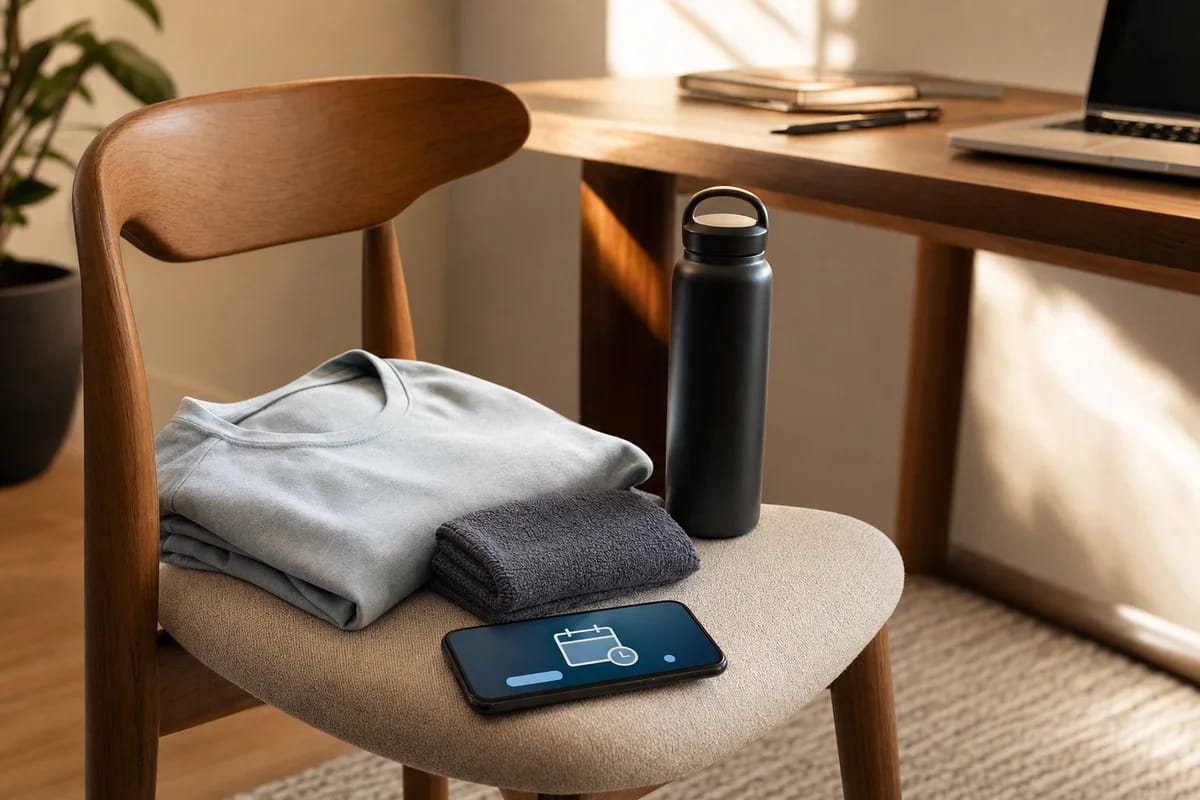
Skip the cool-down, not the settle time
Not the slow ten-minute version you were taught to do, at least. A 2018 review in Sports Medicine by Van Hooren and Peake looked at active cool-downs across the evidence and found they don't meaningfully cut muscle soreness, don't prevent injury, and do little for most other recovery markers.1 They speed up blood lactate clearance a bit, but lactate isn't what makes you sore days later anyway.
What a couple of quiet minutes does buy you is practical, not physiological: your heart rate drops, your face de-flushes, and you stop sweating. That's what matters before a camera-on call. Leave a 10-minute buffer before any meeting where people can see you, and skip the formal routine otherwise.
When the door-to-door hour doesn't add up
How much you sweat is individual. Some people run hot and need a real shower no matter how gentle the session, and no template changes that. The whole plan also assumes you can cut the commute. If your only option is a gym across town, the door-to-door hour genuinely might not fit at lunch, and that's a real limit, not a willpower problem. And for most people, a lunch session is a maintenance-grade dose: good for staying consistent, not the day you'll set a personal record.
Common questions
Is a lunch session enough to make progress, or is it just maintenance? For most people, training two or three times a week at lunch is plenty to build and hold strength, especially if you push the main lifts each time. It won't replace a longer session for every goal, but three focused 35-minute sessions a week beat the perfect 90-minute program you keep skipping.
What if I can only get to a gym across town? Then the door-to-door hour probably won't work at lunch, and it's worth being honest about that instead of forcing it. A small home setup, a gym inside your building, or moving the session to a time that isn't boxed into 60 minutes are the better options.
What a coach adds to the template
A real coach keeps the small decisions moving during the session (what's next, how much rest, when to stop), so nothing stalls out mid-set, though a compact lift list and a strict eye on the clock get plenty of people through the door-to-door hour fine on their own. With Bespoke Fit, the commute is gone before it starts. You train live over HD video from your living room. A real coach, never AI, has the session ready when you log on and keeps it moving so you finish with time to clean up. Sessions are unlimited, so a short weekday session never costs extra. Your first 14 days are free, then it's $299 a month. For the calendar side of fitting training around a workday, our guide to training at home between meetings picks up where this one leaves off.
Cut the commute and the shower, and the workout was never the thing that didn't fit.
Sources
-
Van Hooren and Peake, 2018. Do we need a cool-down after exercise? A narrative review of the psychophysiological effects and the effects on performance, injuries and the long-term adaptive response. Sports Medicine. ↩